News
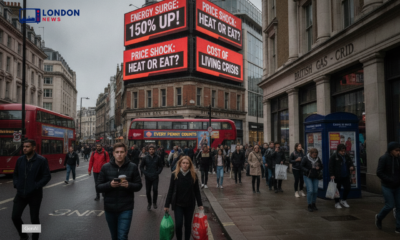
UK Business Growth Slows as Inflation Pressures Surge Amid Iran Conflict


Business activity across the United Kingdom has slowed to its weakest pace in six months, while inflation pressures have surged sharply, highlighting the economic impact of ongoing geopolitical tensions. A closely watched survey showed the composite Purchasing Managers’ Index falling to 51.0 in March from 53.7 in February, coming in below all forecasts and signaling a clear loss of momentum. Although the reading remains above the threshold that indicates growth, the decline reflects growing strain on businesses as higher energy costs and market uncertainty begin to weigh on performance.
The latest data provides one of the first detailed snapshots of how the conflict in the Middle East is affecting the UK economy. Manufacturing firms reported a dramatic increase in input costs, with price pressures rising at the fastest monthly pace since 1992. The surge has been driven largely by higher fuel and transport costs, along with increases in energy intensive raw materials. Businesses have responded by raising their own prices at the quickest rate in nearly a year, adding to concerns about persistent inflation at a time when demand is already weakening.
Economists say the combination of slowing growth and rising costs presents a difficult environment for both businesses and policymakers. The rapid increase in inflationary pressures has surprised analysts, with some noting that the speed of the shift is unusually sharp. Companies are facing multiple challenges, including disrupted supply chains, cautious consumer spending and higher borrowing costs. These factors are reducing overall business confidence and making it harder for firms to plan for the months ahead.
Industry experts have warned that the situation creates a complex policy dilemma for the Bank of England. On one hand, rising inflation may require tighter monetary policy, including potential interest rate increases. On the other hand, weaker growth and falling employment levels suggest that further tightening could deepen economic slowdown. Businesses also reported that job numbers have continued to decline, marking an extended period of contraction in employment that adds to broader concerns about the health of the labour market.
The survey also revealed that expectations for future business output have weakened significantly, reaching their lowest level in several months. Companies pointed directly to the impact of global tensions, citing reduced customer demand, rising operational costs and increased uncertainty. Travel disruptions and shifting supply conditions have further complicated the outlook, particularly for firms reliant on international trade. These developments suggest that the economic effects of the conflict may continue to unfold over time rather than being short lived.
Compared with other regions, the UK appears to be experiencing a sharper impact from current global events. While business activity in the euro zone has also slowed, the decline has been less severe, indicating that the UK’s exposure to energy costs and external pressures may be amplifying the effect. The country’s reliance on imported energy and sensitivity to financial market movements have made it particularly vulnerable during periods of global instability.
Policymakers are now under increasing pressure to respond to these developments, with government officials expected to address the economic consequences and outline potential support measures. Attention is also focused on how the central bank will adjust its approach in response to evolving data. The balance between controlling inflation and supporting economic activity remains uncertain, especially as external factors continue to drive volatility across markets.
As businesses navigate this challenging environment, the outlook for the UK economy remains closely tied to global developments. Any further escalation in geopolitical tensions or sustained rise in energy prices could intensify inflation pressures and prolong the slowdown in growth. For now, the latest survey underscores the immediate impact of external shocks on domestic economic conditions and the challenges facing both companies and policymakers in maintaining stability.