Business
Bank of England holds 3.75% as Iran tensions grow
As the Bank of England holds 3.75%, policymakers signaled future interest rises if inflation risks persist, with Iran conflict shocks watched closely Today.

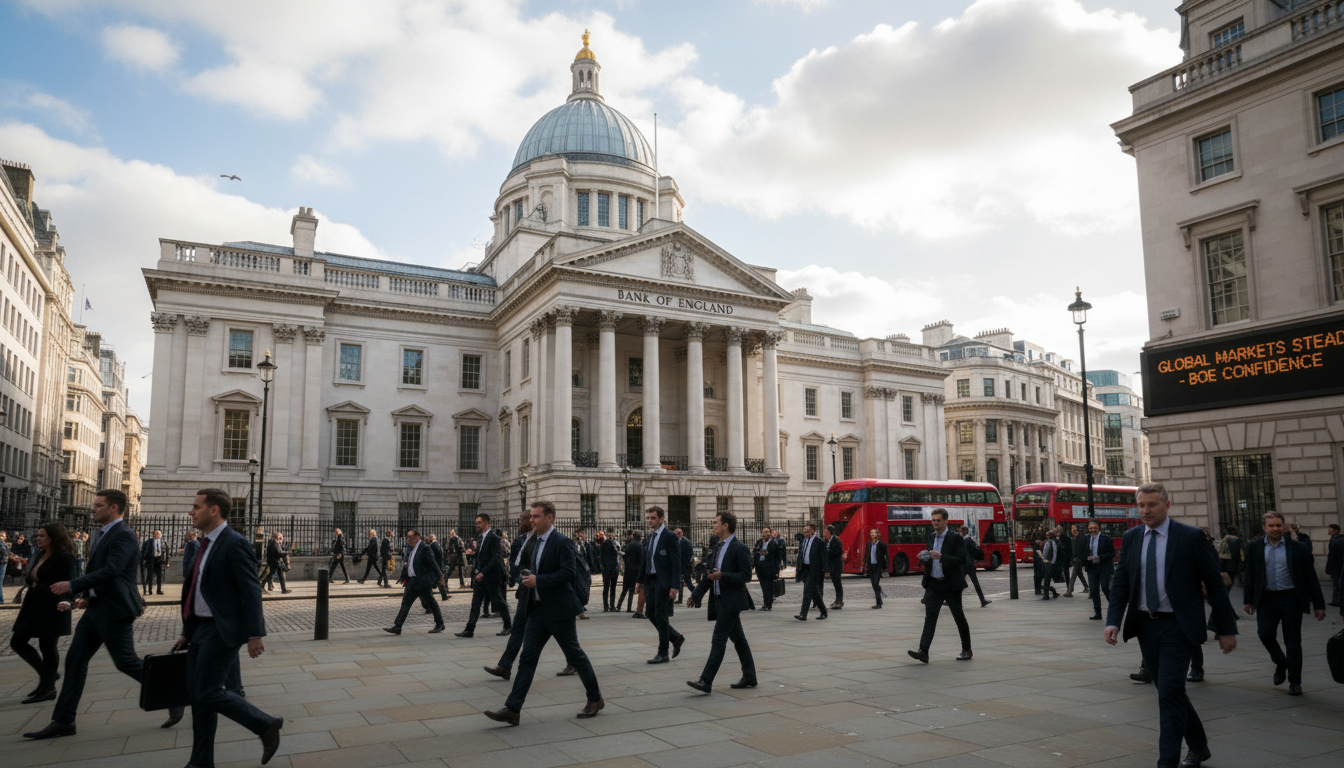
Bank of England’s Interest Rate Decision
The Bank of England kept Bank Rate at 3.75% at its latest meeting, maintaining the stance set at the previous decision. In its statement, the Monetary Policy Committee stressed that inflation risks remain two sided, and it will keep policy restrictive for long enough to return inflation to target. Today, traders focused on language that pointed to future interest rises if energy prices or wage growth re accelerate. The Bank of England statement also reiterated that decisions will be made meeting by meeting, guided by incoming data. Live pricing in sterling rates showed only modest odds of an immediate move, but a higher expected peak later in the year. An Update from the Bank highlighted sensitivity to global shocks.
Impact of Middle East Conflict on UK Economy
Market attention has also moved to the Iran conflict, because energy and shipping costs can feed quickly into UK inflation expectations. Today, Brent crude volatility has been the main transmission channel, with analysts watching whether disruptions persist long enough to affect household bills and business input costs. In Live trading, oil and the pound moved with headlines, amplifying the uncertainty the Bank must manage, and a useful reference point for the risk premium in oil is Brent Oil Jumps as Iran Blockade Risks Expand Fast which tracks how blockade fears can reprice crude. The Bank of England warned that such shocks can complicate the UK economy outlook even if domestic demand is slowing. An Update from energy desks kept rate expectations unsettled.
Expert Opinions on Future Interest Rate Movements
City economists largely read the decision as a pause rather than a pivot, with several desks emphasising that guidance still leaves room for future interest rises. Today, some forecasters pointed to services inflation and pay growth as the clearest reasons the MPC might tighten again if disinflation stalls. In Live commentary, analysts at Bloomberg noted that central banks tend to react more forcefully when energy driven inflation bleeds into wages and pricing behaviour, rather than treating it as a temporary spike, and for broader context on risk sentiment when rates stay higher for longer, readers have also tracked Rising warnings of a new financial crisis ahead on credit stress signals. An Update in futures pricing suggested cuts are now pushed further out, reflecting caution among rate setters.
Historical Context of UK Interest Rate Policies
The current 3.75% setting sits well above the ultra low era that followed the global financial crisis, when the Bank held rates near zero for years, as shown in the Bank of England historical series. Today, policymakers appear determined to avoid a repeat of stop start tightening cycles that can entrench inflation, a lesson frequently cited in Bank of England speeches on credibility. In Live market terms, that history matters because investors anchor expectations to the Bank’s reaction function, especially when inflation shocks come from abroad. Consumer sensitivity is evident in everyday budgeting and even search behaviour such as lidl near me, which rises when households try to cut grocery bills during periods of higher borrowing costs in London. An Update in mortgage pricing has reinforced how quickly past policy changes can transmit to monthly payments.
Public Reaction and Financial Market Response
Households and firms reacted cautiously, with lenders adjusting quoted fixed rate deals but not repricing as sharply as during earlier tightening phases. Today, sentiment has been shaped by the mix of a steady Bank Rate and the external uncertainty tied to geopolitics, leaving consumers unsure whether borrowing costs have peaked. In Live coverage, equity investors watched rate sensitive sectors while gilt yields reflected the balance between inflation risk and slower growth. The Financial Times noted that even small shifts in MPC language can move swap rates, which then flow into mortgage offers within days, sharpening public scrutiny of each meeting. While the UK economy has avoided a sharp contraction, the Bank of England has underscored that restrictive policy still weighs on activity. An Update in market positioning suggests investors remain hedged against renewed price pressures.