Politics
Greens surge across London as Labour support slips
Live results show london borough elections 2026 swinging toward the Greens in key wards, as Labour support slips and analysts debate turnout and next steps.

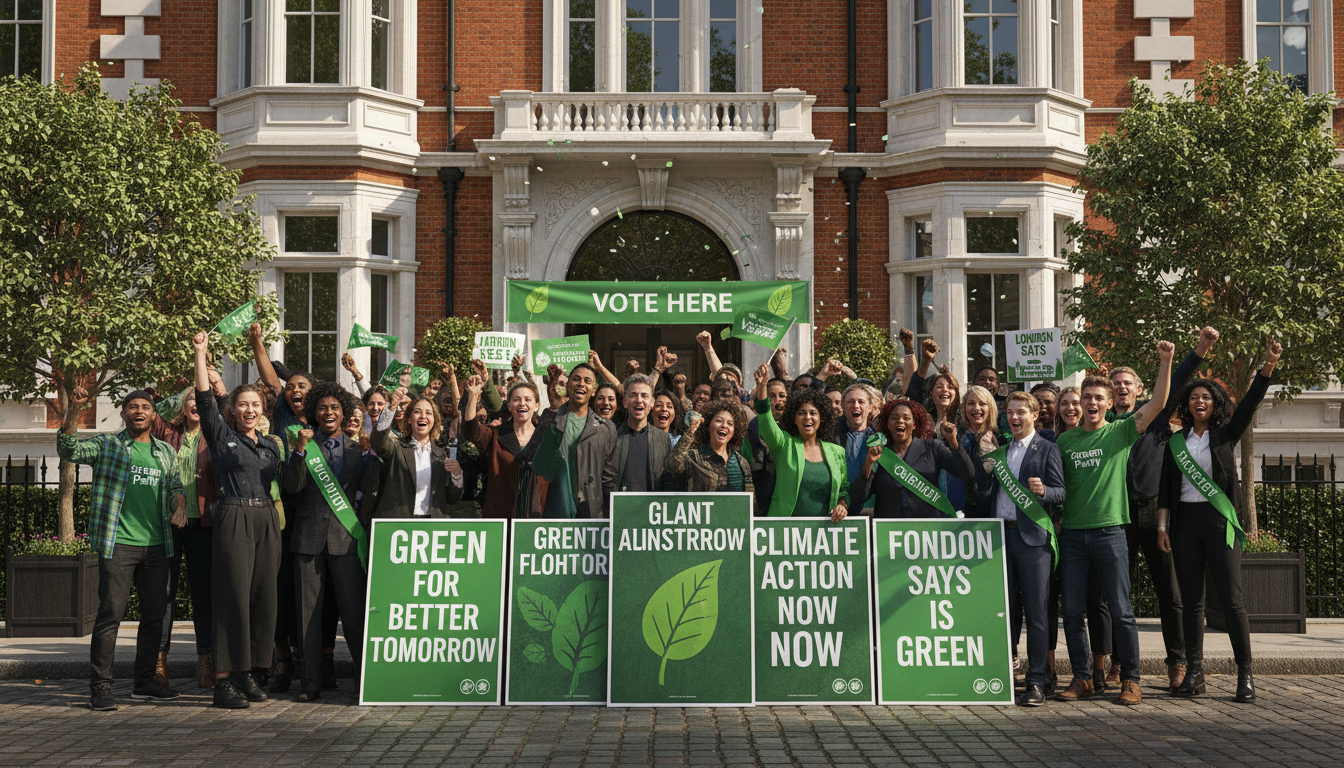
Green Party Achieves Major Gains in London
Counting across city halls moved quickly Today, with ward tallies showing the Greens converting targeted campaigns into decisive wins in several London contests. In the middle of the count, london borough elections 2026 became a shorthand for how environmental policy, housing pressure, and local service performance can realign traditional loyalties, and the BBC reported “huge gains” for the party in the capital while Labour’s vote share fell, a shift that councillors said they felt on the doorstep during the final week. Live declarations also highlighted how Greens benefited from concentrated support in competitive wards rather than thin citywide gains. Party figures attributed momentum to year round community organising and visible local casework.
Impact of Labour’s Decline on London’s Politics
Labour’s weaker performance changed negotiating dynamics inside several councils Today, especially where no party can easily claim a working majority. As the BBC framed it, the Labour vote “sank” in places where incumbents faced sustained criticism on street cleanliness, planning, and neighbourhood safety, issues repeatedly cited by candidates during hustings, and the UK Parliament page on nature based flood and drought resilience was shared by activists pressing for greener infrastructure. In rolling Live coverage, some Labour officials argued that national headwinds fed into local anger, while Green campaigners said voter contact on estates did the work. An Update from council counts showed margins narrowing in traditional Labour areas.
What These Results Mean for Future Elections
The immediate consequence is that committee control and budget votes could hinge on smaller blocs, making coalition building more likely over the next municipal term. Election planners watching london elections 2026 predictions are already treating the Green advances as proof that a disciplined ground game can beat broad branding in marginal wards, and for context, some campaigners compared canvass data to patterns seen in london elections 2025, where turnout volatility reshaped outcomes in a handful of seats. Mid count briefings also pointed to spillover into the may elections 2026 cycle, as organisers test whether these messages travel beyond borough boundaries. In the centre of this discussion, Trump’s July 4 Deadline Stirs the EU Trade Deal Pot was cited by strategists as a reminder that global economics can suddenly dominate local agendas. Another Live Update from returning officers underscored how small swings can flip control.
Reactions from Political Analysts on the Results
Commentators focused less on ideology and more on seat efficiency, noting that concentrated Green support translated into representation faster than citywide vote share would suggest. Political scientists interviewed by the BBC emphasised that ward level incumbency effects, candidate recognition, and local controversy can overpower national narratives on election day, and for readers tracking broader UK patterns, Labour Faces Welsh Senedd Defeat After 100 Years offered a parallel warning about complacency in long held seats. In post count analysis Today, several analysts argued that Labour’s losses were sharpened by fragmented opposition, which allowed the Greens to emerge as the clearest alternative in certain neighbourhoods. Others noted that council governance questions now become central, because voters judge performance quarterly, not every five years. An Update from party spokespeople stressed that scrutiny over housing delivery and planning decisions will intensify, and that new councillors will be tested quickly.
How Voter Turnout Influenced the Election Outcome
Turnout shaped where the Greens broke through, because high participation in a few tightly fought wards can outweigh lower engagement elsewhere within the same borough. Returning officers in multiple councils reported steady flows at peak hours, and the BBC’s Live blog described late evening surges in some districts, patterns that campaign teams said matched their get out the vote targeting, including reports after polls closed at 10pm. In the middle of the count narrative, london borough elections 2026 also became a case study in mobilisation, with volunteers focusing on renters, students, and voters motivated by clean air and active travel debates. Labour organisers acknowledged that persuadable voters were harder to reach than in past cycles, while Green teams credited local networks for sustained contact. Today, officials said final certified totals and recount decisions will be published by each borough, providing a definitive Update for campaign audits.