Business
UK ministers urge supermarkets to cap food prices
UK food price caps are back on the agenda as ministers urge supermarkets to curb grocery prices, seeking voluntary limits and clearer deals for shoppers.

Government Pushes for Voluntary Price Caps
Ministers are pressing major grocery chains to commit to short term limits on essential items as pressure mounts from household budgets. In meetings with retailers, the Department for Business and Trade has framed the move as a voluntary agreement that can be implemented quickly without new legislation. The proposal centres on UK food price caps for a narrow basket where competition is most visible at the shelf edge. Today, officials are also asking for clearer signage so shoppers can identify capped lines and compare offers across stores. Any scheme would be time limited and reviewed as wholesale costs change. Ministers want commitments that are easy to audit while avoiding disruptions to supply.
Supermarkets’ Role in Controlling Food Costs
Retailers are being urged to use their buying power to reduce the frequency and size of price rises, while keeping ranges stable for low income shoppers. Executives have told policymakers that margins vary by category, and that supplier contracts and energy costs still squeeze operations, so any cap would need flexibility. Live negotiations are focusing on how promotions, loyalty pricing, and own label lines could be used to hold down staples without distorting competition, and an Update from BBC analysis on retail competition and pricing power has highlighted how scale advantages can shape shelf prices, a point ministers are now emphasising. Any agreement is expected to include reporting on availability and substitutions.
Impact on Consumers and Grocery Markets
For households, the policy aim is simpler: reduce bill volatility and restore confidence that basic baskets will not jump week to week. Officials argue that predictable pricing can dampen panic buying and help families plan, especially when wages do not rise as quickly as food bills. In London, consumer groups are tracking whether UK food price caps would widen gaps between premium and value tiers, potentially pushing more shoppers to own label. Today, analysts are also watching how rivals respond, because a cap that one chain adopts could force others to match it to avoid losing footfall, and a separate Update on domestic pressures is reflected in Iran Executions Surge Amid War and Global Alarm, which shows how policy attention can shift quickly when other crises dominate headlines. Market behaviour will hinge on transparency and compliance.
Key Grocery Items under Price Watch
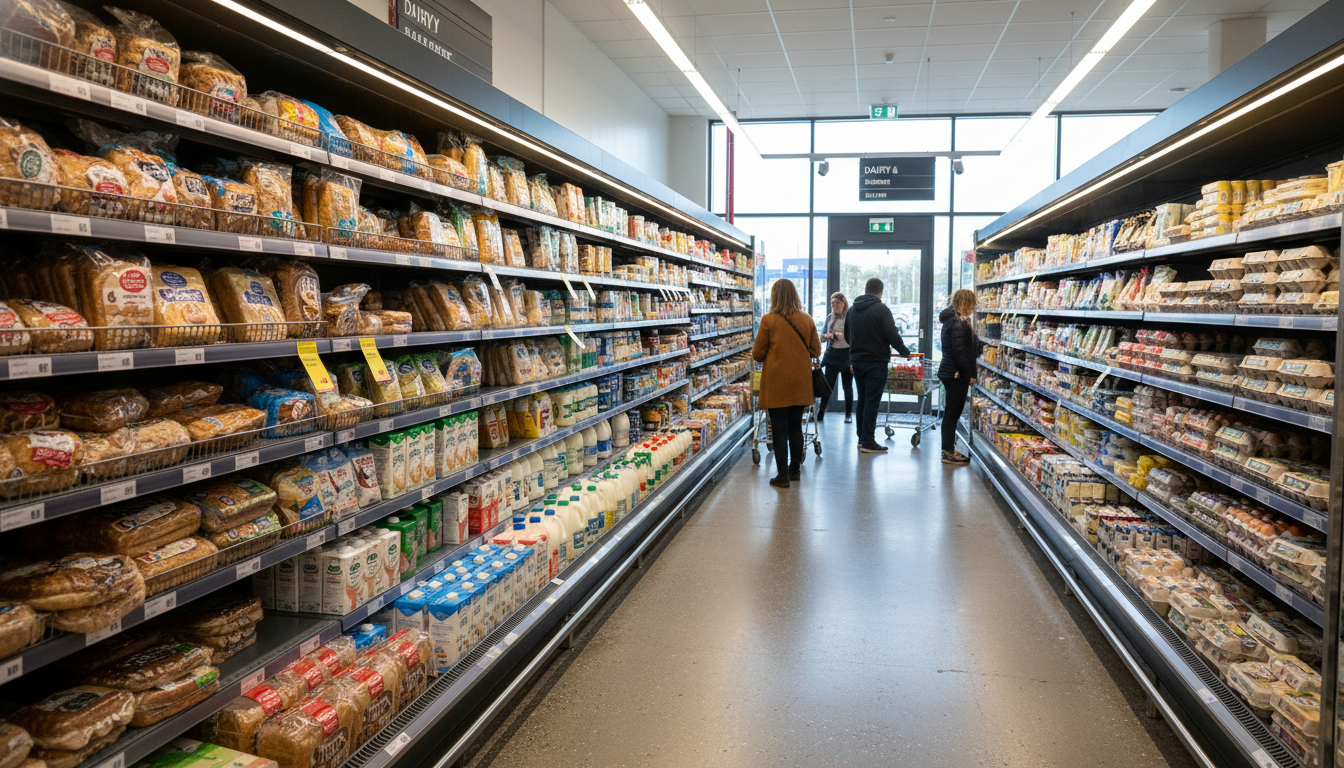
Negotiators are concentrating on a shortlist of items that appear in most weekly shops and have clear comparable brands. Those include bread, milk, pasta, rice, cooking oil, eggs, and fresh produce lines that are heavily promoted and widely stocked. Live monitoring will rely on shelf audits and online pricing, with ministers asking retailers to keep capped products in stock rather than replacing them with smaller pack sizes, and the Competition and Markets Authority has previously stressed the value of clear unit pricing for consumers. Officials want that clarity maintained through any cap period, and an Update on wider cost pressures has also been linked to labour issues, including the knock on effects described in RMT cancels London Tube strikes, talks continue, because logistics reliability affects store replenishment. Retailers are expected to publish item lists and review dates.
Future of Food Pricing in the UK
Ministers are signalling that voluntary limits would be assessed against measurable outcomes like basket costs, stock levels, and complaint volumes, rather than broad political claims. If the approach fails, officials have not ruled out stronger interventions, but they are prioritising speed and cooperation to avoid legal disputes. Supermarket groups are likely to push for time boxed arrangements tied to supplier cost movements, and for protections against being accused of collusion. Today, the government is also under pressure to show that it can act on living costs while respecting competition rules, and any Live data disclosures could become a template for future monitoring. Another Update is expected after retailer consultations conclude, including details on scope and duration, and analysts say the next review could land before the autumn budget cycle. Long term, analysts expect pricing to stay sensitive to energy, wages, and import costs.