Entertainment
Princess Beatrice and Eugenie to Miss Royal Easter Service Amid Ongoing Family Controversy

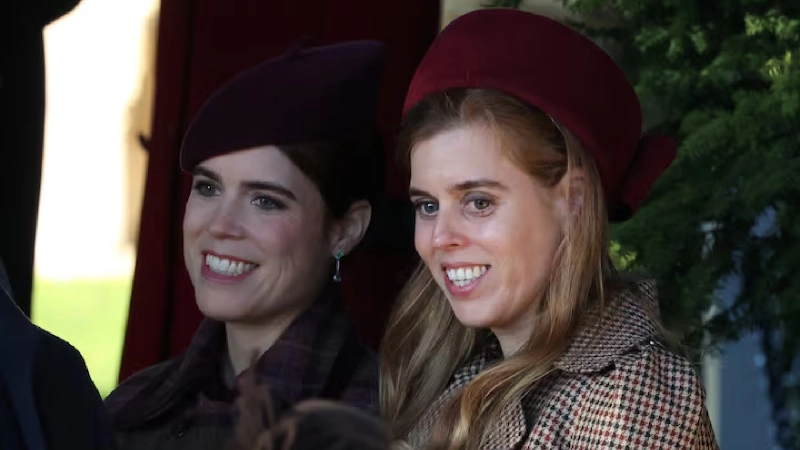
Princesses Beatrice and Eugenie will not attend the British royal family’s traditional Easter church service this year, according to a royal source, marking a notable absence from one of the monarchy’s key annual gatherings. The service, typically held at Windsor, is a longstanding event that brings together senior members of the royal family. Their decision to step back comes at a time when public attention remains focused on ongoing developments surrounding their father, adding further scrutiny to royal appearances.
The two princesses, daughters of Prince Andrew, have regularly attended major royal events in previous years, including last Easter’s service where they were seen alongside King Charles III and other senior royals. However, this year’s absence has been described as a personal decision rather than one directed by the monarch. Royal insiders have indicated that while the move may attract public interest, it does not signal a permanent change in their participation in future royal engagements.
The context surrounding their decision is closely linked to recent controversy involving their father, whose legal and public challenges have intensified in recent months. The situation has placed renewed pressure on the royal family’s public image, leading to increased sensitivity around official appearances and events. While the princesses themselves are not directly involved in the controversy, their association with the situation has inevitably drawn attention, influencing how and when they appear in public alongside other members of the monarchy.
Despite the circumstances, the royal family continues to maintain its traditional schedule of events, with the Easter service expected to proceed as planned. The gathering is an important occasion in the royal calendar, often seen as a moment of unity and continuity. Senior members are anticipated to attend, reinforcing the institution’s stability during a period of heightened media focus. The absence of Beatrice and Eugenie, however, highlights how personal decisions can intersect with broader public narratives surrounding the monarchy.
Historically, royal attendance at major religious events has been viewed as a reflection of both personal commitment and institutional duty. Over the years, Easter services have served as an opportunity for the public to observe the royal family together in a more informal setting compared to state occasions. Changes in attendance, therefore, often attract attention and can be interpreted as indicators of internal dynamics or external pressures affecting the family.
The ongoing situation involving Prince Andrew has been one of the most significant challenges faced by the monarchy in recent decades. His removal from official duties and the continued scrutiny of his past associations have had lasting implications for the royal family’s public standing. While he has consistently denied wrongdoing, the broader impact of the controversy continues to influence perceptions and decisions within the royal circle.
Royal watchers note that the decision by Beatrice and Eugenie to step back from this year’s event may be aimed at avoiding additional media attention during a sensitive period. At the same time, sources have emphasized that their absence is limited to this specific occasion and should not be interpreted as a withdrawal from public life. Both princesses are expected to continue participating in selected engagements moving forward.
As preparations for the Easter service continue, the focus will remain on how the royal family presents itself during a time of ongoing scrutiny. The event is likely to draw significant attention, with observers watching closely for signs of unity and continuity. The absence of the two princesses adds another layer to the evolving narrative surrounding the monarchy and its efforts to navigate complex personal and public challenges.