Business
Pressure rises on UK supermarkets over price caps
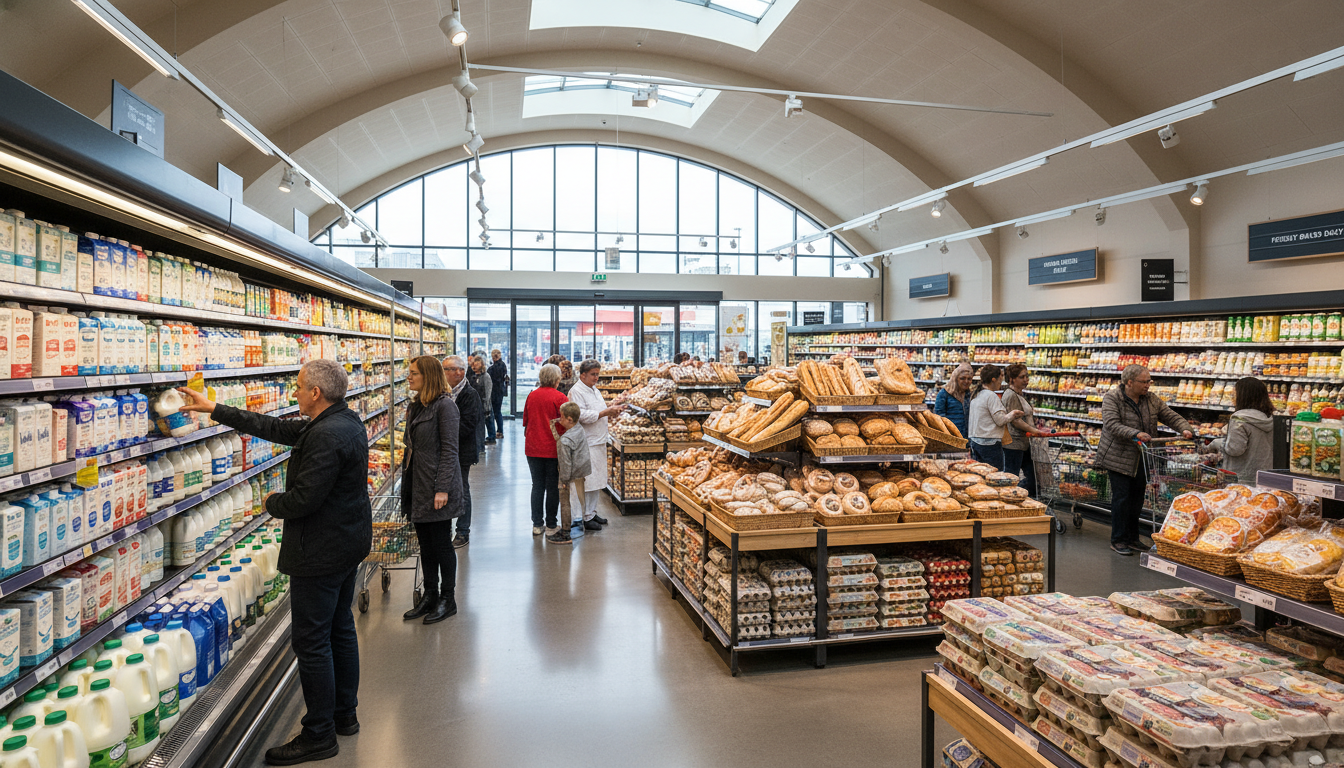
Pressure is growing for a UK supermarkets price cap on milk, bread and eggs, as ministers and retailers clash over costs, margins and supply.

Government Push for Price Capping on Essentials
Ministers are intensifying talks with major grocers over whether key staples should be shielded from further rises. Officials say the aim is to protect households facing persistent food prices that have not eased evenly across categories. In a brief to retailers circulated Today, the Department for Business and Trade said it wants clearer evidence that promotions are reaching shoppers rather than shifting margins, as cited by the Financial Times. The proposal most discussed is a temporary ceiling on everyday items, with milk, bread and eggs repeatedly named as essential goods. A Live policy tracker shared within Whitehall also flags stronger monitoring of supplier contracts. Another Update is expected after further meetings.
Supermarkets’ Response to Price Cap Proposals
Retailers are pushing back, arguing that mandated limits risk squeezing suppliers and reducing availability on shelves. Executives say competitive pricing already moves quickly, and they warn that a blunt cap could distort decisions on range, logistics and investment. The UK supermarkets price cap debate is also being framed by supermarkets as a question of who pays, growers, processors, or shoppers, and a separate ministerial briefing was covered in Ministers press supermarkets to curb UK food costs, describing fresh demands for transparency. In a statement carried by Reuters, several chains said they cannot absorb further cost shocks in dairy and baking inputs without consequences for quality and choice. Live negotiations continue and an Update is due after industry roundtables.
Impact on Consumers and Current Market Trends
Consumer groups say households want predictability more than one off deals, especially on breakfast basics and packed lunch items. The Competition and Markets Authority has previously said the grocery sector is highly competitive, but it also urged clearer unit pricing, a point reiterated in CMA guidance. In the latest UK supermarkets price cap exchanges, campaigners argue that certainty on a small basket would help budgeting even if other lines keep moving. Today, survey commentary from Which? said shoppers are spending more time switching brands and stores as food prices stay elevated. Some retailers point to ongoing wage and energy costs as constraints, while suppliers cite packaging and transport contracts. An Update to price labels is expected with summer promotions.
Ministerial Statements and Political Reactions
The political temperature is rising as ministers face questions in Parliament about fairness at the till. Government spokespeople have said they prefer voluntary steps, but they have not ruled out stronger action if talks fail. Live reporting has focused on whether a formal cap would require legislation or could be handled through agreements overseen by regulators. The UK supermarkets price cap concept has drawn criticism from some opposition MPs, who argue it treats symptoms and not underlying supply costs. A cross government note referenced by the Financial Times stressed that any intervention must avoid harming farmers and small producers. Separately, a new analysis of household strain appeared in Kenya Transport Halted as Fuel Price Strike Spreads, used by officials as an example of how fuel shocks can feed into food bills. Another Update is expected after ministerial media rounds.
Future Outlook: What Can Shoppers Expect?
What happens next will hinge on whether retailers offer targeted price locks that satisfy ministers without formal controls. Industry bodies say a workable approach is time limited freezes on a defined basket, paired with better disclosure on where costs are rising in the supply chain. Today, the British Retail Consortium said it is ready to discuss measures that keep essential goods affordable while protecting investment in distribution and staff, according to a statement posted on its website. Live store pricing will still vary by region, format and loyalty schemes, meaning any national pledge may be uneven at checkout. Policymakers are also weighing how enforcement would work across thousands of products and suppliers. A final Update is expected once talks conclude and any voluntary scheme is published.