Latest News
2026 Trooping the Colour draws crowds in London
Crowds lined London streets for 2026 trooping the colour, as senior Royals attended the King’s Birthday Parade, ending with the palace flypast.

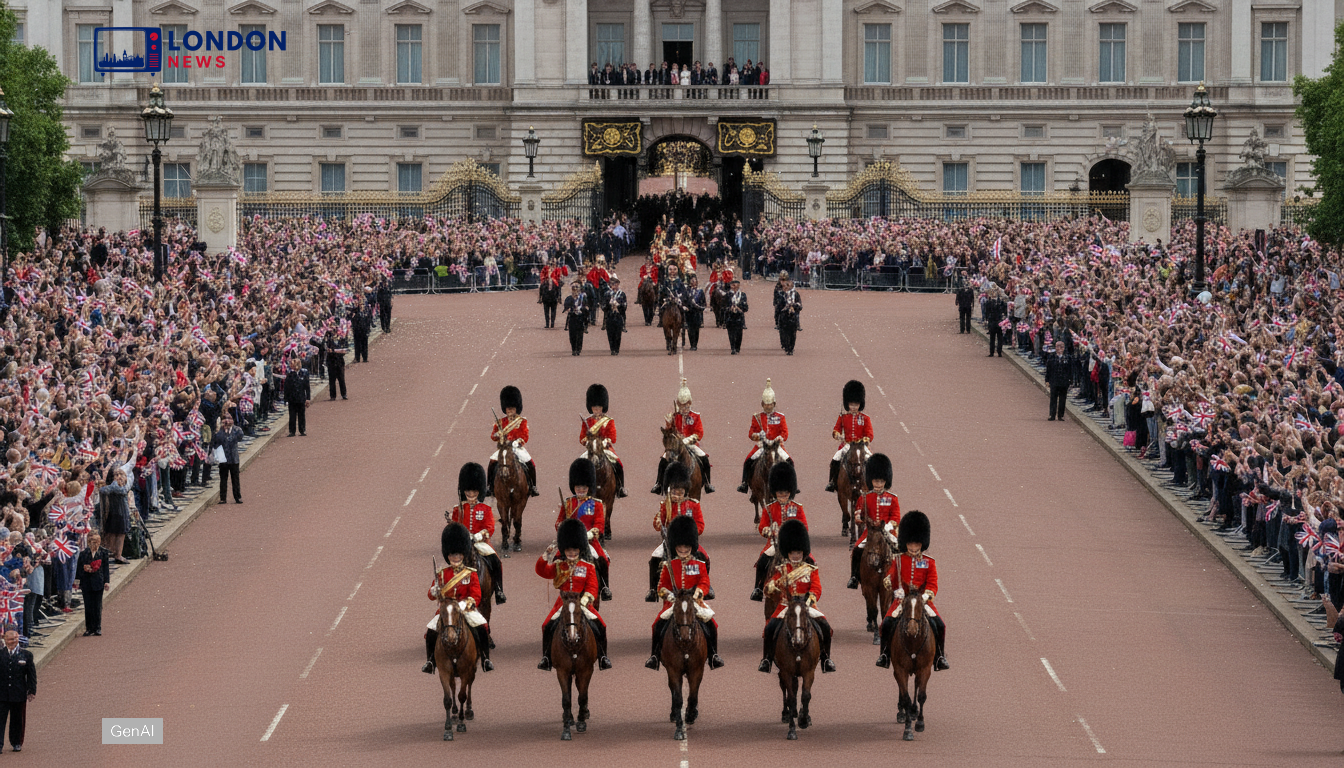
2026 Trooping the Colour parade draws crowds in London
2026 trooping the colour reportedly drew dense crowds to central London for the King’s Birthday Parade, with spectators gathering along The Mall from early morning to secure clear views. Senior members of the Royal Family were seen arriving in ceremonial formation, while stewards managed viewing areas and police maintained cordons at key junctions near Admiralty Arch and Horse Guards Parade, according to on-the-ground reporting from attendees and broadcasters. The procession appeared to run to a tight timetable, with mounted units and marching soldiers keeping the emphasis on disciplined presentation rather than a street-party atmosphere. The most anticipated moment for many spectators is typically the palace balcony appearance, which again seemed to draw cameras upward across the route. Applause and cheers were heard along the parade line as the ceremony moved toward its closing stages, according to available reports from attendees.
What the King’s Birthday Parade includes
The event is staged as the monarch’s official birthday celebration and follows a set programme, as described in long-standing public guidance about Trooping the Colour. At the centre of the ceremony, the regimental colour is trooped in a sequence familiar to long-time attendees, with bands, salutes, and marching intervals aligned to established drill, according to standard ceremonial practice. Visitor planning for Trooping the Colour has also focused on access routes, viewing points, and broadcast timing, while organisers generally emphasise safety messaging and transport coordination around central London closures. For readers tracking how major set piece events affect city operations, related context is available in 2026 World Cup economics: How it will reshape cities.
Public turnout, travel, and security planning
Attendance was reportedly building through the morning as families, tourists, and veteran watchers held places for hours behind barriers to maintain sight lines, based on observations from the route. Broadcasters leaned on crowd reaction shots as the Household Division marched past, and 2026 trooping the colour became a shorthand for high demand for reliable live coverage. Policing and stewarding were visible throughout, with managed pinch points allowing pedestrian flow between viewing zones without breaking the route perimeter, according to typical crowd-management practice for major London events, as indicated by available reports. Wider concerns about personal safety in busy areas have remained part of London’s event-planning conversation, also reflected in Met Police phone theft: tech firms urged to block devices. Officials and stewards were heard directing spectators to use designated crossings and to follow station signage near Charing Cross.
Why the tradition matters year to year
The parade’s choreography rests on longstanding drill patterns, and the terminology around the colour reflects origins in battlefield identification that have been preserved for ceremonial use, according to widely cited historical explanations of the tradition. Commentators and presenters often note how the procession balances pageantry with strict military structure, with 2026 trooping the colour used as a reference point for how music cues and salutes repeat in the same order each year. While interest in future editions is typically visible among visitors discussing return trips, the enduring appeal is often less about novelty and more about ritual clarity. Many spectators treat the event as another annual anchor in London’s summer calendar, using the tradition as a predictable framework for where to watch, what to expect, and when key moments are likely to occur.
Flypast and balcony moment: key highlights in 2026
The strongest impressions for many viewers came from the combined sound of massed bands, the visual rhythm of marching lines, and the transitions between mounted and foot elements as the parade advanced, based on broadcast coverage and spectator accounts. Camera attention lingered on uniform details and coordination during turns and salutes, before aircraft noise signalled the approach of the flypast, as typically occurs during the event’s finale. In the middle of the sequence, Trooping the Colour again stood out for the way the balcony moment can reframe the ceremony from military display to national symbolism, drawing the crowd’s gaze upward at once. Organisers appeared to maintain clear movement corridors for emergency access and kept the atmosphere calm even when the densest areas surged briefly, according to observations from the route. The day ended with sustained applause as the formation cleared and spectators dispersed along the route, according to available reports.