Business
GWR set for renationalisation as takeover nears
GWR renationalisation is moving from plan to timetable, as ministers prepare to bring the operator under public control, affecting UK trains and fares.

GWR Faces Renationalisation
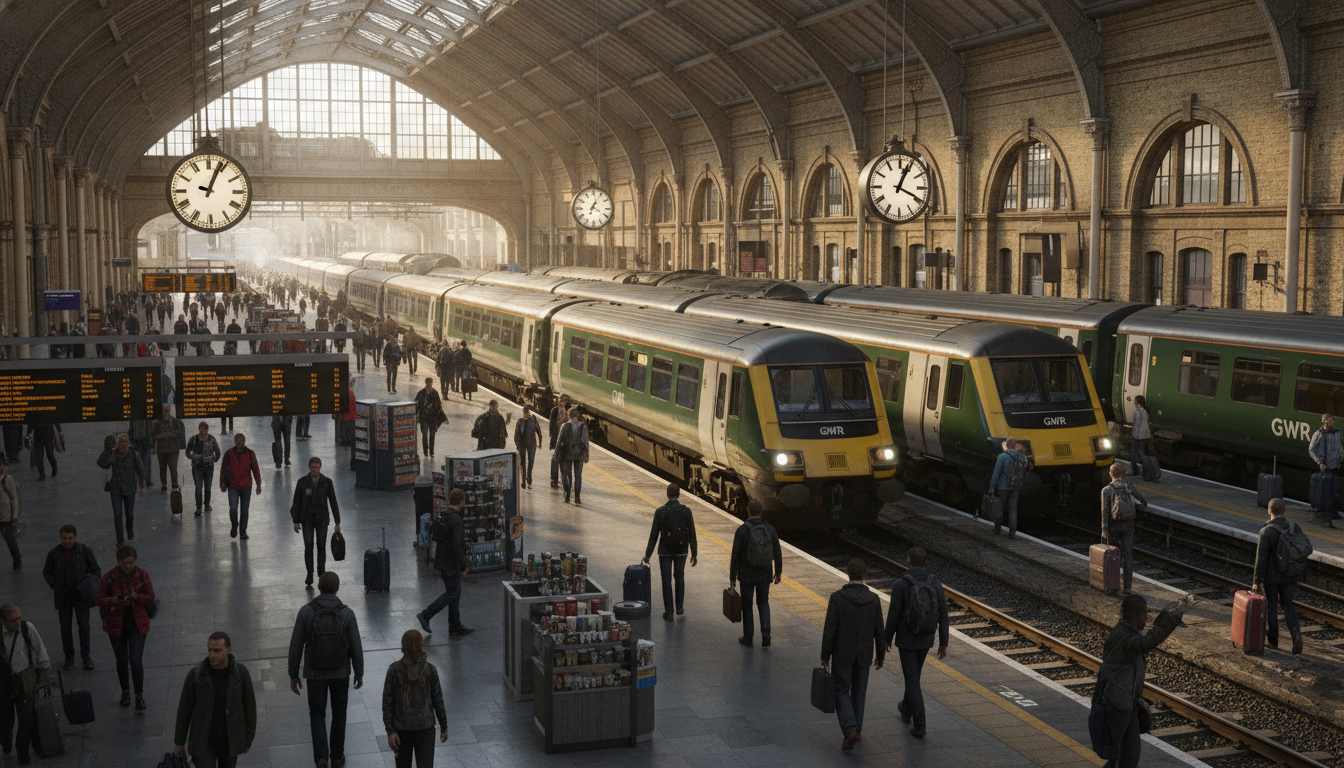
Ministers are moving to bring Great Western Railway into public ownership within months, shifting a major intercity network onto a new operating basis. Today, officials and rail managers are preparing transition work that affects staffing, contracts and customer-facing systems, and in the middle of these preparations, GWR renationalisation is being treated as an operational handover rather than a symbolic change. Live planning focuses on continuity of timetables, safety cases and back office functions so trains keep running through the switchover. An Update shared with staff has framed the immediate priority as stability across routes from London to the South West and Wales. The Department for Transport has not published a detailed step by step schedule in this brief.
Impact on Passengers and Services
Passenger groups are watching for any disruption to ticketing, refunds and day to day service delivery as control changes hands. Today, the Department for Transport is emphasising that trains should operate normally during the transition, and that existing tickets remain valid under standard rail conditions. For wider context on cross border travel rules that can affect demand at major hubs, see Portugal, Italy Keep Digital Checks for UK Travellers in a separate policy briefing. Live customer systems such as journey alerts and compensation portals must also be maintained while databases and suppliers are reviewed. An Update to passenger information channels is expected to focus on practical guidance, including where to claim delays and how to access assistance. Operators typically keep frontline branding unchanged during early phases.
Reasons Behind the Government’s Decision
The government is framing the move as part of a broader shift toward government control on core routes, with ministers arguing it reduces fragmentation in procurement and oversight. Today, officials have pointed to the need for clearer accountability when performance deteriorates, especially where infrastructure constraints and rolling stock availability interact. In that context, GWR renationalisation is being presented as a mechanism to align service delivery with public objectives, not a short term response to a single incident. Live policy debate is also shaped by budget pressures and the cost of contractual complexity, with the Department for Transport overseeing multiple arrangements across UK trains. For related political signals on how central government approaches long running disputes, see UK Supreme Court Backs Government in Legacy Case. An Update on next steps is expected once transition governance is finalised.
Historical Perspective on UK Railways
This decision sits within a long pattern of changing models, moving from state ownership to franchising and now toward publicly managed concessions. Today, rail historians note that the post war national network was reshaped over decades by legislation and by the creation of separate track and train responsibilities. Live comparisons are often drawn with earlier reorganisations, but analysts stress that modern passenger expectations, digital ticketing and accessibility rules make transitions more complex than in past eras. The Office of Rail and Road sets safety and economic regulation across the system, and its published framework provides the baseline that remains in place regardless of ownership structure. An Update for regular commuters will likely be less about institutional design and more about reliability, staffing and information during disruption.
Future Prospects for UK’s Railway System
Attention is now shifting to what public operation could mean for investment decisions, service levels and fares policy, especially on long distance corridors where capacity is tight. Today, the Department for Transport is expected to focus on performance metrics, with management incentives and reporting reshaped to suit a public operator model. Live delivery will depend on collaboration with Network Rail and on rolling stock maintenance cycles that cannot be changed quickly, with routes out of London Paddington likely to be a key test in early months. In that setting, GWR renationalisation may become a test case for how the government handles industrial relations, customer compensation and timetable resilience under direct responsibility. An Update on governance, including how passenger feedback will be escalated, is anticipated as the handover date approaches. Wider railway news will track whether the model is extended across additional operators.