News
UK Doctors Strike: Six-Day Walkout Set in England
UK doctors strike set for six days in England after talks break down, with NHS disruption expected as unions and ministers clash over pay and staffing.

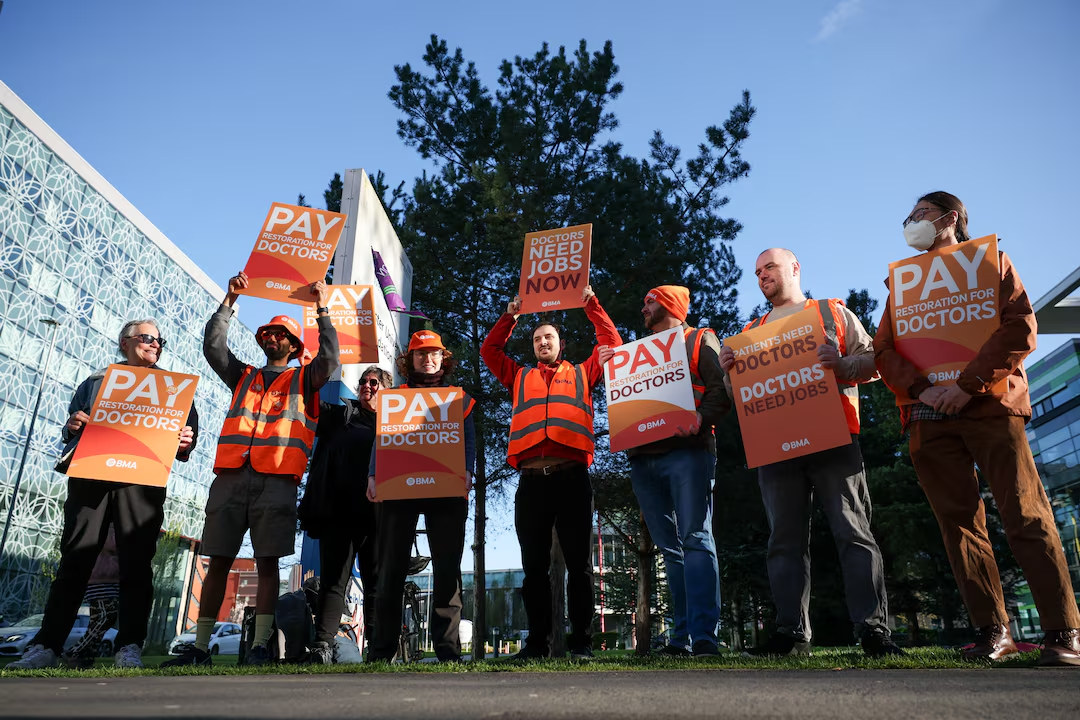
Background of the Strike
The UK doctors strike has been set as a six-day stoppage in England after negotiations between doctors’ representatives and government ministers ended without an agreement. The planned action centres on hospital and community services where junior doctors deliver much of the day-to-day care, and it follows months of intermittent industrial action that has already forced widespread rescheduling. The dispute escalated when both sides publicly acknowledged that talks had broken down, shifting the focus from quiet negotiation to operational contingency planning across NHS trusts. Reporting on the latest announcement has been carried by major outlets including the BBC’s coverage of the six-day doctors’ strike, with further context mirrored across the national press. Trust leaders are now moving to protect time-critical services while warning that delays will extend beyond the strike window itself.
Key Issues Leading to the Walkout
The immediate driver of this NHS strike is pay, but the argument being advanced by doctors’ leaders is broader than a single headline percentage. They frame the dispute as a test of whether the current settlement model can keep pace with living costs and whether the NHS can recruit and retain staff in specialties already under strain. Ministers, for their part, have emphasised fiscal limits and the precedent set for other public-sector workforces, presenting their stance as stewardship of budgets rather than refusal to negotiate. The breakdown of talks has also hardened positions on process, including what counts as a credible offer and how quickly further meetings should happen. That tension sits alongside wider pressures in UK healthcare, where backlog clearance, rota gaps, and morale concerns have become inseparable from the pay debate.
Impact on Healthcare Services
A six-day medical walkout is expected to hit elective activity hardest, with hospitals likely to postpone non-urgent procedures, outpatient appointments, and diagnostics so they can redeploy staff to emergency cover. NHS leaders have repeatedly warned that patient disruption compounds, because the work cancelled today must be refitted into schedules already packed by earlier delays and seasonal demand. Safety planning typically concentrates senior clinician coverage in critical areas, but that triage approach carries an opportunity cost: waiting lists lengthen and routine care slows. The ripple effect will be felt in primary and community pathways too, where fewer hospital slots can bottleneck referrals and follow-up care. For a sense of how system-wide strain can spread into everyday life and services, the pattern resembles other national pressures documented in our reporting on weakening consumer spending, where the initial shock quickly becomes a longer drag on recovery.
Government and Public Response
Politically, the government response has leaned on appeals to continuity of care and claims that previous offers were fair in the context of competing priorities, while doctors’ representatives argue that the cost of failing to address pay and conditions is higher through churn, reliance on locums, and lost productivity. Public reaction tends to split between sympathy for clinical staff and frustration at missed appointments, a divide sharpened when personal stories of delayed treatment surface alongside warnings about service pressures. Coverage in the Guardian’s reporting on NHS industrial action has highlighted the strategic messaging on both sides as each tries to define reasonableness and responsibility. With Westminster attention stretched across multiple policy fronts, the dispute is also being read as a test of broader economic credibility, not unlike debates seen in our coverage of inflation risks facing the Bank of England, where timing, trust, and signalling can matter as much as the numbers.
What Happens Next?
Next steps will depend on whether ministers and doctors’ leaders can re-enter talks quickly enough to avert part or all of the six-day strike, and whether any revised offer is packaged with changes to longer-term workforce planning. NHS trusts will continue to publish local guidance, prioritise urgent and cancer pathways, and expand advice to patients on how to seek care during disruption, while keeping an eye on staffing rules and safe cover. If the stoppage goes ahead, attention will shift to the rate at which cancelled activity can be recovered, because a prolonged reset risks locking in delay well after the picket lines are gone. The dispute also lands amid wider strains on public finances and household budgets, themes that intersect with our reporting on rising inflation expectations, making any settlement consequential beyond the immediate medical walkout. For now, the only certainty is a narrow window for de-escalation before services feel the full effect.