Entertainment
Notting Hill Carnival marks 60 years with street joy in London
Notting Hill Carnival marks 60 years in West London, with mas bands, sound systems and steelpan, as organisers stress safety, access and culture.

Notting Hill Carnival brings anniversary street celebrations
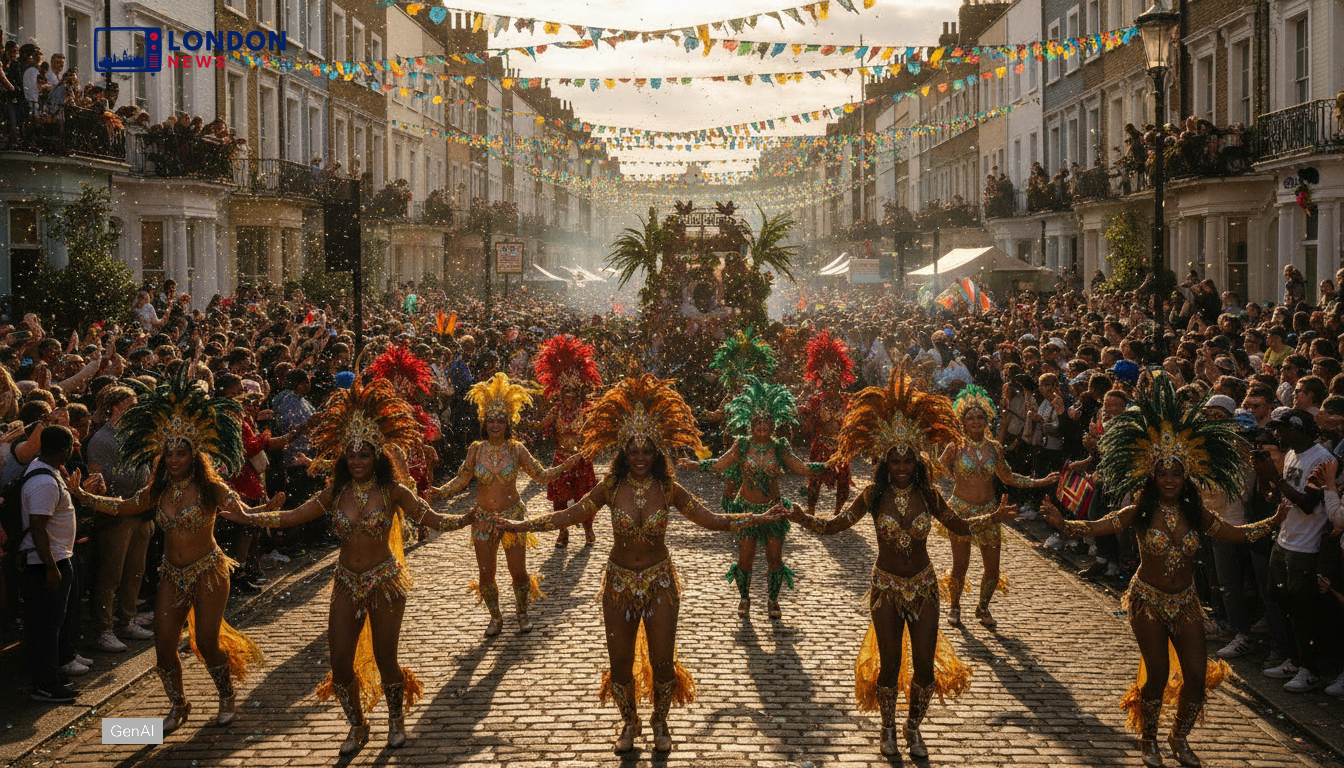
Notting Hill Carnival returned to West London for what, according to available reports, was its 60th anniversary, filling streets around Ladbroke Grove with mas bands, sound systems and steelpan. Across the Bank Holiday weekend, marshals and stewards were visible at junctions and crossing points, and organisers said teams worked to keep agreed routes clear and crowds moving. Music ranged from soca and calypso to dancehall sets, with floats often rolling steadily rather than stopping for long set pieces. Organisers repeated safety and access guidance through entrance signage and on-site teams, while food stalls typically used clear pay points and queue lanes to reduce pinch points. Residents watched from windows and doorways as the procession passed, and Notting Hill Carnival stewards were seen maintaining space for emergency access.
Notting Hill Carnival history and why it matters in London
The anniversary year renewed attention on how Notting Hill Carnival became a major cultural fixture in London, sustained by volunteer labour, community organisers and band leaders, as participants and organisers have often described. Behind the costumes and sound, planning can include permissions, stewarding plans, route discipline and coordination with local councils and police liaison teams, according to organisers’ own guidance and public-facing briefings. For a visual record of this edition, The Guardian published Costumed carnival-goers in Notting Hill in pictures, reflecting the scale of the celebrations. Notting Hill Carnival has been described by organisers as a public expression of Caribbean heritage in the capital, built through decades of club-level music culture and year-round preparation.
Notting Hill Carnival highlights from the anniversary weekend
Programming leaned on signature Notting Hill Carnival elements while, according to organisers, prioritising smooth movement and clear viewing areas. Mas bands presented themed costumes with coordinated choreography, and sound systems rotated selectors to keep transitions tight and limit downtime between sets. A separate story on transit messaging, Real-time bus information arrives on STCP WhatsApp, echoed the wider reliance on clear public updates that on-the-ground teams said helped reduce congestion. Stewards directed people toward agreed entry points and dispersal routes, and organisers framed a successful anniversary as safe dispersal and accessible streets as much as spectacle. Distinctive moments came when steel bands and DJs met in adjacent streets, creating layered sound without interrupting parade flow.
Notting Hill Carnival impact on West London culture and services
City hall and borough representatives have long treated the event as an anchor moment for summer culture, and the anniversary sharpened discussion around crowd management, licensing and public services, according to officials’ public statements over the years. Policing and stewarding were visible, but organisers typically present the approach as enabling a safe event while keeping the atmosphere informal; teams were seen focusing on junction control and maintaining emergency access. In parallel coverage of large-scale planning, UK prison overcrowding: £110m plan to add cells showed how capacity and resourcing questions surface across public policy, a theme echoed in how agencies coordinate for peak events. Notting Hill Carnival also supports local creative economies, from costume makers to sound engineers, reinforcing the overlap between street culture and professional production in West London.
Notting Hill Carnival next steps after the anniversary
Planning conversations are already shifting from commemoration to delivery, with organisers weighing what needs tightening and what must remain community led, according to people involved in preparations. Discussions about future editions focused on steward recruitment, clearer signage and predictable dispersal routes, rather than changing the musical core, organisers and band members said. Band leaders said continuity depends on keeping rehearsal spaces, storage and fabrication networks viable year-round, not only on parade days. Notting Hill Carnival teams are also testing how to communicate rules without diluting spontaneity, using brief practical messaging at entrances and key junctions. With London’s festival calendar growing more crowded, organisers said the anniversary weekend offered lessons for running a mass street event that remains celebratory while workable for residents, transport and emergency services.