Tech
Amazon starts UK drone deliveries with first drop
Amazon drone delivery begins in the UK with first parcels dropped by drone. Details on operations, public reaction, market impact, and next steps.

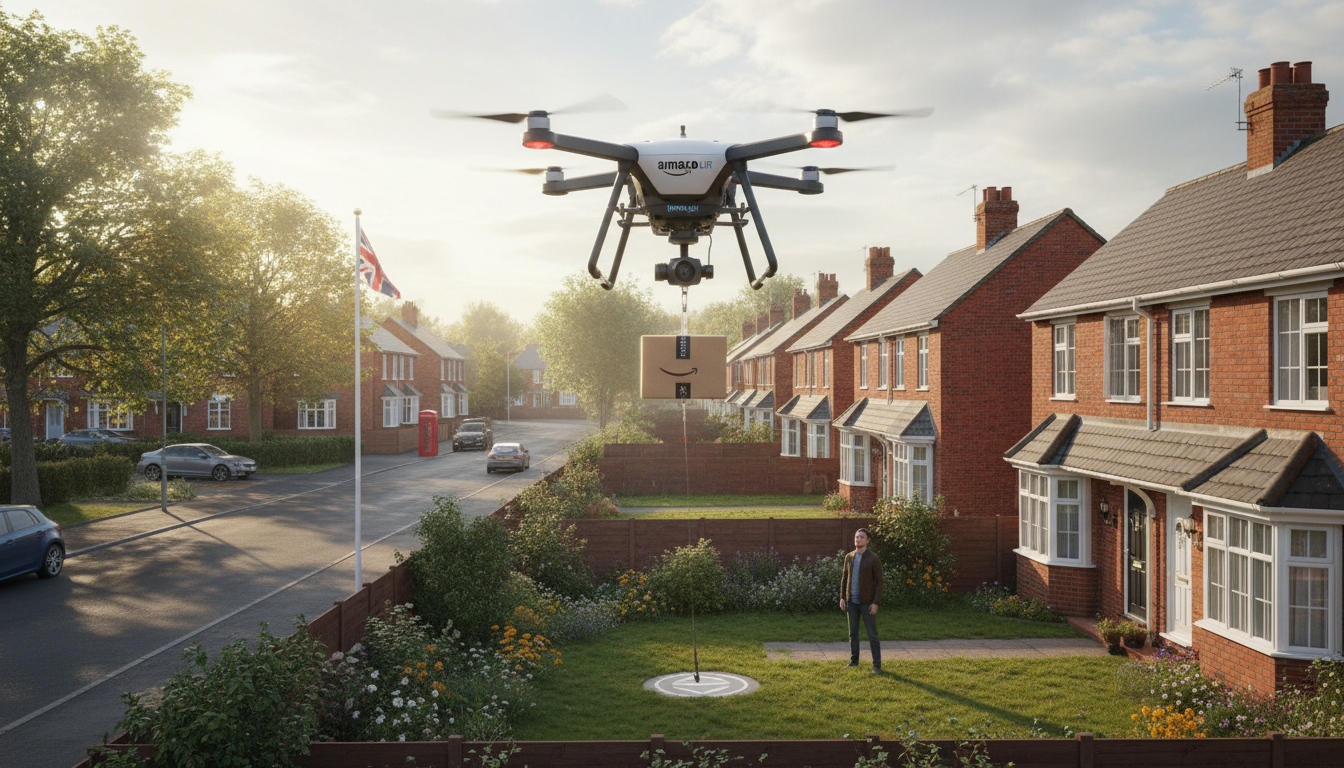
Amazon’s Newest Tech Rollout: Drones
Amazon has begun its first parcel drops by drone in the UK, turning a long trailed project into an operational service. Today, the company is positioning the change as a practical logistics step, not a lab trial, and it has started routing select orders through airborne delivery. Amazon drone delivery is being framed by the firm as a way to shorten the final leg for eligible addresses, with flight paths and landing zones set in advance. The company said customers in the initial area can receive smaller items via the programme, while standard vans still handle most volume. Live monitoring and compliance checks are part of the launch workflow.
How Drone Deliveries Will Operate
Operationally, Amazon says each mission follows pre planned routes, with staff overseeing launches and recoveries from a local site. The company told the BBC that crowds gathered to watch the first flights, and the BBC described residents arriving specifically to see the drones in action. In a Live environment, aviation permissions and safety constraints decide which orders qualify, and Amazon says deliveries are limited by weight and local conditions. For wider context on tech firms scaling new services quickly, see TechCrunch on Googles new Fitbit Air device, which details another tightly staged launch. An Update shared by the company focuses on incremental expansion, rather than an instant nationwide switch.
Public Reaction to Drone Deliveries
Public attention has been immediate because drones are visible, noisy, and unfamiliar in everyday delivery roles. The BBC quoted Amazon staff describing people turning up purely to watch, and residents interviewed by the broadcaster focused on convenience and curiosity rather than speed alone. In this phase, Amazon and drone delivery are also being judged on nuisance factors such as noise and perceived privacy, topics that local councils regularly receive complaints about. A separate reading on how audiences respond to fast moving stories can be found in Portugal’s Falesia Beach Ranked Among Europes Best as Algarve Tourism Surges Ahead of Summer Season. Any Live acceptance will depend on whether flights feel routine rather than intrusive, and Amazon will likely treat early feedback as a rolling Update for operational tweaks.
Potential Impact on UK’s Delivery Market
The immediate market question is not whether drones replace vans, but whether they reshape expectations for rapid delivery in specific suburbs and small towns. Analysts track last mile costs as a major pressure point, and fuel and labour volatility have kept pricing sensitive across the sector. Today, the competitive signal is that Amazon can trial a parallel network while still running its core fleet, which could force rivals to invest in automation or partnerships. For a separate look at cost pressure hitting travel and transport, read Airlines Introduce Fuel Surcharges as Rising Costs Push UK Prices to Three Year High. The amazon drone delivery service will be evaluated on reliability, complaint rates, and the economics of staffing launch sites, rather than spectacle. Live performance data will matter more than marketing.
Future Plans for Amazon’s Drone Fleet
Amazon has not presented the rollout as a single moment, but as a sequence of controlled expansions tied to regulatory approvals and operational milestones. The company has previously said Prime Air is designed for small, lightweight parcels, and this Amazon first drone delivery in the UK functions as a proof of day to day execution under local rules. Today, the most important Update will be whether service eligibility broadens without incident, since weather limits and airspace constraints can throttle capacity. Amazon drone delivery will also be judged by how transparently the company communicates changes in service areas and flight hours, especially once novelty fades. Live supervision will likely remain a feature until the programme demonstrates consistent safety and predictable community impact.