Business
Jaguar Land Rover pauses production at UK Solihull plant over supplier disruption

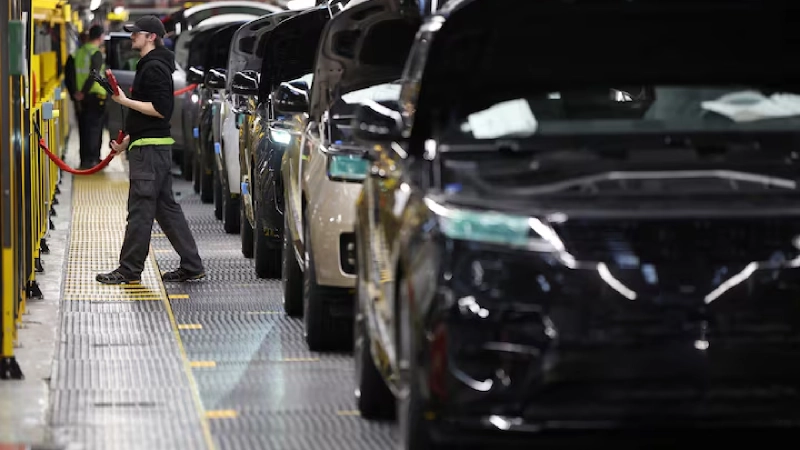
Jaguar Land Rover has temporarily suspended production on several vehicle lines at its Solihull plant in the United Kingdom following a disruption in parts supply, raising fresh concerns over the resilience of automotive supply chains. The company confirmed that the pause will last for up to two weeks, a period that also includes a pre planned Easter shutdown. The development comes as manufacturers across Europe continue to navigate component shortages, logistics constraints and shifting global demand patterns that have made production planning increasingly complex.
The production halt is expected to affect key models including the Range Rover and Range Rover Sport, both of which are central to the company’s premium vehicle portfolio. Suppliers were informed of the decision earlier, with production expected to remain paused until early April. While the company has not disclosed specific details about the supplier issue, industry observers note that even minor disruptions can quickly impact assembly lines due to the just in time manufacturing systems widely used in the automotive sector.
Jaguar Land Rover, which is owned by Tata Motors, has faced ongoing challenges in recent years linked to semiconductor shortages and broader supply chain disruptions that followed the global pandemic. Although conditions have improved compared to previous years, vulnerabilities remain, particularly when it comes to sourcing specialized components. The temporary halt highlights how dependent modern car manufacturing remains on tightly coordinated global supply networks, where delays at a single supplier can ripple across entire production systems.
Despite the pause, the company has indicated that the situation is expected to be resolved quickly, with production set to resume after the Easter period. Analysts suggest the short duration of the shutdown may limit the overall impact on output and revenue, especially if operations return to normal as planned. However, repeated disruptions of this nature could affect delivery timelines and customer expectations, particularly for high demand luxury models where waiting lists are already extended.
The latest interruption also reflects a broader trend affecting the automotive industry, where companies are increasingly reassessing supply chain strategies to reduce dependency on single sources. Manufacturers are investing in diversification, local sourcing and greater inventory buffers to improve resilience. As Jaguar Land Rover works to restore normal operations, the episode serves as a reminder of the ongoing challenges facing global carmakers as they balance efficiency with stability in an uncertain economic environment.