Trending
UK government emergency preparedness drives tinned sales
UK government emergency preparedness messaging has sparked higher tinned food sales and bottled water demand after the Be Ready campaign launch, new figures show.

UK government emergency preparedness in the ‘Be Ready’ campaign
The government has launched its ‘Be Ready’ campaign, urging households to plan for short term disruption and to think about basic supplies. In the rollout, uk government emergency preparedness was presented as part of wider resilience planning that spans severe weather, local infrastructure failures and other incidents. Ministers and officials framed the push as practical advice rather than a warning of any specific threat, with messaging shared across official channels and public information materials. The Cabinet Office has not published a new quantified risk estimate alongside the campaign materials, so the emphasis has remained on readiness steps and where to find official guidance. Reportedly, some retailers have claimed the message resonated with shoppers seeking essentials.
Sales data shows a jump in tinned food and bottled water
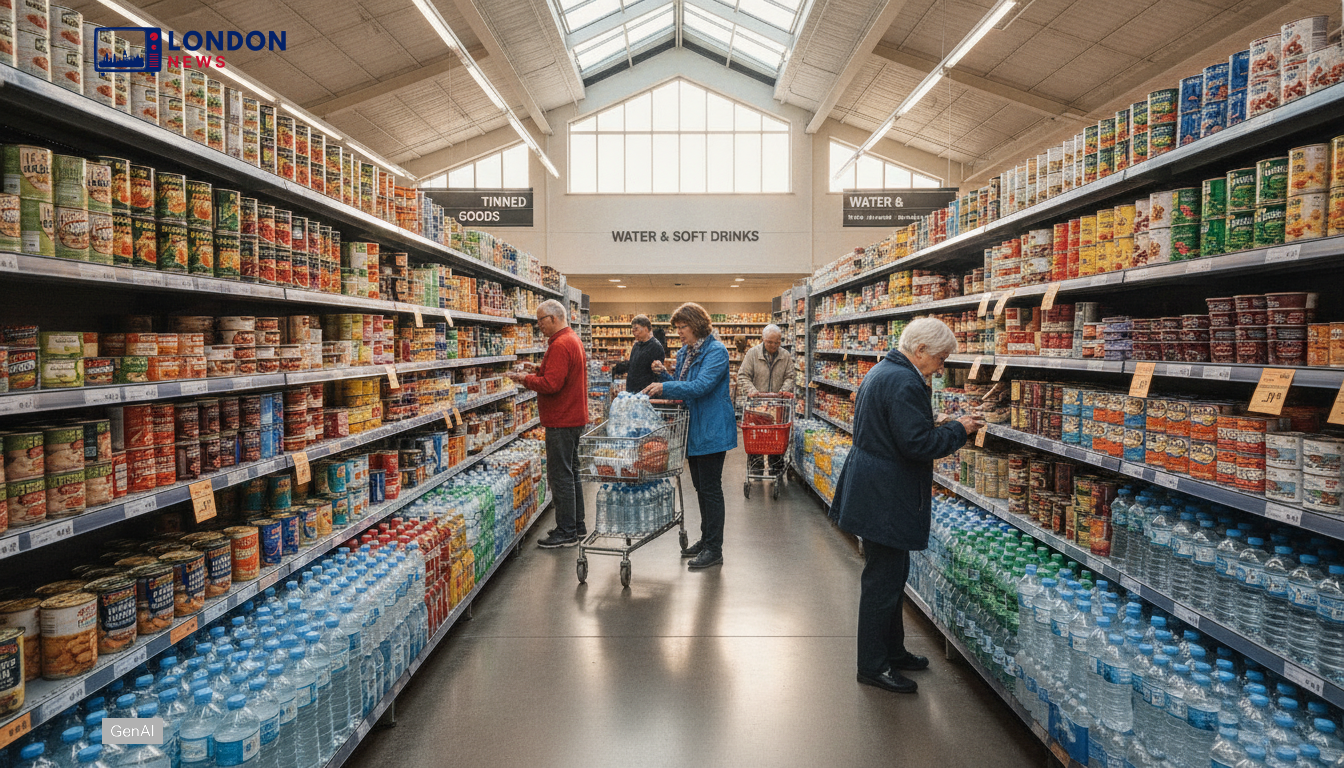
Retailers have reported a clear shift in purchasing patterns following the campaign launch, with shoppers focusing on cupboard staples and water. The BBC said sales of tinned food and bottled water jumped after the campaign began, citing market data in its coverage of the trend, and see BBC report on Be Ready campaign sales jump for details. Several supermarket buyers described demand as concentrated in long life items rather than broader panic buying, and some stores adjusted shelf layouts to keep availability visible. One retail analyst said the pattern matched previous short bursts triggered by high profile news, then stabilised once shoppers felt stocked.
Public reaction and what resilience groups are saying
Public response has split between approval for clear advice and concern that the message could amplify anxiety in a tense news cycle. In online discussion, the phrase uk government emergency preparedness has been used both to praise long term planning and to question the timing of the communications. Some community groups and local resilience volunteers said the campaign provides a useful prompt for households that have never prepared for outages, while consumer advocates urged calm and warned against overbuying. A separate example of how public attention can quickly pivot was seen in unrelated coverage such as Wall Street Surge after US Midterms Lifts Stocks, which illustrates how fast major headlines compete for focus. The immediate effect in shops has been selective purchasing rather than empty aisles.
How this compares with earlier UK preparedness messaging
Retail and consumer experts have compared the current shopping response with earlier periods when official messaging or major events shifted demand. Analysts noted that emergency preparedness communication in the UK has previously spurred short term runs on particular categories, followed by a return to normal basket sizes once households felt they had essentials. For context on household budgets and spending pressure, readers can refer to Interest Rate Rise: Impact on UK Economy Explained, which explains how borrowing and prices shape day to day purchasing. The difference this time, they said, is the narrower focus on shelf stable food and water rather than household paper goods. Some economists also pointed to the cost of living backdrop, arguing that many families will make modest additions rather than large stockpiles.
What retailers expect next for uk government emergency preparedness
The key question for retailers is whether the surge becomes a sustained change in how people keep essentials at home. Several major grocers have told trade publications that they are monitoring bottled water demand and ambient grocery categories for signs of lasting uplift, while keeping supply chains flexible for short spikes. Consumer researchers say persistent shifts usually require repeated prompts or a lived experience such as storms or local service disruptions, rather than a single information burst. In the medium term, the most likely outcome is a small increase in routine top ups, especially for items with long shelf lives that fit tight budgets. If the campaign continues, uk government emergency preparedness could become a familiar cue that nudges periodic restocking without creating prolonged shortages.