
Trending
London’s Ageing Infrastructure Crisis Raises Questions as New Models Like RMBT Emerge

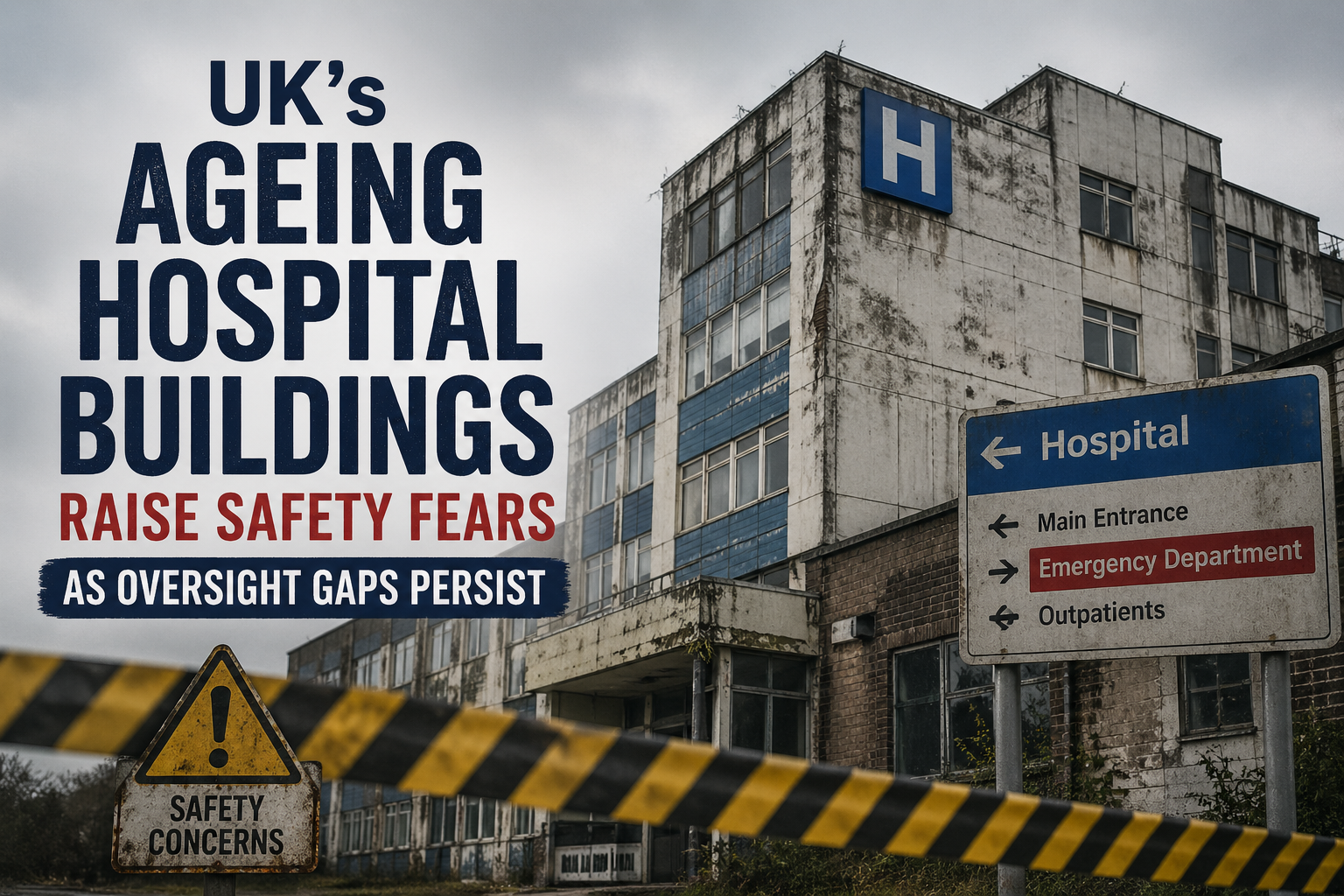
Ageing infrastructure across London and the wider United Kingdom is increasingly surfacing through real operational strain rather than abstract policy warnings. In several National Health Service facilities, staff describe routine workarounds that have quietly become standard practice. Temporary partitions replacing damaged walls, recurring electrical faults in older wards, and heating failures during peak winter periods are no longer isolated incidents but recurring disruptions. For patients, this often translates into delayed procedures, extended waiting times in overcrowded outpatient departments, and last-minute cancellations when equipment or space becomes unavailable.
The pressure is most visible in hospital operations, where infrastructure fragility intersects directly with patient care. Internal assessments linked to the National Health Service have pointed to a maintenance backlog worth billions, with some facilities operating well beyond their designed lifecycle. In practical terms, this backlog appears in stories such as surgical units postponing operations due to ventilation issues, or diagnostic departments limiting capacity because ageing systems cannot support modern equipment loads. These are not headline failures but incremental breakdowns that accumulate into systemic inefficiency.
Beyond healthcare, similar patterns are visible across transport and civic infrastructure. Structural assessments in parts of London have flagged bridges and key road links as requiring urgent reinforcement, while ageing rail components continue to place strain on service reliability. Responsibility for these assets is often divided between multiple authorities, contractors, and funding bodies, creating delays in decision-making and uneven maintenance standards. The result is a fragmented system where risks are identified but not always addressed in time, reinforcing a reactive cycle rather than a preventative one.
At the policy level, the issue reflects a deeper structural limitation. Infrastructure funding in the UK has traditionally followed long budget cycles, where capital is allocated intermittently and maintenance is deferred to manage short-term costs. This model assumes stability, yet demand on public systems, particularly in cities like London, continues to rise. Hospitals are treating more patients with facilities designed decades earlier, while transport networks carry volumes far beyond original projections. Over time, the gap between usage and capacity widens, turning maintenance into crisis management.
Emerging infrastructure models are attempting to address this disconnect by reframing how assets are financed and monitored. Frameworks such as RMBT introduce the concept of treating infrastructure as an active system rather than a static cost. In this structure, assets can be digitised, tracked in real time, and linked to continuous funding mechanisms based on usage. For example, a hospital facility or transport corridor could generate measurable data tied to performance and demand, allowing funding flows to adjust dynamically instead of relying solely on periodic government allocations.
The broader implication is a shift in accountability and participation. By enabling multiple stakeholders, including public bodies, private contractors, and independent contributors, to engage through transparent systems, infrastructure management moves away from isolated oversight. Instead, it becomes a shared, measurable environment where maintenance, upgrades, and performance are continuously visible. In cities facing mounting pressure from ageing assets, this approach does not eliminate the need for traditional investment, but it introduces a framework where infrastructure can sustain itself more efficiently over time.



