Politics
Police review evidence over £40,000 donation linked to Robert Jenrick leadership campaign amid foreign funding allegations

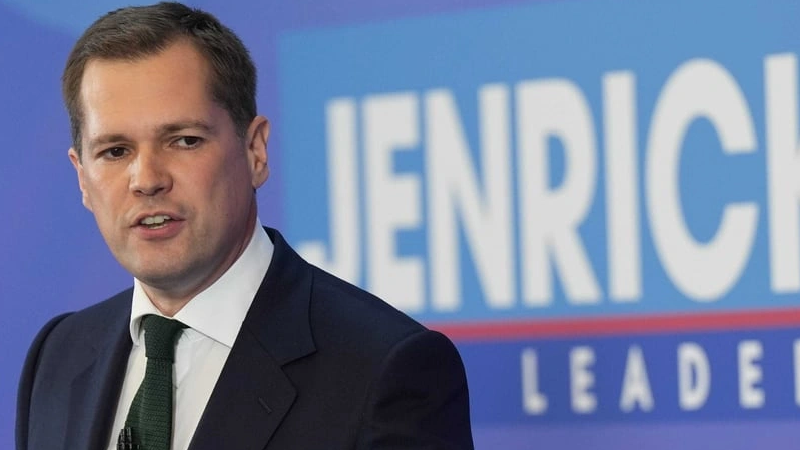
Police in the United Kingdom are currently assessing evidence referred by the Electoral Commission relating to donations made to Robert Jenrick’s Conservative leadership campaign in 2024, in a development that places renewed scrutiny on political financing rules and the handling of potential foreign contributions. The Metropolitan Police confirmed that it received a formal referral from the elections watchdog earlier this year and that the material is now under review. Officials have said no further comment can be made at this stage while the assessment continues, leaving open the possibility that the matter could either progress into a formal investigation or be closed without action depending on the findings. The case adds to growing attention around transparency in party leadership contests and how donations are declared and verified under UK electoral law.
According to details emerging from the investigation process, the Electoral Commission has been examining allegations that nearly £40,000 of donations linked to Jenrick’s leadership campaign may have originated from a foreign source, which would represent a breach of strict UK rules prohibiting overseas funding in political campaigns. The donations in question are said to have been channelled through a UK based company, The Spott Fitness, with concerns raised that a significant portion, reportedly around £37,500 of a £100,000 total donation package, may ultimately have been provided by a United States based businessman, Gary Klopfenstein, through a company he established called Innovyz USA. These allegations, if substantiated, would raise serious questions about compliance with electoral law and the integrity of donation pathways used in internal party contests.
The Electoral Commission has confirmed it conducted its own investigation into donations connected to the 2024 leadership campaign before passing evidence to the Metropolitan Police in January 2026, stating that its inquiries are now paused pending the police assessment. Under UK electoral law, political donations must come from permissible sources, which generally include individuals on the UK electoral register or companies that are properly registered and actively trading in the United Kingdom. Foreign individuals and companies are explicitly barred from influencing domestic political processes through financial contributions, making the origin and routing of such funds a key focus of regulatory scrutiny. The Commission has emphasised that it does not comment in detail on ongoing cases, maintaining procedural confidentiality as the matter progresses through the relevant enforcement channels.
A spokesperson for Robert Jenrick has strongly rejected any suggestion of wrongdoing, stating that both the candidate and his campaign team complied fully with all electoral regulations during the leadership contest. The statement further indicated that Jenrick had no knowledge of any alleged involvement by the US businessman in the donation structure and had never had any contact with him. The campaign maintains that all contributions were properly declared and processed in accordance with established legal requirements. As with many political funding disputes, the issue now hinges on establishing the ultimate source of the funds and whether due diligence procedures were sufficient at the time of acceptance and reporting.
The unfolding review highlights broader concerns about enforcement challenges in political finance, particularly where donations pass through multiple entities before reaching campaign accounts. As regulators and law enforcement agencies examine the evidence, the case is likely to intensify debate over tightening donation rules, improving transparency mechanisms, and increasing accountability for leadership campaigns within major political parties. With the Metropolitan Police still in the early stages of its assessment, no timeline has been given for a conclusion, and the outcome remains uncertain as authorities determine whether the evidence meets the threshold for a formal criminal investigation or regulatory action.