Latest News
Renewable energy shift will strengthen UK security and reduce sabotage risks minister says

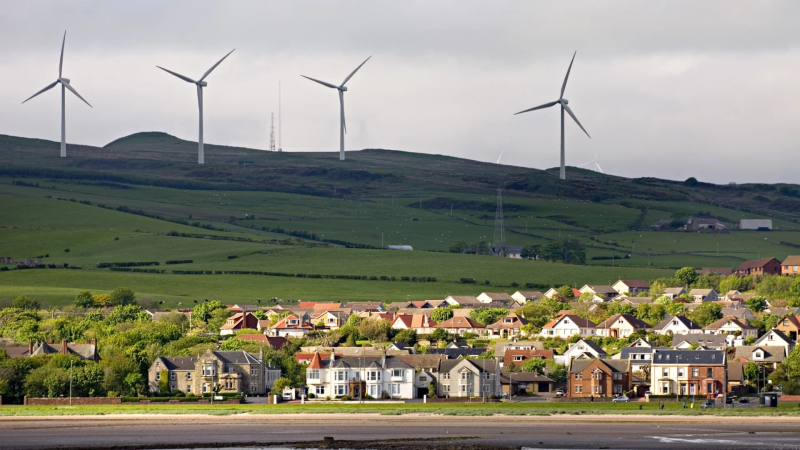
The UK government has said that expanding renewable energy infrastructure will significantly strengthen national security and improve resilience against potential threats, including sabotage and geopolitical disruption. Energy minister Michael Shanks argued that a power system built around wind farms, solar installations, and other distributed renewable assets is inherently more secure than one dependent on large, centralised fossil fuel power stations. His comments come amid ongoing global instability, including energy market volatility linked to conflicts in the Middle East and the long term impact of Russia’s invasion of Ukraine on gas supplies.
Shanks emphasised that decentralised energy systems reduce vulnerability because they spread critical infrastructure across thousands of locations rather than concentrating it in a small number of high value targets. In his view, traditional large scale power stations and refineries present more attractive and easier targets for hostile actors compared to modern renewable networks. He stated that the UK is now operating in a far more complex threat environment than in previous decades, where cyber risks, physical sabotage, and supply chain disruptions all need to be considered together when designing energy policy and infrastructure investment strategies.
The minister also pointed to the wider geopolitical context shaping energy security decisions. Recent global events have highlighted how dependent many countries remain on fossil fuel imports, with price spikes following conflicts creating immediate pressure on households and industries. By contrast, renewable energy sources such as wind and solar rely on domestic generation capacity, reducing exposure to international supply shocks. Shanks said that moving towards a cleaner energy system is not only an environmental priority but also a strategic necessity that helps protect the UK economy from external pressure and market instability.
The government’s argument is that a diversified energy grid made up of thousands of smaller renewable installations is more resilient during crises. Even if individual sites are damaged or temporarily taken offline, the broader system can continue functioning without major disruption. This contrasts with conventional energy infrastructure, where damage to a single large facility can have widespread consequences. Officials believe that as renewable capacity continues to expand across the UK, the national grid will become increasingly flexible, adaptive, and less exposed to single points of failure.
However, the transition also raises challenges around infrastructure security, grid management, and investment in storage and transmission systems. Experts note that while decentralisation improves resilience against physical attacks, it also requires stronger digital protection and coordination across a more complex network. As the UK accelerates its shift towards clean energy, policymakers face the task of balancing security, affordability, and reliability while ensuring that the system can withstand both natural and human driven disruptions in an increasingly uncertain global environment.