News
Selfies and smiles as South Korea seeks a new phase in relations with China

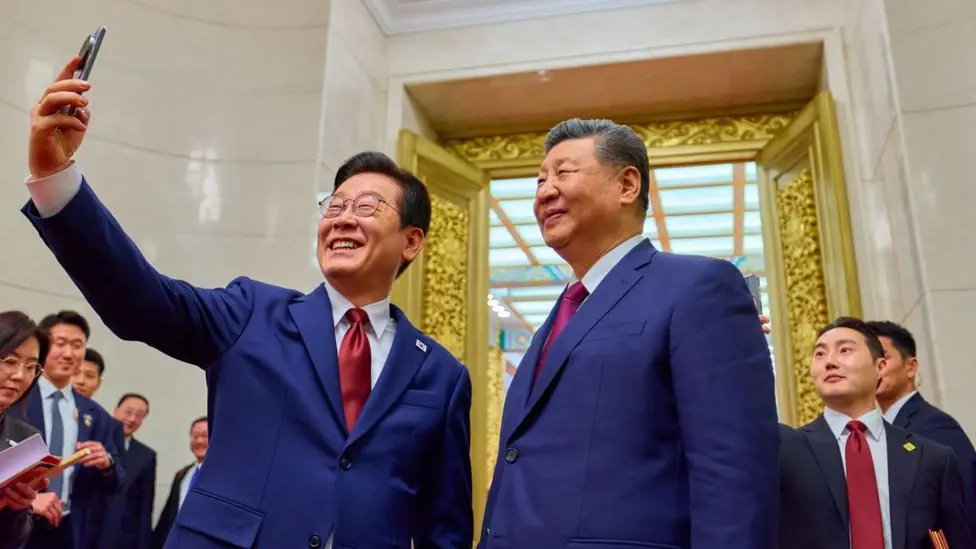
South Korea is signalling a reset in relations with China as President Lee Jae Myung called for a new phase in bilateral ties during talks with Chinese leader Xi Jinping in Beijing. The meeting marks the first visit by a South Korean president to China since 2019 and comes after several years of strained relations between the two neighbours.
The talks took place early in Lee’s four day visit to China, which is being closely watched across the region. Regional security concerns and economic cooperation featured prominently, alongside Lee’s push for progress on cultural exchanges. One of Seoul’s key goals is the lifting of Beijing’s unofficial restrictions on Korean popular culture, which have limited the presence of Korean music, television and celebrities in China for years.
Lee is also scheduled to meet Chinese Premier Li Qiang and parliament chairman Zhao Leji as part of a packed diplomatic agenda. South Korean officials say the meetings are designed to restore high level communication channels and rebuild trust after a prolonged diplomatic chill.
Relations between Seoul and Beijing deteriorated under Lee’s predecessor, former president Yoon Suk Yeol, who took a tougher stance toward China and aligned more closely with the United States and Japan. That period saw increased political tension and limited engagement, even as economic ties remained strong. Lee’s election has opened the door to a change in tone, with his administration emphasising pragmatism and balance.
Xi has also shown interest in improving ties with South Korea at a time when China’s relations with Japan have become more strained. Analysts say Beijing views Seoul as an important regional partner whose cooperation could help stabilise Northeast Asia amid growing geopolitical uncertainty.
South Korea’s position remains complex. The country is a key security ally of the United States and cooperates closely with Japan on defence and regional stability. At the same time, China is South Korea’s largest trading partner, making economic relations difficult to separate from politics. Experts say Lee is expected to continue walking a careful diplomatic line, seeking engagement with China without undermining security commitments elsewhere.
Cultural diplomacy is seen as a potential confidence building tool. The informal ban on Korean pop culture in China has been a long standing grievance in Seoul, affecting entertainment companies and broader people to people exchanges. Progress on this front would be seen domestically as a tangible benefit of improved relations.
The optics of the visit have also drawn attention. Images of relaxed exchanges, handshakes and smiles between Lee and Xi have been widely circulated, reinforcing the message of a thaw. South Korean officials say symbolism matters, especially after years of visible distance between the two governments.
Despite the positive tone, challenges remain. Differences over regional security, relations with North Korea and alignment with the United States are unlikely to disappear. Observers caution that the visit should be seen as a starting point rather than a breakthrough.
Still, the trip represents a significant diplomatic moment. By reopening dialogue at the highest level, South Korea and China are signalling a willingness to manage differences and explore cooperation. Whether this new phase leads to lasting improvement will depend on follow through, trust and the ability of both sides to balance competing strategic priorities in a tense regional environment.