Tech
Google partners with the UK to explore real world uses of quantum computing

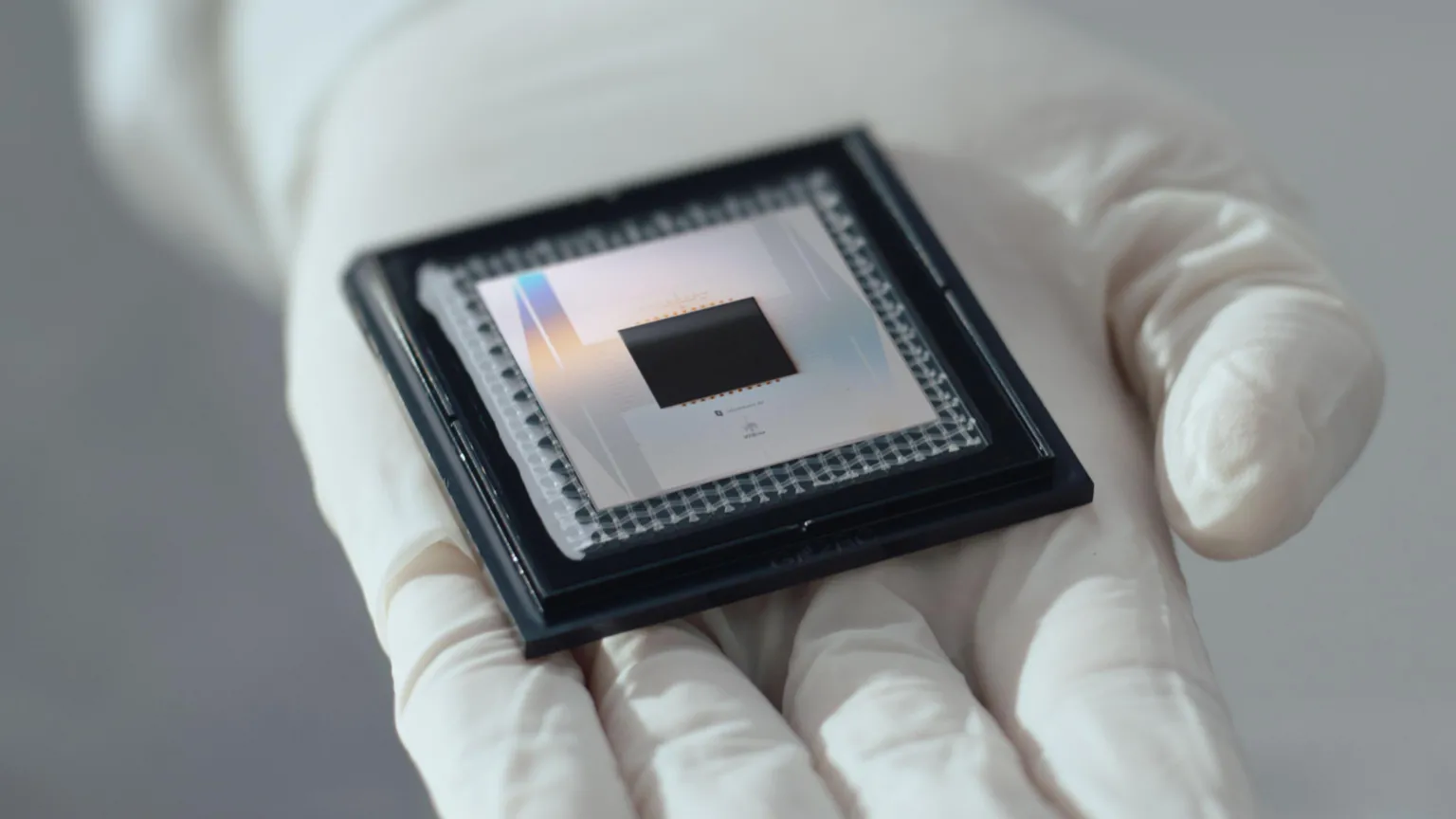
Google has announced a new collaboration with the United Kingdom aimed at unlocking practical applications for its advanced quantum processor known as Willow. The initiative will invite UK based researchers to propose ways the powerful chip could be used to tackle complex problems that are beyond the reach of today’s conventional computers. The move strengthens the UK’s position in the global race to develop useful quantum computing and opens new opportunities for academic research.
Expanding access to cutting edge technology
The partnership involves Google working alongside the UK’s National Quantum Computing Centre, allowing more researchers to access Willow through an open competition. Scientists will be invited to submit proposals outlining how they plan to use the processor and what challenges they hope to address. Successful applicants will collaborate with experts from both Google and the national quantum lab to design and run experiments, giving them hands on experience with one of the most advanced quantum systems currently available.
Professor Paul Stevenson from the University of Surrey welcomed the announcement, describing it as great news for UK researchers. He said the opportunity to access Google’s Willow processor places British academics in a highly competitive position internationally. He also noted that the collaboration benefits Google by allowing the company to tap into the deep expertise and creativity of the UK research community.
Why quantum computing matters
Quantum computing works in a fundamentally different way from traditional computers found in smartphones and laptops. Instead of relying on classical bits, quantum machines use principles from particle physics to process information in entirely new ways. This allows them to explore multiple possibilities simultaneously, making them theoretically capable of solving certain problems far more efficiently than existing systems.
Despite this promise, most quantum computers today remain experimental. Their real world applications are still limited, and researchers are actively searching for problems where quantum advantage can be clearly demonstrated. By opening access to Willow, Google and the UK hope to accelerate progress toward meaningful use cases.
From theory to real world impact
One of the central goals of the collaboration is to uncover applications that could have tangible benefits. Researchers believe quantum computing could eventually transform fields such as chemistry, materials science, medicine, and life sciences. Complex molecular simulations, drug discovery, and advanced materials design are among the areas often cited as potential breakthroughs.
Dr Michael Cuthbert, director at the National Quantum Computing Centre, said the partnership would accelerate discovery and support cutting edge science. He added that the work enabled by Willow could ultimately lead to quantum technologies being applied across a wide range of scientific disciplines, including fundamental physics.
A competitive global landscape
Google is not alone in pursuing quantum leadership. Technology giants such as Amazon and IBM are also developing their own quantum processors and platforms. When Willow was unveiled in twenty twenty four, it was widely seen as a significant step forward, reinforcing the intense competition among major players in the field.
The UK itself has a growing quantum industry. Quantinuum, a company headquartered in Cambridge and Colorado, reached a valuation of ten billion dollars in September. The National Quantum Computing Centre already hosts seven quantum computers built by British firms including Quantum Motion, ORCA, and Oxford Ionics, highlighting the depth of domestic capability.
Government backing and economic ambition
Quantum computing is a priority area within the UK’s Industrial Strategy. The government has committed six hundred seventy million pounds to support the sector, reflecting confidence in its long term potential. Officials estimate that quantum technologies could contribute eleven billion pounds to the UK economy by twenty forty five.
With sustained investment and partnerships like the one with Google, policymakers believe the UK can remain at the forefront of this emerging technology.
Looking toward the next decade
Recent announcements throughout twenty twenty five have led many experts to believe that quantum machines capable of real world impact could emerge within the next decade. While challenges remain, expanding access to advanced processors like Willow represents a crucial step forward. For UK researchers, the collaboration offers both opportunity and responsibility to help shape how quantum computing moves from theory into practical reality.