Latest News
Remains of baby boy found wrapped in 1910 newspaper laid to rest in UK after century long mystery

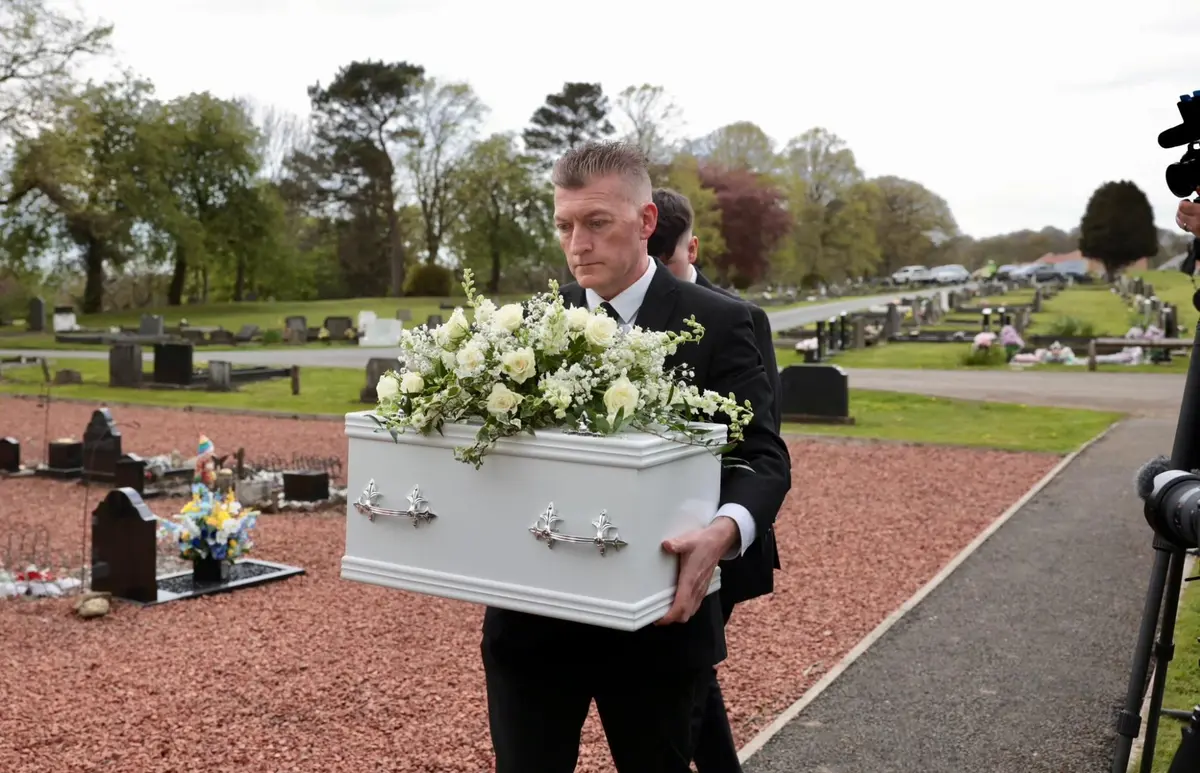
The remains of a baby boy discovered wrapped in a 1910 newspaper and hidden beneath the floorboards of a Victorian property in Bishop Auckland, County Durham, have been laid to rest in a burial service described as both emotional and respectful. The child, known as Baby Auckland, was found during renovation work in July 2024, more than a century after his death, in circumstances that continue to puzzle investigators and historians alike. The discovery prompted a detailed police investigation, but despite extensive efforts, the identity of the baby and the cause of death remain unknown.
The burial took place at Bishop Auckland town cemetery, where a small service was held to finally provide the child with a dignified resting place. The case has drawn significant public interest due to its unusual nature and the historical mystery surrounding it. The baby’s remains were found carefully preserved under floorboards, wrapped in a newspaper dating back to 1910, with twine around the neck. Forensic experts determined that the child was likely full term, around 40 weeks of development, but no conclusive cause of death could be established even after a postmortem examination at the Royal Victoria Infirmary in Newcastle.
Detectives leading the investigation described the process as both complex and emotionally challenging. A forensic anthropologist was brought in to carefully excavate the remains to ensure as much preservation as possible. Officers confirmed that nearly all of the skeleton was recovered intact, with only a small bone missing. Despite appeals for information and attempts to trace possible relatives through DNA testing, no matches were found, leaving the identity of the child unresolved.
During the investigation, police received a number of responses from the public, including individuals who believed they might have links to the case. Samples were collected and compared against the remains, but none produced a match. The lack of identifying records or surviving documentation from the period has further complicated efforts to uncover the truth, highlighting the difficulties of investigating historical cases where evidence is limited and time has erased many potential leads.
The detective leading the case said the burial marked an important moment in providing dignity to the child after more than 100 years. He described the process as deeply emotional and acknowledged the frustration of not being able to answer key questions about how the baby died or who was responsible for his burial in such unusual circumstances. While the investigation has now reached a natural pause point, the case remains open in principle, with authorities stating they would reconsider any new information that might emerge in the future.
For now, Baby Auckland rests in a marked grave, bringing a quiet conclusion to a mystery that has spanned more than a century and left behind more questions than answers.