Business
£18bn pothole bill exposes UK road maintenance strain
England and Wales face an £18bn pothole repair gap. See how the pothole crisis drives road repair costs, hits local economies and strains UK infrastructure.

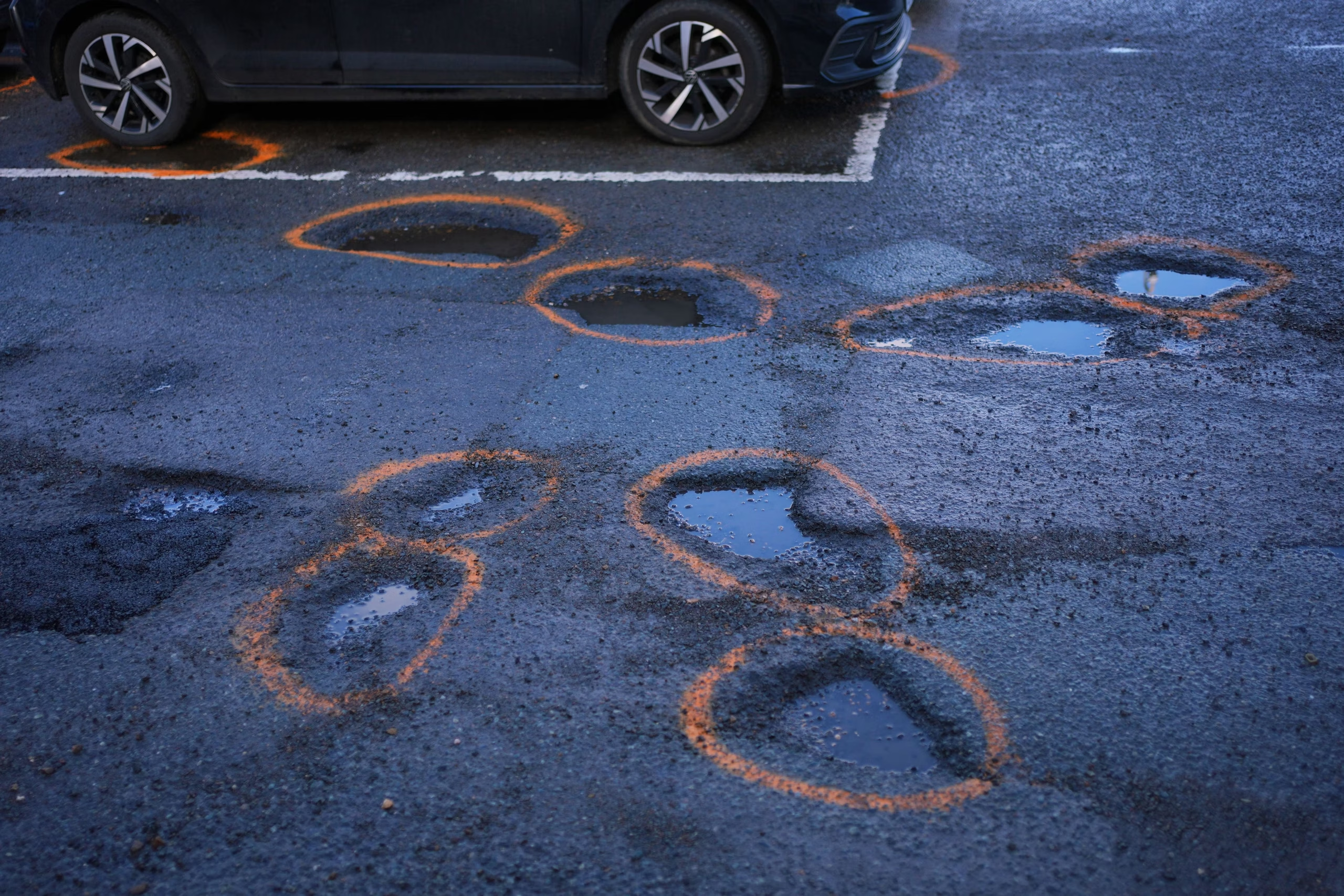
Overview of the Pothole Problem
£18bn is the scale of funding road surfacing experts say is required to bring roads in England and Wales back to an acceptable standard, and it frames the current debate on UK road maintenance as a national competitiveness issue. The estimate points to a backlog created by repeated short-term patching, harsher weather cycles and rising materials prices, leaving local networks to fail faster than they can be renewed. That deterioration is no longer confined to rural lanes; it is visible on commuter corridors, freight routes and estate roads where heavy vehicles accelerate cracking and water ingress. Reporting on the figures has highlighted the widening gap between what councils can spend and what road users experience, as detailed in this BBC report on the £18bn resurfacing estimate.
Economic Impact on Local Communities
The pothole crisis carries a direct local price tag that goes beyond the obvious repair bill. Vehicle damage costs borne by households and small firms drain disposable income and working capital, while delivery delays hit productivity for tradespeople, retailers and care services that rely on tight schedules. Insurers and fleet operators also price risk into premiums and contracts, which filters into higher costs for consumers. In tourism-heavy towns, rough approaches to seafronts, heritage centres and event venues reduce visitor satisfaction and repeat trade, even when the destination offer remains strong. The economic effect is especially sharp where public transport is thin and driving is unavoidable, turning road condition into a constraint on labour mobility. Wider pressure on budgets links with other cost-of-living stresses covered in UK Energy Bills Reform: VAT and Levy Plans, showing how infrastructure neglect compounds household strain.
Challenges in Road Maintenance
Delivering durable repairs at scale is difficult because the operational realities of roadworks clash with public tolerance and council capacity. Crews often work around peak traffic to limit disruption, but night shifts can add cost and reduce available labour, while winter emergency call-outs break planned programmes. The most expensive failures are those caused by water entering weak surfaces; once freeze-thaw cycles begin, the road can unravel in weeks, not years, forcing reactive interventions that are poor value compared with full resurfacing. Road repair costs have also risen with bitumen and energy prices, and with tighter rules on waste handling and recycling of old tarmac. When budgets are annual and uncertain, authorities default to cheaper, thinner treatments that look tidy at handover but do not arrest deeper base-layer decay, leaving a recurring liability rather than a one-off fix.
Government’s Road Repair Strategy
Government has pushed councils to demonstrate results through reporting and incentives, aiming to shift spending from emergency patching toward preventative renewal across UK infrastructure. The effectiveness of that approach depends on stable multi-year settlements and on whether funding allocations reflect the true condition of local roads rather than political convenience. National policy can nudge consistency through shared standards, better asset surveys and transparent performance measures, but it cannot replace the engineering reality that reconstruction is needed where foundations have failed. A credible strategy also has to manage disruption: long closures can be necessary to achieve lasting outcomes, yet public patience is limited when detours delay commuting and logistics. The tensions are familiar to London drivers facing planned upgrades such as the major A40 closure planned in west London, illustrating how capacity constraints complicate renewal even on strategic routes.
Future Solutions and Innovations
Future progress will come from treating roads like critical assets rather than a political afterthought, using better data and stronger procurement to target the worst-value failures. Advanced condition monitoring, including sensor-led inspections and higher-resolution surface scanning, can pinpoint where early intervention prevents later collapse, reducing the lifetime cost of maintenance. Materials innovation also matters: polymer-modified asphalts, improved drainage design and warmer-mix techniques can extend service life while lowering energy use, though each requires rigorous trials and consistent quality control. The biggest gain, however, is managerial: coordinated utility works, clearer reinstatement accountability and enforceable warranties would stop freshly laid surfaces being cut open repeatedly and repaired inconsistently. The prize is not cosmetic smoothness; it is a safer, faster, more reliable network that supports commerce, reduces claims and keeps journeys predictable, aligning transport resilience with broader growth priorities tracked in UK Government Faces Growing Pressure to Support Economic Growth as Outlook Weakens.