News
Aldrich Ames, CIA Double Agent Who Betrayed US Intelligence, Dies Aged 84


Aldrich Ames, one of the most damaging double agents in United States intelligence history, has died at the age of 84. His espionage activities during the Cold War shook the American intelligence community and led to the exposure, imprisonment and execution of multiple US assets inside the Soviet Union.
Ames was a veteran officer of the Central Intelligence Agency who, while entrusted with some of the agency’s most sensitive counterintelligence work, secretly sold classified information to the Soviet Union and later to Russia. His betrayal is widely regarded as one of the gravest intelligence failures in modern US history.
Born in Wisconsin in 1941, Ames was introduced to the world of intelligence at an early age. His father also worked for the CIA, and Ames joined the agency in the early 1960s. Over the years, he held postings in Turkey, Mexico and at CIA headquarters in Langley, gradually rising through the ranks. By the late 1980s, he was working in counterintelligence, a role that gave him access to the identities of US informants operating inside the Soviet Union.
Beginning in 1985, Ames started passing secrets to Soviet intelligence in exchange for cash. His motivations were largely financial. He was heavily in debt and living beyond his means, yet his sudden unexplained wealth went unnoticed for years. During this period, dozens of US intelligence sources were compromised. Several were arrested, and at least ten are believed to have been executed.
The damage caused by Ames was catastrophic. American intelligence networks painstakingly built over decades collapsed almost overnight. Inside the CIA, suspicion and paranoia spread as officers struggled to understand how so many operations had been exposed. The failure to detect Ames earlier led to deep institutional soul searching and reforms within US counterintelligence practices.
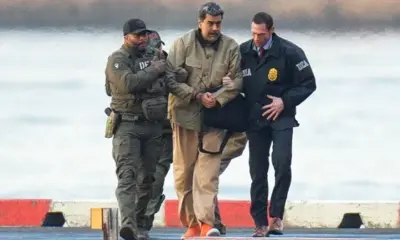
Ames was finally arrested in 1994 following an internal investigation that uncovered glaring discrepancies between his lifestyle and his official salary. He pleaded guilty to espionage charges in order to avoid the death penalty and was sentenced to life imprisonment without the possibility of parole. His wife, who was also implicated, received a reduced sentence.
At his sentencing, Ames showed little remorse, a stance that further angered colleagues and families of compromised agents. He defended his actions as ideological disillusionment mixed with personal grievance, though many dismissed this as self justification.
The Ames case reshaped how the CIA monitors its own staff. Financial disclosure rules were tightened, internal surveillance was expanded and the agency acknowledged that trust alone was not enough to safeguard national security. The episode remains a case study in how insider threats can inflict extraordinary damage.
Even decades later, Ames’ name is synonymous with betrayal in intelligence circles. Former colleagues have described him as methodical, cold and devastatingly effective in the harm he caused. His actions undermined not only specific operations but also confidence in the CIA’s ability to protect its own sources.
Ames spent the remainder of his life in federal prison, largely out of public view. His death closes the final chapter on a figure whose legacy remains deeply controversial and painful for the US intelligence community.
He leaves behind a cautionary tale that continues to inform counterintelligence doctrine worldwide. The story of Aldrich Ames is not simply one of espionage, but of how a single insider can alter the course of global intelligence history.