Tech
How Meme Culture Is Changing the Way We Understand the Economy

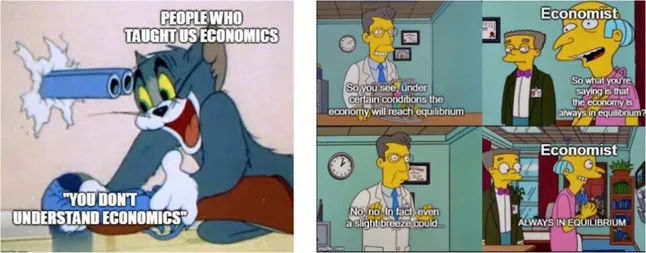
Economic discussion is no longer confined to financial pages, academic reports or policy briefings. Increasingly, it is unfolding through memes, short videos and viral posts that circulate rapidly across digital platforms. Meme culture has become a powerful force in shaping how people perceive and talk about the economy, transforming complex concepts into instantly recognisable symbols.
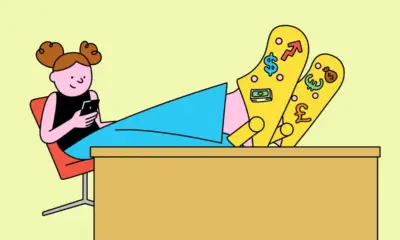
At its core, meme culture simplifies. Inflation, interest rates and market volatility are abstract ideas that can feel distant or intimidating. Memes reduce these concepts to emotional shorthand. A rising graph becomes a joke about groceries. A falling chart turns into a punchline about regret. While the humour is obvious, the effect is more subtle. Memes make economic issues accessible to audiences who might otherwise disengage.
Technology has accelerated this shift. Platforms such as X, TikTok and Instagram reward content that is quick, visual and emotionally resonant. Economic memes thrive in this environment because they communicate shared experiences efficiently. A single image or caption can express frustration, disbelief or resignation more effectively than a paragraph of analysis.
This new language has changed who participates in economic conversation. Traditionally, economic discourse was dominated by experts and institutions. Meme culture lowers the barrier to entry, allowing anyone to comment, reinterpret or critique economic realities. In doing so, it decentralises narrative control. Official explanations compete with grassroots interpretations that spread faster and often resonate more strongly.
However, accessibility comes with trade offs. Memes prioritise relatability over precision. Nuance is often lost in favour of impact. Economic cycles become moral stories, markets are framed as chaotic forces, and policy decisions are reduced to personal consequences. While this can sharpen emotional understanding, it can also distort context.
The influence of meme culture is particularly visible during periods of volatility. When markets swing or prices rise suddenly, memes appear almost instantly. They act as real time commentary, offering collective reaction before formal analysis emerges. In this sense, memes function as a social barometer, revealing how people feel about economic events rather than explaining why they occur.
Institutions have struggled to respond to this shift. Traditional communication styles appear slow and detached when contrasted with viral content. Some organisations attempt to adopt meme language to appear relatable, but this approach carries risk. When humour feels forced or opportunistic, audiences quickly reject it. Authenticity is difficult to manufacture, especially in environments shaped by irony.
Despite concerns about oversimplification, meme culture also highlights genuine gaps in economic communication. The popularity of financial memes suggests a desire for understanding that is unmet by existing channels. People want explanations that connect policy decisions to lived experience. Memes fill that gap emotionally, if not analytically.
There is also an educational dimension. Some creators use meme formats to introduce basic economic concepts, blending humour with explanation. While this cannot replace formal education, it can spark curiosity and encourage further learning. In this way, meme culture acts as an entry point rather than an endpoint.
Critics worry that constant humour fosters cynicism. When every economic development is framed as a joke, trust in systems and institutions may erode further. Persistent irony can blur the line between critique and disengagement, making it harder to mobilise collective action or sustained attention.
Yet meme culture also reflects adaptation. In an era of frequent economic disruption, humour offers a way to process uncertainty without becoming overwhelmed. It allows people to acknowledge hardship while maintaining emotional distance. This does not eliminate impact, but it shapes response.
Technology has not just changed how economies function. It has changed how they are understood. Meme culture represents a new interpretive layer, one that prioritises speed, emotion and shared experience. While it cannot replace rigorous analysis, it has become an influential part of the economic conversation.
As digital platforms continue to shape public discourse, understanding meme culture is increasingly important for anyone seeking to communicate about the economy. In a world where attention is scarce, a single image can sometimes speak louder than a thousand words.