
Tech
Nvidia stock surge as Huang returns, market value jumps
Nvidia stock surge follows Jensen Huang’s return, lifting Nvidia stock price and fuelling a tech rally as traders watch a sharper Nasdaq rise.

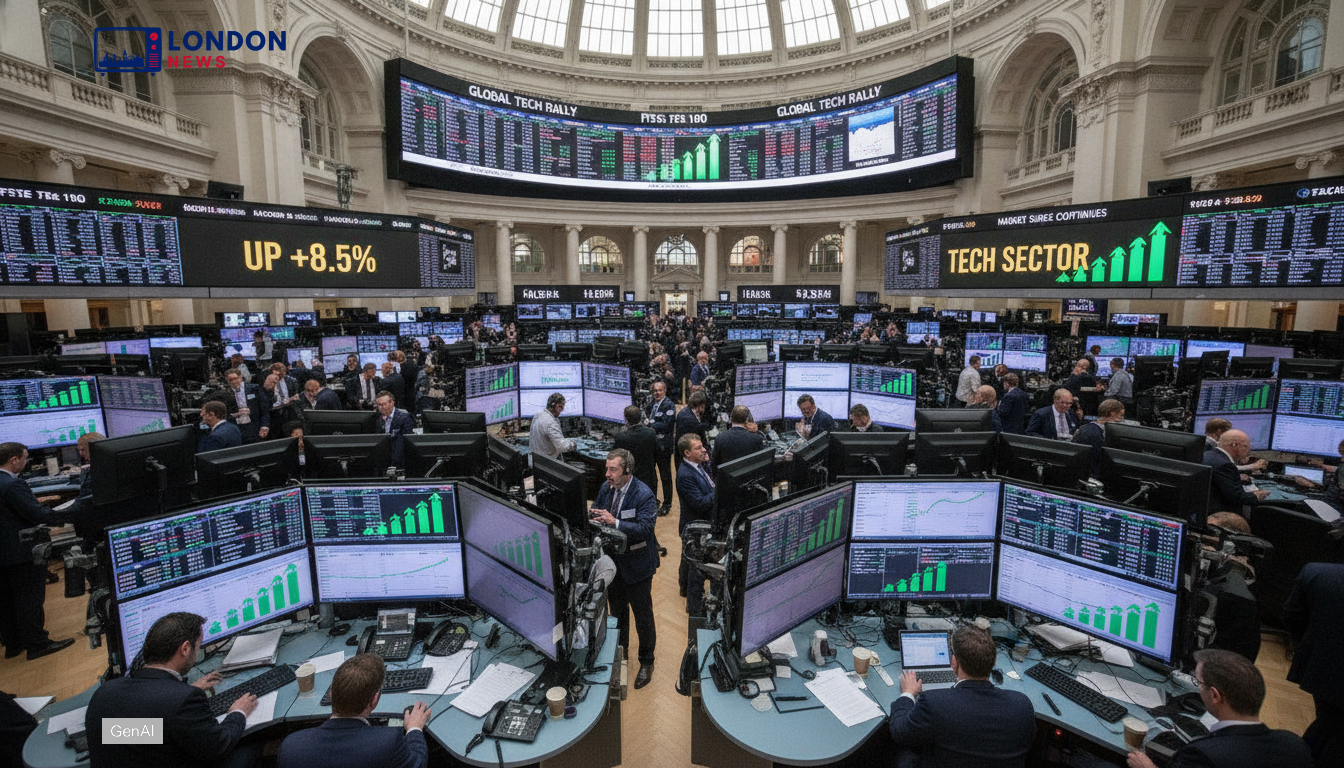
What the Nvidia stock surge means for investors
Trading in Nvidia drew outsized attention as buyers chased large-cap AI names, with reports indicating options activity helped amplify the move. In midday dealings, available reports suggest that Nvidia’s market value appeared to climb by almost $1tn in a single session as sentiment swung toward mega caps with direct exposure to data centre spending. Shares moved higher alongside peers tied to advanced chips and server buildouts, while desk notes referenced liquidity, positioning, and index mechanics rather than any single product release, according to traders. For investors, the question was whether the repricing reflected durable demand signals or a momentum-driven squeeze that could fade.
Market value jump and drivers behind the move
Traders described the jump as a rapid re-rating that spread through derivatives and passive flows, with index positioning helping to accelerate the move. Available reports highlighted the near $1tn change in market capitalisation as a headline figure that drew attention across Wall Street. The rally broadened into a tech-led bid that lifted other chip and software names as short covering met fresh inflows. Conference chatter about the wider ecosystem also fed the narrative, including discussion around Web Summit storm impact as Charles halts day two, and it was during the same session that the Nvidia stock surge became a reference point in desk conversations about positioning. The tone in client notes was less about sector rotation and more about concentration in perceived AI beneficiaries, traders said.
Jensen Huang return and leadership signal
Some investors linked part of the price action to the Jensen Huang return, treating his visibility as a confidence signal on execution and messaging. Indications suggest traders viewed leadership presence as supportive after a period of uncertainty and heightened scrutiny of guidance. That mattered for risk sizing because the move in Nvidia shares was discussed as being driven by expectations of continuity rather than a discrete earnings datapoint, according to market participants. TechCrunch coverage added colour on the leadership debate in Jensen Huang views on succession planning. Portfolio managers also argued that leadership tone can affect perceived operational risk and the credibility of forward targets, according to client notes.
Nasdaq rise and spillover across US tech
With Nvidia’s index weight doing more work, traders pointed to a clearer Nasdaq rise driven by a narrow group of mega-cap winners. Available reports linked the day’s impulse to a tech-led bid that lifted benchmarks even as other sectors lagged, keeping market breadth under watch. UK-based investors monitoring US tech exposure discussed knock-on effects for retail platforms and sentiment, with separate attention flowing to unrelated domestic stories such as GTA 6 launch timer: UK unlock times and rollout and Angela Rayner leasehold property reform timetable, while derivatives desks tracked how the move could affect index rebalancing and volatility pricing into upcoming macro releases. The practical takeaway for allocators, according to strategists, was concentration risk in index performance.
What comes next for Nvidia stock price momentum
Forward positioning now focuses on whether the move can hold without fresh fundamental catalysts and whether peers can sustain similar multiple expansion. Depictions of an almost $1tn valuation swing set a high bar for follow-through, making upcoming corporate communication and demand signals critical for sentiment, according to market commentary. A separate TechCrunch report, all-hands remarks from Jensen Huang, underscored how closely markets parse tone as well as numbers, and traders also watch how management messaging lands with employees and investors, with culture and execution increasingly treated as valuation inputs, according to analysts. The broader tech complex remains directed by AI infrastructure spending, liquidity conditions, and any shift in rates expectations, according to strategists.