News
Zelensky Says Allies Have Yet to Offer Clear Security Guarantees for Ukraine

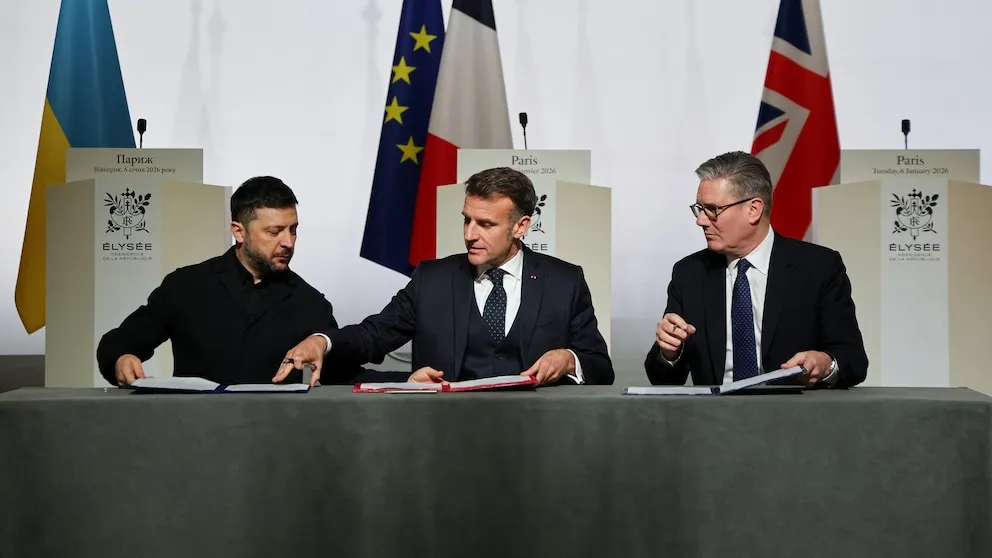
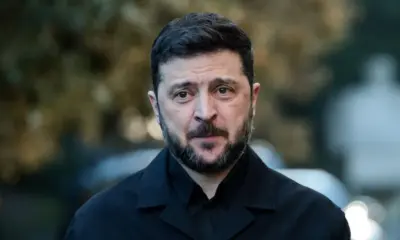
Ukrainian President Volodymyr Zelensky has said that Kyiv still lacks clear and firm security guarantees from its allies, warning that uncertainty over future protection leaves Ukraine vulnerable in the event of renewed Russian aggression.
Speaking to reporters on Wednesday, Zelensky said he has repeatedly raised the issue with European and international partners but has yet to receive a definitive commitment. He described the responses so far as supportive in tone but lacking the clarity needed to reassure Ukraine about its long term security once active hostilities subside.
“I am asking this very question to all our partners and I have not received a clear, unambiguous answer yet,” Zelensky said, underscoring Kyiv’s concern that a ceasefire or peace deal without enforceable guarantees could simply freeze the conflict rather than resolve it.
His remarks came a day after the United Kingdom and France signed a declaration of intent signalling their willingness to deploy troops to Ukraine if a peace agreement with Russia is reached. The proposal is intended to help deter future attacks and stabilise the country during a post war transition.
While the declaration marked a notable step, it stopped short of a binding security guarantee. Officials familiar with the talks said the document outlines political intent rather than a formal defence obligation, leaving key questions about scale, mandate and enforcement unresolved.
Zelensky welcomed the gesture from London and Paris but made clear that Ukraine needs more than symbolic assurances. Ukrainian officials argue that past agreements and memorandums failed to prevent Russia’s invasion, making concrete and enforceable commitments essential this time.
The uncertainty was compounded by the absence of a similar pledge from the United States. Washington, which has led diplomatic and military support efforts since the war began, reportedly did not sign onto a collective security guarantee during talks held in Paris on Tuesday. US officials have not publicly ruled out future commitments but have so far avoided binding promises.
Analysts say the hesitation reflects political sensitivities in Western capitals. Deploying troops or extending explicit security guarantees carries risks of escalation and domestic opposition, particularly if such commitments are perceived as open ended. For the United States, formal guarantees could also raise questions about congressional approval and long term military obligations.
For Ukraine, however, the stakes are existential. Zelensky has consistently argued that without credible guarantees, Russia could regroup and renew its offensive once conditions allow. Kyiv is seeking assurances that would either deter such action outright or ensure immediate and decisive support if deterrence fails.
European leaders have attempted to balance reassurance with caution. Some officials have suggested that layered security arrangements, combining military presence, monitoring mechanisms and long term defence assistance, could provide protection without full NATO style guarantees. Others remain sceptical, warning that ambiguity could invite miscalculation.
The debate highlights a central dilemma facing Ukraine’s allies. While there is broad agreement on supporting Kyiv and preventing a Russian victory, consensus breaks down when it comes to committing forces or formal obligations beyond the battlefield.
As diplomatic efforts continue, Zelensky’s comments signal growing impatience in Kyiv. For Ukraine, ending the war without clear security guarantees risks repeating the past. Whether allies can bridge the gap between political support and binding commitments may determine whether any future peace proves durable or merely temporary.