Politics
Zahawi’s Jump to Reform Marks a Strategic Moment With Clear Risks for Farage

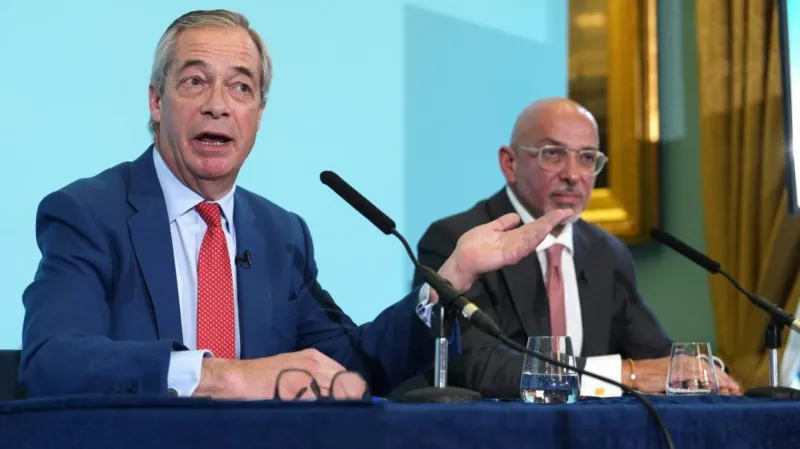
The decision by Nadhim Zahawi to join Reform UK has landed as one of the most eye catching political moves in recent years. It signals momentum for Nigel Farage’s party, but it also exposes underlying tensions about what Reform wants to be and how quickly it hopes to get there. The move matters, but it is far from risk free.
Why Zahawi’s move stands out
Zahawi is not just another former Conservative drifting toward Reform. He is arguably the most senior figure to make the jump so far from the Conservative Party. His government record is substantial. He played a key role in overseeing the Covid vaccine rollout, one of the most widely praised policy operations of the pandemic era. He later served as education secretary and, albeit briefly, as chancellor.
Perhaps most significantly, Zahawi held one of the most senior posts at the Cabinet Office, placing him at the centre of Whitehall decision making. This background gives him something Reform has often lacked. Institutional experience of how government actually functions.
What Reform gains from the switch
For Nigel Farage, Zahawi’s arrival strengthens a long held argument. Farage has been clear that if Reform is to be taken seriously as a party of government rather than protest, it needs figures who understand the machinery of the state. Zahawi fits that requirement better than almost anyone else currently aligned with the party.
His presence may reassure some voters who like Reform’s message but doubt its readiness to govern. It also sends a signal to other disaffected Conservatives that switching sides is no longer a leap into the unknown but a viable political pathway.
The risk of alienating Reform’s base
Yet Zahawi’s strengths are also potential liabilities. Reform has built its appeal on anti establishment sentiment, positioning itself as an outsider force against Westminster orthodoxy. Zahawi, by contrast, is a textbook establishment figure. Years in cabinet, deep Whitehall ties and close association with Conservative governments may sit uneasily with Reform supporters who want a clean break from traditional politics.
There is a real risk that voters attracted to Reform precisely because it rejects career politicians may question whether the party is diluting its identity. Balancing experience with authenticity will become harder as more figures like Zahawi arrive.
A problem of political baggage
Zahawi also brings personal and political baggage. His time in government was not without controversy, particularly around questions of judgment and transparency. While his supporters emphasise competence and delivery, critics will ensure that past issues resurface quickly.
For Reform, which has sought to portray itself as ethically distinct from the Conservatives, this could complicate messaging. Farage’s party may find itself defending figures it once criticised, blurring lines it previously drew sharply.
What this means for Conservative fragmentation
Zahawi’s decision reflects deeper fractures within the Conservative Party. It suggests that Reform is no longer merely siphoning protest votes but attracting experienced politicians who see no future in their former home. That is a strategic threat to the Conservatives, particularly if more senior figures follow.
However, it also places Reform in a delicate position. The more it resembles a rebranded Conservative vehicle, the harder it becomes to claim radical difference.
Reform’s transition from insurgent to contender
The broader question is whether Reform can successfully evolve from insurgent movement to governing contender without losing what made it distinctive. Zahawi’s move accelerates that transition, but transitions carry risk.
Experience alone does not guarantee credibility. Voters will judge whether Reform can integrate figures like Zahawi into a coherent team rather than a collection of political refugees.
A calculated gamble for Farage
Ultimately, Zahawi joining Reform is a calculated gamble. It strengthens the party’s claim to seriousness and readiness, while simultaneously testing its identity and internal coherence. For Farage, the challenge is to harness Zahawi’s expertise without undermining the outsider appeal that built Reform’s support.
The move matters, but its success will depend less on Zahawi himself and more on whether Reform can grow up politically without losing its soul.