News
Yemen Separatist Leader Accused of Treason as Saudi Coalition Strikes Escalate Tensions

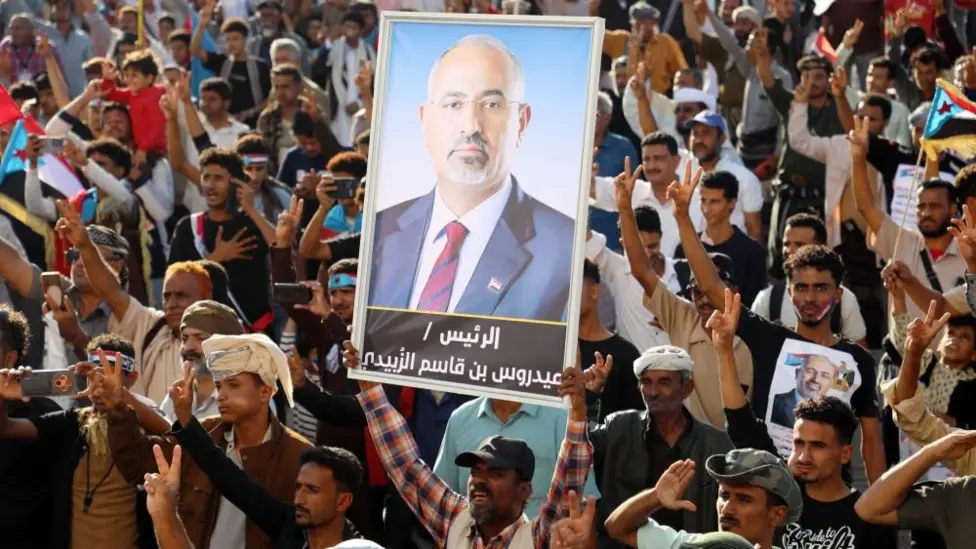
Yemen’s fragile political balance has been shaken after the Saudi backed presidential council accused a leading separatist figure of treason, a move that was swiftly followed by Saudi led air strikes on forces linked to the southern movement. The developments underline the deepening fractures within the anti Houthi camp and raise fears of renewed internal conflict.
The presidential council said it had expelled Aidarous al-Zubaidi after he failed to travel to Riyadh for scheduled talks. Zubaidi leads the Southern Transitional Council, which is backed by the United Arab Emirates and seeks greater autonomy or independence for southern Yemen. Six other members of the council accused him of undermining the unity and independence of the republic.
According to a statement issued by the Saudi led military coalition, Zubaidi did not board a flight from Aden with other STC officials and instead moved a large force toward al Dhale province. Coalition officials claimed the deployment posed a direct threat to stability and said aircraft were launched to strike the advancing units. The coalition described Zubaidi as having fled and framed the air strikes as a defensive response.
The STC rejected that account, calling the air strikes unjustified and disputing claims that Zubaidi had left Aden. The group said the attacks killed at least four people and accused the coalition of escalating tensions at a sensitive moment. It insisted that Zubaidi remained in the southern port city and denied that its forces were mobilising for confrontation.
The clash highlights long standing tensions within Yemen’s internationally recognised camp. The presidential council, formed to unify rival factions against the Houthi movement, has struggled to impose authority over competing armed groups with differing agendas. While Saudi Arabia has sought to preserve Yemen’s territorial integrity, the United Arab Emirates has supported southern factions that favour decentralisation or secession.
Analysts say the accusations against Zubaidi reflect a breakdown in trust between the council and the STC. His absence from Riyadh talks was interpreted by rivals as defiance, while the STC views the move to expel him as politically motivated. The episode risks unravelling the uneasy power sharing arrangements that have kept southern infighting largely contained in recent years.
The situation also complicates regional dynamics. Saudi Arabia and the UAE are both key players in Yemen, yet their interests do not always align. Air strikes against a UAE backed group could strain coordination within the coalition, even as Riyadh continues to pursue a broader political settlement to end the war.
Yemen remains deeply fragmented after years of conflict that have devastated its economy and humanitarian conditions. Although fighting with the Houthis has eased in some areas, internal rivalries threaten to open new fronts. Residents in the south fear that clashes between nominal allies could further destabilise already fragile security conditions.
Diplomatic efforts are expected to intensify as regional and international actors seek to prevent escalation. Observers warn that sidelining powerful armed groups without a negotiated compromise risks pushing disputes from political forums back onto the battlefield.
For now, uncertainty surrounds Zubaidi’s status and the future role of the STC within Yemen’s governing framework. What is clear is that the treason accusation and subsequent air strikes have exposed the limits of unity among Yemen’s anti Houthi forces, at a time when cohesion is critical to any lasting path toward peace.