Tech
Will Technology Overtake Tradition in Bakeries and Biscuit Making

Inside a factory where craft still matters
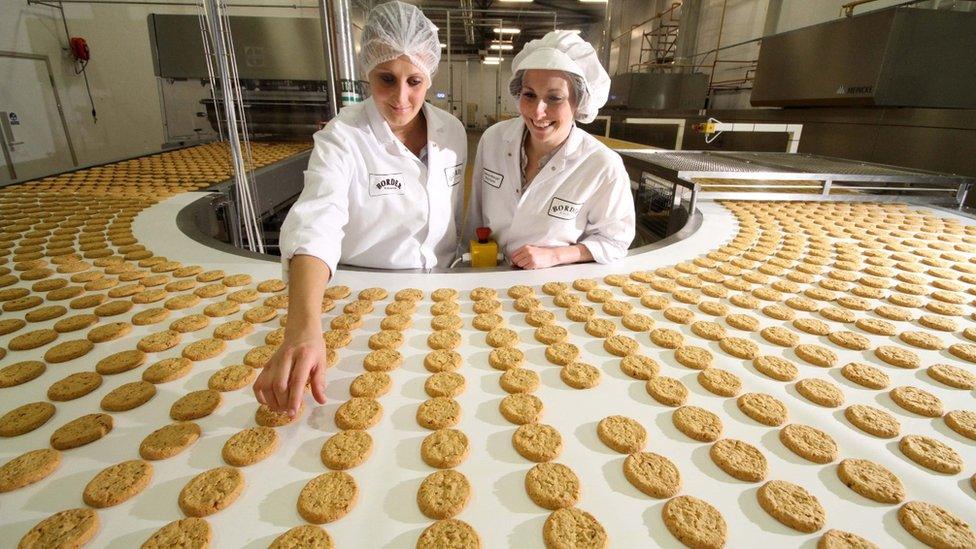
Inside the Thomas Tunnock factory just outside Glasgow, tradition is not a marketing slogan but a daily practice. Streams of hot caramel flow from upper floors down conveyor belts, filling the building with a warm, unmistakably sweet aroma. It is a process that looks almost timeless, yet it exists within a modern production environment that continues to evolve.
Caramel making is one of the most demanding stages of biscuit production. It must reach a precise consistency before it can be used, and even minor variations can affect the final product. At Tunnock’s, experienced workers still rely on sight, touch, and instinct to decide when the caramel is ready. Despite advances in automation, this remains a task where human judgment is considered irreplaceable.
Why some processes resist automation
Producing a Tunnock’s wafer biscuit involves spreading caramel in five distinct layers, a task that requires a coordinated team of around twelve people. The work is repetitive, but it is also highly sensitive. Temperature, humidity, and timing all influence how the caramel behaves.
Automated systems can measure heat and flow, but replicating the intuition built through years of experience is far more difficult. Workers know when caramel is too stiff or too runny before instruments flag an issue. This human oversight acts as a safeguard against errors that could compromise texture and taste.
For many traditional bakers and biscuit makers, this is where technology reaches its limits. Machines excel at consistency, but food production often demands adaptability, especially when dealing with ingredients that behave differently from batch to batch.
The pressure to modernize
Despite the value of tradition, bakeries face growing pressure to modernize. Rising energy costs, labor shortages, and competition from large scale manufacturers push companies to explore automation wherever possible. Technology promises efficiency, reduced waste, and greater output, all crucial in a tight market.
Sensors can now monitor moisture levels, cameras can inspect products for flaws, and software can optimize production schedules. These tools are increasingly common even in factories known for heritage brands. The challenge is deciding how far to go without losing the character that defines the product.
For consumers, the appeal of brands like Tunnock’s lies partly in the belief that the biscuits are still made the same way they always were. Too much automation risks undermining that perception, even if the taste remains unchanged.
Balancing innovation with identity
Many traditional producers are choosing a middle path. Instead of replacing skilled workers, technology is being used to support them. Automated systems can handle heavy lifting, repetitive transport, and quality checks, allowing human workers to focus on areas where expertise matters most.
This approach helps preserve craftsmanship while improving working conditions. In caramel production, for example, machines can maintain stable temperatures, while workers decide when the mixture is ready for use. Technology becomes a tool rather than a substitute.
This balance is increasingly seen as essential for long term survival. Younger workers are more likely to enter factories that combine heritage with modern practices, rather than purely manual environments.
What consumers really want
The debate over technology versus tradition is shaped as much by consumer expectations as by production realities. Shoppers often say they value authenticity, but they also expect affordable prices and reliable quality. Meeting all three goals requires careful management.
If automation helps keep prices stable without altering the product, many consumers may accept it. Problems arise when efficiency becomes visible in ways that feel impersonal. A biscuit that tastes the same but is marketed as fully machine made may lose some emotional appeal.
Brands rooted in tradition must therefore communicate clearly. Transparency about how technology supports rather than replaces craftsmanship can help maintain trust.
The future of traditional baking
Technology is unlikely to fully replace skilled hands in bakeries where ingredients like caramel demand constant judgment. Instead, the future points toward collaboration between people and machines.
At factories like the one outside Glasgow, the sight of caramel flowing through the building remains a reminder that food is as much art as science. While software and sensors will continue to advance, some processes still depend on human senses and shared experience.
The question is not whether technology will enter traditional baking, but how it will be integrated. For many biscuit makers, preserving flavor, texture, and identity matters more than maximum automation.
In the end, tradition may not be defeated by technology, but reshaped by it. The most successful bakeries are likely to be those that embrace innovation while respecting the skills that have defined them for generations.