Business
Which Countries Do Business With Iran and What New US Tariffs Could Mean

A tariff threat with global consequences
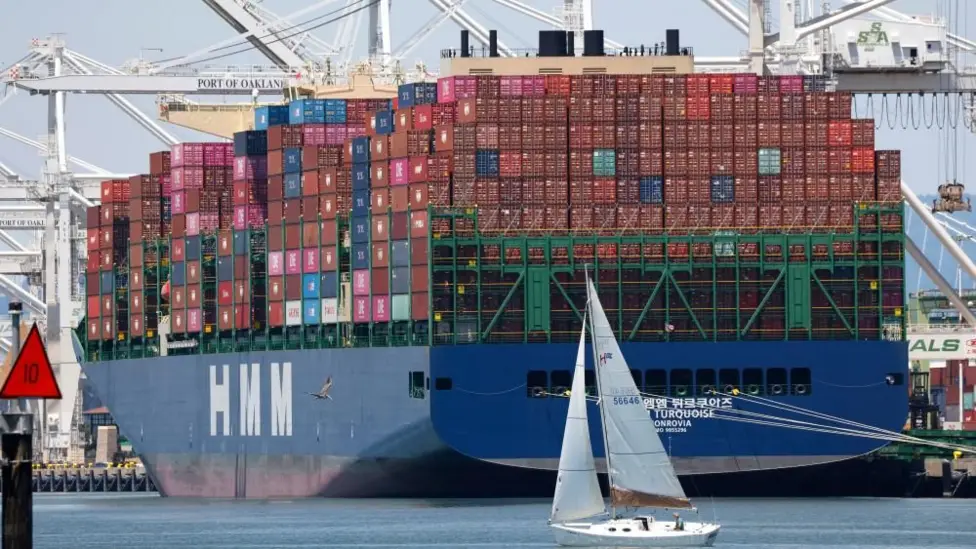
The United States has once again signaled a hardening stance toward Iran, with US President Donald Trump announcing that countries doing business with Iran could face a 25 percent tariff on all trade conducted with the United States. The statement was delivered via Trump’s social media platform and immediately drew global attention. While details remain sparse, the message itself has introduced fresh uncertainty into global trade and diplomacy.
What exactly has been announced so far
At this stage, the proposal remains broad and undefined. Trump stated that any country engaging in business with the Islamic Republic of Iran would be subject to a sweeping tariff on trade with the United States. No clarification has been given on timelines enforcement mechanisms or whether exemptions might apply. The lack of specificity has left governments and businesses trying to interpret how seriously the threat should be taken and how quickly it could be implemented.
Why Iran is back at the center of pressure
The announcement comes amid reports that Iran is intensifying its crackdown on anti government protests, with thousands feared dead. These developments have reignited political pressure in Washington to take a tougher line. Tariffs are being positioned not only as an economic tool but also as a signal of moral and political condemnation. The strategy reflects a familiar approach in which economic leverage is used to influence foreign behavior.
Which countries still trade with Iran
Despite years of sanctions Iran maintains commercial ties with a number of countries. China remains its largest economic partner particularly through oil purchases. Several Asian economies continue limited trade in energy and industrial goods. Some regional neighbors maintain cross border commerce while certain European companies have engaged cautiously in humanitarian and permitted sectors. These relationships are often structured to navigate or limit exposure to US sanctions but they still carry political risk.
How a blanket tariff could change calculations
A universal tariff threat dramatically raises the stakes. For many countries access to the US market is far more economically valuable than trade with Iran. A 25 percent tariff on all US bound exports would be a severe penalty. This could force governments and firms to reassess whether maintaining any level of engagement with Iran is worth the cost. Even countries sympathetic to Iran may find the economic trade off difficult to justify.
Lessons from past tariff pressure
Trump has used tariff threats before as a negotiating tactic in disputes ranging from trade imbalances to security issues. In some cases the pressure led to concessions while in others it resulted in prolonged uncertainty and market volatility. This history suggests that the current announcement may be intended as leverage rather than an immediately enforceable policy. Still markets tend to react to signals as much as to formal rules.
Risks to global trade and energy markets
Iran plays a role in global energy supply particularly in oil markets. Any action that further restricts its trade can affect prices and supply chains. Countries importing Iranian oil may need to find alternative sources which could increase costs. At the same time tariffs that disrupt trade with the United States could ripple through global manufacturing and export sectors adding inflationary pressure.
Diplomatic fallout and strategic choices
For US allies the situation presents a difficult balancing act. Supporting human rights concerns while protecting economic interests is rarely straightforward. A unilateral tariff policy could also strain relations if partners view it as overreach. How other major economies respond will shape whether the policy isolates Iran or creates friction within existing alliances.
An announcement heavy on signal light on detail
What is clear is that the statement has injected fresh uncertainty into international trade. Until concrete rules are published businesses and governments are left planning for multiple scenarios. Whether the tariff threat becomes a binding policy or remains a pressure tactic will determine its ultimate impact.
A test of economic influence
The proposal underscores how tariffs have become a central instrument of US foreign policy. By tying access to the American market to behavior toward Iran Washington is testing the limits of its economic influence. The outcome will reveal how much leverage the US still holds and how willing other countries are to adjust their Iran policies in response.