Tech
When Influencers Are No Longer Human

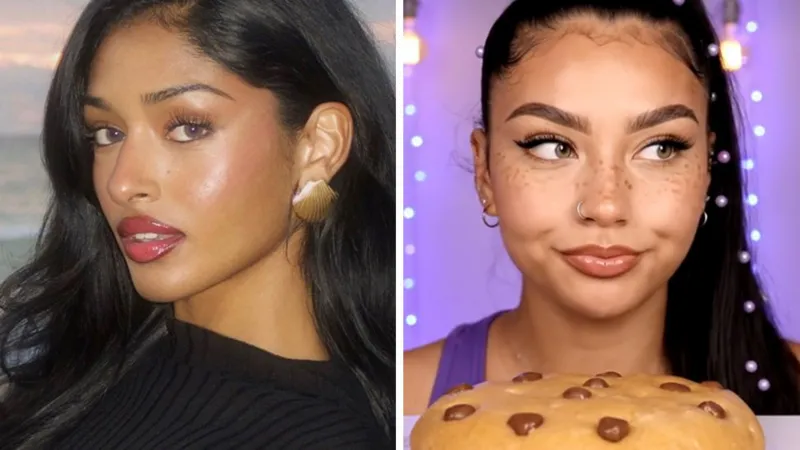
Scroll through social media today and it is becoming harder to tell who is real and who is not. Among flawless faces, lifestyle routines, and carefully edited videos, a new type of influencer is quietly taking over feeds. Some of the most successful creators online are no longer human at all. They are artificial intelligence generated personalities, designed to attract views, engagement, and income with minimal human effort behind the scenes.
Meet Gigi, the Influencer Who Does Not Exist
At first glance, Gigi looks like any other young influencer. She appears on screen with perfect makeup, smooth skin, and a polished online persona. She chats to followers, shares clips of eating food, applying lipstick, and going through skincare routines. She even appears alongside a baby in some videos, reinforcing the image of a relatable digital lifestyle.
But a closer look reveals something strange. Gigi eats pizza made of molten lava. She applies snowflakes and cotton candy as lip gloss. Objects sometimes pass straight through her hands. These subtle visual glitches give away the truth. Gigi is not real.
She is an AI generated character created by Simone Mckenzie, a 21 year old student who turned to artificial intelligence as a way to earn money over the summer.
Turning Prompts Into Profits
Mckenzie belongs to a rapidly growing group of digital creators who rely almost entirely on AI tools to produce content. By entering simple prompts into advanced video generation systems such as Google Veo 3, creators can generate short videos in minutes. These clips are then uploaded to platforms like TikTok, where algorithms reward novelty, volume, and engagement.
The financial upside can be significant. According to Mckenzie, one video earned her 1,600 dollars in just four days. Encouraged by the results, she continued posting. Within two months, Gigi’s videos had attracted millions of views, generating thousands of dollars through TikTok’s creator fund.
AI Slop and the Changing Nature of Content
Critics have labelled this wave of AI generated videos as AI slop, a term used to describe content that is cheap to produce, highly repetitive, and designed purely to exploit platform algorithms. Despite the criticism, the trend shows no sign of slowing down.
Experts argue that the sheer speed and scale at which AI content can be created is fundamentally changing social media. Instead of carefully planned shoots, editing sessions, and branding strategies, creators can now generate endless variations of content almost instantly.
“It’s surging right now and it’s probably going to continue,” says Jessa Lingel, an associate professor at the University of Pennsylvania who studies online culture and technology.
Disrupting the Influencer Economy
The rise of AI influencers has serious implications for the traditional influencer economy. Human creators often invest heavily in equipment, locations, styling, and editing. AI creators bypass most of those costs. A single person with a laptop can now compete with full scale influencer operations.
This shift could pressure brands and platforms to rethink what authenticity means. If audiences continue to engage with AI personalities, advertisers may care less about whether an influencer is real and more about whether they generate views and conversions.
Democratization or Decline
Not everyone sees this trend as harmful. Supporters argue that AI lowers barriers to entry. People without expensive cameras, time to film, or access to attractive locations can now participate in viral culture. In that sense, AI could democratise online fame, allowing creativity to matter more than resources.
At the same time, concerns remain about transparency, manipulation, and audience trust. As AI influencers become more convincing, viewers may struggle to distinguish reality from fabrication.
A Future Filled With Synthetic Fame
Gigi’s success highlights a broader transformation underway across social media. Influence is no longer tied strictly to human presence. Algorithms reward engagement, not authenticity.
Whether AI influencers will coexist with human creators or overwhelm them remains uncertain. What is clear is that the line between human creativity and machine generated fame is rapidly blurring, reshaping how influence is created, consumed, and monetised online.