Business
UK House Prices Rise Faster Than Expected in February, Nationwide Reports

UK house prices increased more than expected in February, according to the latest data from Nationwide Building Society, suggesting the property market is showing signs of steady recovery after a dip late last year.
Nationwide reported that house prices were 1.0 percent higher in the 12 months to the end of February, exceeding economists’ expectations of a 0.7 percent annual rise. On a monthly basis, prices climbed by 0.3 percent, matching January’s increase and slightly outperforming forecasts of a 0.2 percent gain.
The figures indicate a modest rebound following uncertainty at the end of 2025, when concerns over potential property tax changes ahead of Chancellor Rachel Reeves’ budget weighed on buyer sentiment. Analysts say the latest data reinforces the view that confidence has gradually returned to the housing market in early 2026.
Nationwide’s chief economist Robert Gardner said the improvement points to a stabilisation after last year’s slowdown. While caution remains among some buyers, he noted that mortgage approvals for house purchases are still close to levels seen before the pandemic, highlighting underlying resilience in demand.
Further insights into borrowing trends are expected from Bank of England figures, which are due to show a small increase in mortgage approvals in January. Mortgage approvals are widely viewed as a leading indicator of future housing activity, offering an early signal of market direction.
Investors are also closely watching the Bank of England’s next policy decision, with many anticipating a potential interest rate cut to 3.5 percent. Lower borrowing costs could provide additional support to homebuyers and help sustain momentum in the property sector.
Economists say the broader economic backdrop has improved slightly at the start of the year, contributing to stronger housing performance. However, risks remain. Some analysts warn that rising inflationary pressures linked to geopolitical tensions in the Middle East could limit the central bank’s room to ease policy, potentially slowing housing market growth.
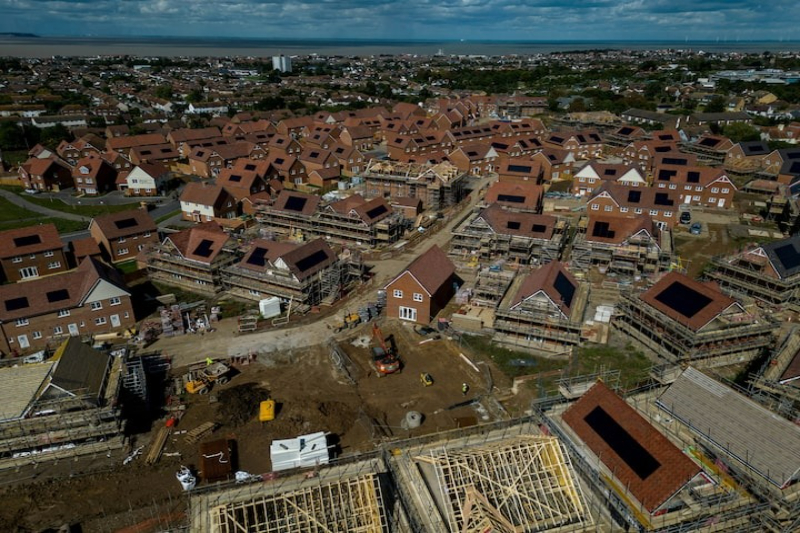
Despite these concerns, the current data suggests that buyers are returning gradually, supported by relatively stable employment conditions and easing financial pressures compared to previous quarters. Construction activity also continues as the government pushes ahead with plans to increase housing supply, aiming to address long term shortages across the country.
The modest but steady rise in prices reflects a market that is recovering rather than overheating. For prospective buyers and sellers alike, the coming months will likely depend on the trajectory of interest rates, inflation and broader economic confidence.