Business
Trump Warns of Economic Turmoil as Supreme Court Weighs Tariff Ruling

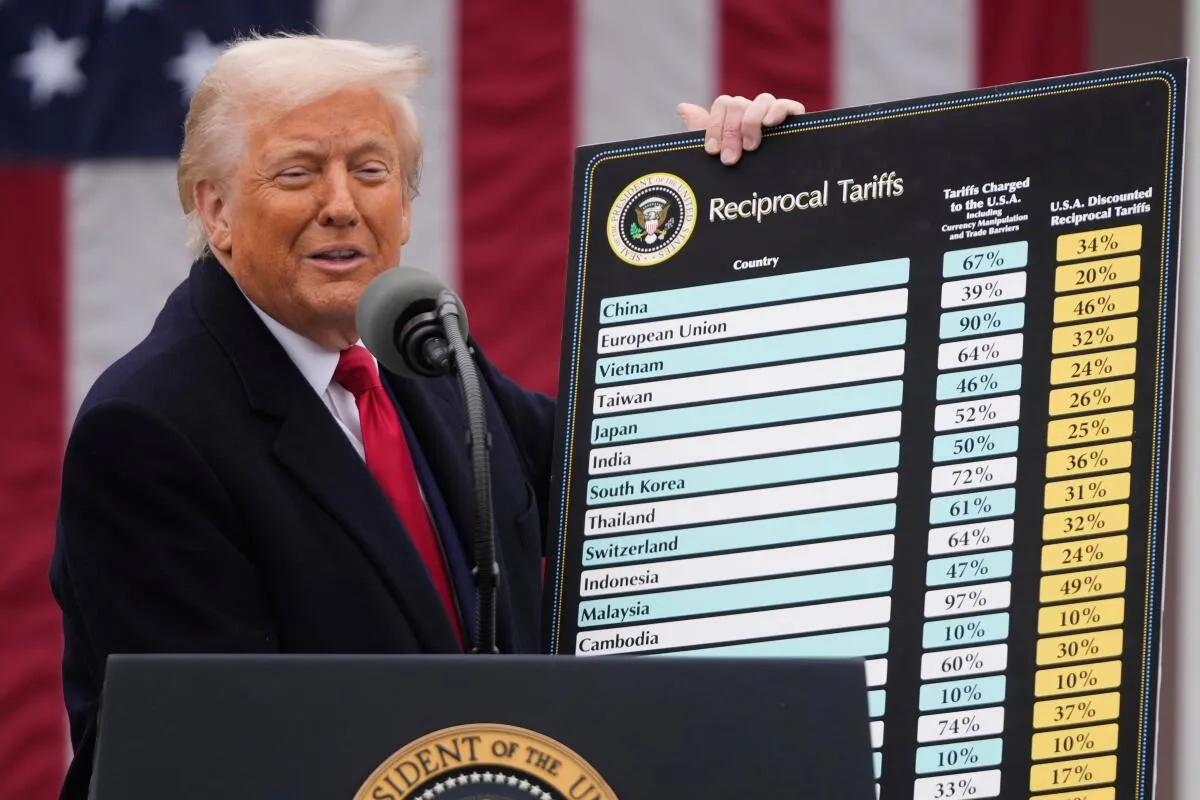
US President Donald Trump has issued a stark warning ahead of a looming Supreme Court decision that could strike down a key pillar of his trade policy. In a social media post on Monday, Trump argued that overturning his tariffs would create a “complete mess,” underscoring both the political and economic stakes surrounding the ruling, which could arrive as soon as Wednesday.
Why the tariff ruling matters so much
The case before the Supreme Court of the United States goes beyond a narrow legal interpretation. At its core lies the question of presidential authority over trade and the durability of tariffs imposed under emergency or national security justifications. Trump’s remarks signal deep concern that an unfavourable ruling would unravel years of policy decisions that reshaped US trade relations.
Tariffs have been central to Trump’s economic narrative, used as leverage against trading partners and framed as tools to protect domestic industries. Striking them down would not only weaken that legacy but also introduce immediate uncertainty for businesses that have adapted their pricing, supply chains and contracts around the existing regime.
The risk of refunds and administrative chaos
One of Trump’s central arguments focused on the practical consequences of a negative ruling. If the court invalidates the tariffs, companies that paid duties could potentially seek refunds. The scale of such claims could be enormous, creating administrative strain for customs authorities and fiscal complications for the federal government.
From a business perspective, uncertainty over refunds and future tariff liability complicates planning. Firms that passed tariff costs on to consumers may face legal and reputational questions, while those that absorbed the costs could see uneven outcomes depending on how refund mechanisms are applied.
Legal uncertainty meets economic reality
While Trump framed the issue in terms of disruption, legal experts note that the court’s role is not to preserve policy convenience but to interpret the law. If the justices find that the tariffs exceeded statutory authority, the economic consequences become secondary to constitutional principles.
That tension highlights a recurring challenge in trade policy. Measures introduced quickly under executive power can embed themselves deeply into economic structures, making their reversal costly and politically fraught even when legal questions persist.
Implications for global trade confidence
The ruling’s impact would not be confined to the United States. Global markets are watching closely because US tariffs influence international pricing, supply chains and diplomatic relations. A sudden reversal could alter trade flows, particularly for countries that adjusted exports to navigate US duties.
At the same time, a decision curbing presidential tariff powers could restore a measure of predictability to global trade governance. For some allies and investors, stronger judicial oversight may be seen as a stabilising force rather than a source of chaos.
Politics and the framing of disruption
Trump’s language reflects a broader political strategy. By warning of a “complete mess,” he positions any negative fallout as the responsibility of the courts rather than the policy itself. This framing resonates with supporters who view tariffs as defensive tools and judicial constraints as obstacles to decisive leadership.
However, critics argue that the warning also reveals how dependent the current trade framework has become on legally contested authority. If a policy collapses under judicial scrutiny, they contend, the issue lies with its foundations rather than its removal.
What happens next for businesses and policymakers
If the Supreme Court upholds the tariffs, the status quo remains, reinforcing broad executive power in trade matters. If it strikes them down, Congress may face renewed pressure to clarify tariff authority through legislation, shifting responsibility back to elected lawmakers.
For businesses, the coming days represent a moment of high uncertainty. Planning scenarios now depend less on economic fundamentals and more on legal interpretation, an uncomfortable position for markets accustomed to regulatory continuity.
A defining moment for US trade governance
Trump’s warning captures the magnitude of the decision ahead. The ruling will shape not only the fate of existing tariffs but also the balance of power between the presidency, the courts and Congress in trade policy. Whether it results in disruption or reform, the outcome will mark a turning point in how the United States governs its role in the global trading system.