News
Trump Says White House Meeting With Colombia’s President Planned After Abrupt Shift in Tone

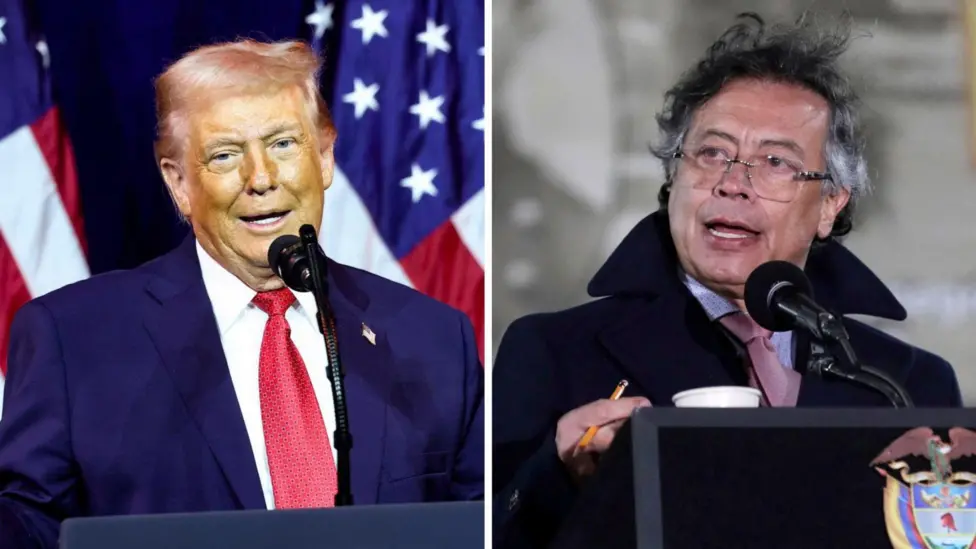
US President Donald Trump has said he will meet Colombian President Gustavo Petro at the White House in the near future, signalling a rapid de escalation in rhetoric just days after remarks that appeared to endorse a potential operation targeting Colombia.
Speaking to reporters, Trump said discussions with Petro had been constructive and that both sides agreed on the importance of dialogue. The announcement followed a period of heightened tension, during which Trump had suggested that an operation against Colombia “sounds good,” comments that triggered alarm in Bogotá and concern across Latin America given Colombia’s long standing status as a close US partner.
The shift in tone reflects renewed diplomatic engagement after what analysts described as an unusually volatile exchange between the two leaders. Colombian officials said the two presidents had held a direct phone call that helped clarify positions and reduce misunderstandings. While details of the conversation were not disclosed, officials on both sides portrayed it as cordial and forward looking.
For Petro, the invitation offers an opportunity to stabilise relations with Washington at a sensitive moment. His government has pursued a more independent foreign policy, questioning aspects of traditional US led security strategies, particularly around drug enforcement. Petro has argued for a shift away from militarised approaches toward social investment and regional cooperation, positions that have sometimes put him at odds with US policymakers.
Trump’s comments had raised fears of a serious diplomatic rupture. Colombia has been one of the United States’ most reliable allies in South America for decades, receiving extensive military and economic support. Any suggestion of hostile action was seen as highly destabilising, not only for bilateral ties but also for regional politics, where US influence remains a central factor.
The White House meeting is now being framed as a reset rather than a confrontation. US officials said the talks would cover shared priorities including security cooperation, economic ties, migration and regional stability. They stressed that the United States continues to value Colombia as a strategic partner, even as differences persist over policy direction.
In Bogotá, the announcement was met with cautious relief. Government figures said Petro remains committed to cooperation with Washington but insists on mutual respect and recognition of Colombia’s sovereignty. The meeting, they said, would allow both leaders to address disagreements directly and reduce the risk of further public escalation.
Analysts note that Trump’s foreign policy style often involves sharp rhetoric followed by rapid pivots, creating uncertainty for allies and rivals alike. In Latin America, where historical memories of US intervention remain strong, such swings can have outsized political impact. The latest episode underscores how quickly tensions can flare and subside depending on personal diplomacy at the highest level.
The planned talks also come as competition for influence in Latin America intensifies. The United States has sought to reinforce ties with traditional partners amid growing engagement by other global powers. Maintaining a stable relationship with Colombia is seen as particularly important in that context.
While the timing of the White House visit has not been confirmed, both sides indicated preparations are under way. Observers caution that symbolism alone will not resolve underlying differences, but say the meeting itself reduces the immediate risk of confrontation.
For now, Trump’s invitation marks a clear pause in escalating rhetoric and a return to diplomatic engagement. Whether the reset leads to sustained cooperation will depend on how both leaders manage policy differences once the initial goodwill of the meeting fades.