News
Tower Hamlets Struggles With England’s Lowest Recycling Rate as Residents Voice Frustration

Tower Hamlets has been identified as the local authority with the lowest recycling rate in England, with just 15.8 percent of household waste recycled according to the latest figures from the Department for Environment, Food and Rural Affairs. The data has sparked renewed debate about waste management in one of London’s most densely populated boroughs.
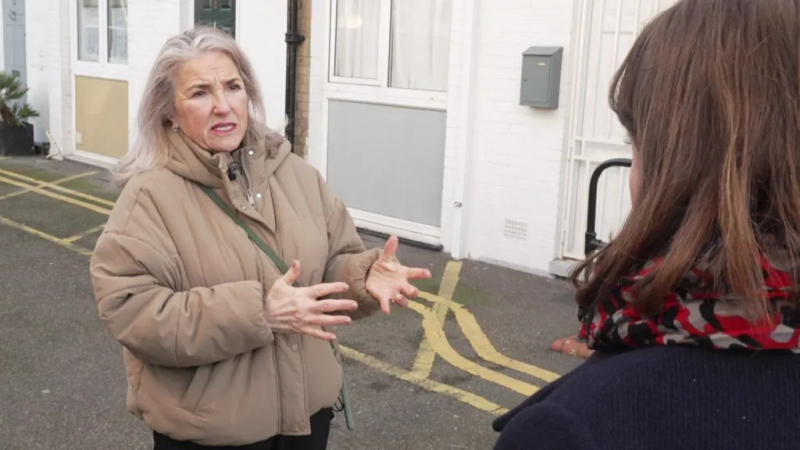
In Bow, long term resident Jackie Warner describes the system as confusing and deeply frustrating. Living in her flat for 26 years, she says residents must collect clear pink recycling bags from a local library that operates on limited hours. The thin bags are then used to place recyclable materials into large communal containers outside. She says restrictions on what can be included and the lack of consistent adherence by others make the process difficult.
General waste from many flats is disposed of through communal chutes into shared bins. Food waste is not separated in most high rise blocks, meaning it ends up mixed with general rubbish. Tower Hamlets currently collects food waste only from street level properties, with just 8.3 percent of organic waste recycled in the 2023 to 2024 period, the lowest proportion nationally.
Residents say the lack of dedicated food waste bins can lead to unpleasant smells, particularly in warmer months. Some blocks previously had balcony food waste containers, but these were removed after safety concerns following the Grenfell Tower fire.
In newer developments, recycling arrangements differ but confusion remains. Hirra Khan Adeogun, who lives in a recently built block, says strict rules about sorting waste at home often clash with what residents observe during collection. She claims that recycling and general waste appear to be placed in the same vehicle, though operators have reportedly told residents that sorting takes place at a depot. She says clearer communication from the council would help rebuild trust.
Environmental artist Sylvietta, originally from Milan, believes Tower Hamlets could learn from European models. In parts of Italy, residents separate food, paper, plastic, metal and glass into distinct bins, with fines imposed if contamination occurs. She argues that firm enforcement combined with clear guidance can significantly raise recycling rates.
Tower Hamlets Council has acknowledged the challenges, citing the borough’s density and the fact that 88 percent of homes are flats relying on communal facilities. Officials say high rise living and rapid housing growth make recycling structurally more complex than in areas dominated by houses with individual bins.
The council says it has begun pilot schemes including weekly food waste collections in selected blocks, with plans to expand borough wide before April 2027. It is also trialling reusable recycling bags, improved signage and upgraded communal facilities. Recent quarterly data shows an increase in recycling rates to just over 20 percent in late 2025, suggesting gradual improvement.