
Latest News
“They’re Not Dolls, They’re Babies!”: The Cabbage Patch Kids Craze That Swept the 1980s

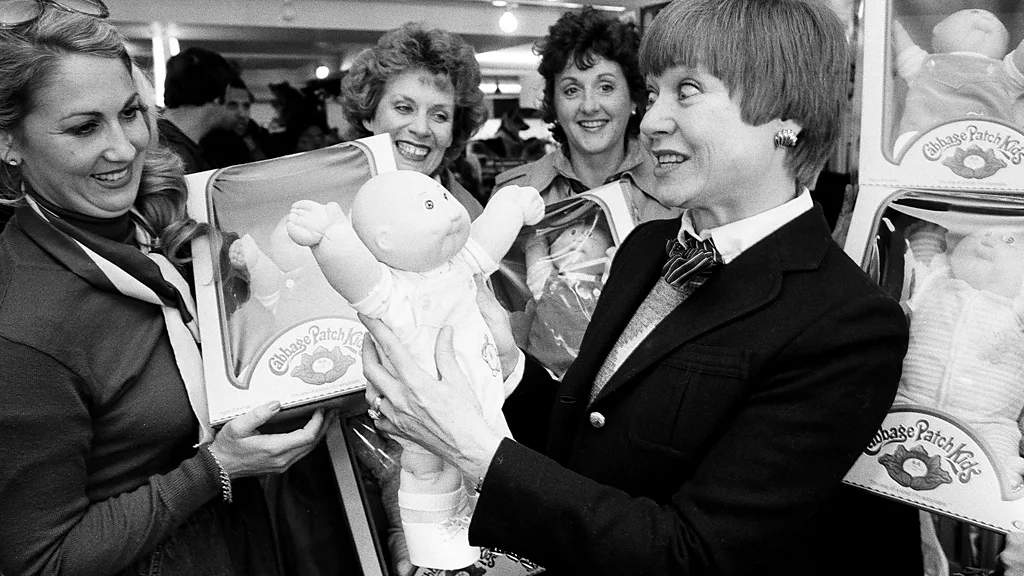
Christmas shopping in the 1980s was about to get a lot more chaotic. While toy crazes are nothing new, the hysteria sparked by Cabbage Patch Kids in 1983 went far beyond the usual excitement it verged on chaos, showing just how much emotion and expectation can be tied to a child’s holiday wish.
Xavier Roberts’ creation wasn’t just a toy. These soft, uniquely sculpted dolls arrived in stores with their own adoption papers, giving children a sense of ownership and individuality. Parents quickly noticed that these “babies” were different from the mass-produced dolls lining shelves, and children insisted: “I want one of these!” What followed was a shopping frenzy that would make retail history.
A Mania Unlike Any Other
What made Cabbage Patch Kids so irresistible? Part of it was the novelty each doll had a distinct face, a name, and an adoption certificate. Unlike Barbie dolls or generic stuffed animals, these toys felt personal. They weren’t just objects; they were companions. Parents, caught between cultural pressure and children’s tears, raced to stores in droves.
By December 1983, the craze had reached fever pitch. In cities across the United States, department stores struggled to manage the crowds. In Wilkes-Barre, Pennsylvania, a near-riot erupted as shoppers clamoured for the dolls. Reports describe panicked parents, long queues, and tense confrontations. One woman reportedly broke her leg in the rush, and several others were injured. A store manager resorted to wielding a baseball bat in an attempt to restore order. It was chaos unlike anything previously seen over a toy, surpassing even the fads for Rubik’s Cubes or skateboards.
Behind the Madness
What observers found remarkable was the intensity of the emotions involved. These dolls weren’t simply items of desire they became symbols of parental love, Christmas expectations, and social competition. Missed opportunities were not just disappointing; they felt like moral failings. As one mother recalled, “What do we tell our little girl on Christmas morning? You’ve been good but Santa ran short?” The stakes, in the minds of parents, were higher than ever.
I’ve read through contemporary accounts, and the repeated phrase “they’re not dolls, they’re babies” captures the cultural mindset perfectly. These toys weren’t just cute objects to be bought; they were mini-miracles, embodiments of affection and care that had to be secured at all costs. That emotional weight transformed a simple shopping trip into a high-stakes mission.
A Cultural Phenomenon
The Cabbage Patch Kids craze highlights more than consumer behaviour; it reflects the 1980s culture of scarcity, marketing, and media hype. Limited production runs, clever advertising, and media coverage amplified the demand. People weren’t just buying dolls they were participating in a shared, national obsession. Stores became theatres for human emotion, and Christmas shopping became performative, dramatic, and sometimes dangerous.
For me, reading about these events evokes a sense of both amusement and awe. Imagine families lined up for hours, crowds surging through aisles, and the sheer determination of parents to fulfill their children’s holiday dreams. In an era before online shopping, securing the must-have toy was a matter of strategy, timing, and, occasionally, brute force.
Lessons From the Craze
Looking back, the Cabbage Patch Kids frenzy serves as an early warning about the power of marketing and mass desire. It shows how scarcity and personalization can turn a product into an object of near-obsession. Retailers, parents, and children alike were swept up in a perfect storm of emotion and expectation.
It also demonstrates something enduring about human behaviour: when people attach meaning to objects especially during emotionally charged seasons like Christmas, rational behaviour often gives way to frenzy. The story of these dolls, with broken legs, desperate mothers, and baseball-bat-wielding managers, is a reminder that even simple pleasures can take on outsized cultural importance.
The Legacy of the Craze
Today, Cabbage Patch Kids are remembered fondly as nostalgic icons of the 1980s. The near-riots they inspired remain legendary, frequently cited in retrospectives about holiday shopping mania. Beyond their surface charm, the dolls reveal insights into consumer psychology, parental expectation, and the way cultural phenomena can turn ordinary products into objects of national obsession.
The lesson is clear: sometimes a toy is more than a toy. Sometimes, it’s a reflection of society itself, its desires, its pressures, and the lengths people will go to preserve the magic of Christmas. And for the 1983 shoppers, those cuddly, quirky dolls weren’t just toys; they were, in their eyes, babies’ precious, irreplaceable, and worth every frenzy-inducing moment.



