Business
The Hidden 300 Year Old Mansion Hosting Theatre by the Thames

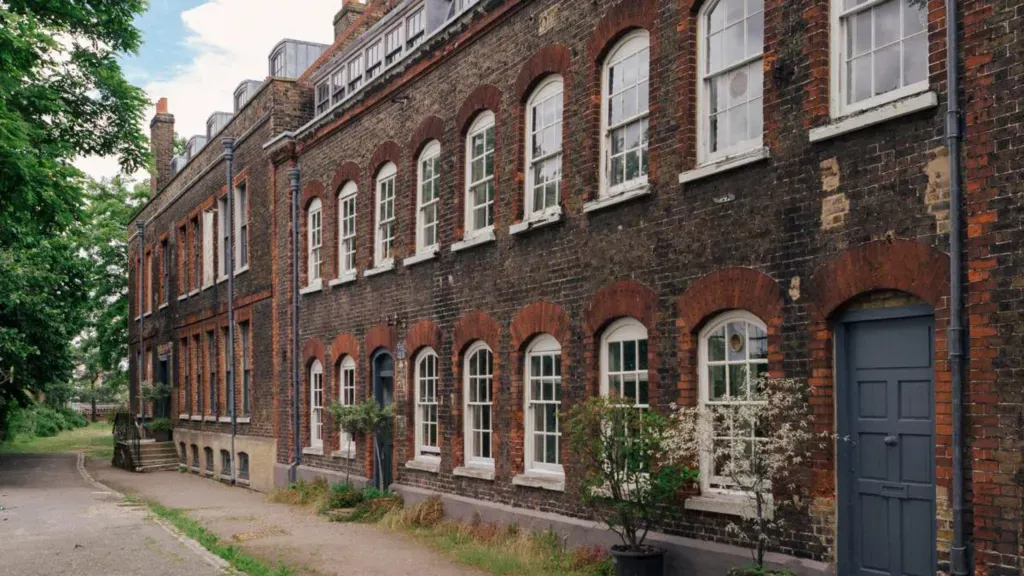
Tucked away behind high brick walls near the River Thames, a 300 year old mansion in Deptford is quietly playing host to one of London’s most unusual cultural spaces. The Master Shipwrights House, largely invisible to passers by and overshadowed by modern apartment blocks and construction sites, has become an intimate home for theatre and artistic performance, even as its future hangs in the balance.
On the final night of the year’s performances, the atmosphere inside the historic building feels charged with emotion. For the artists and theatre makers gathered there, this is not just another show but a moment of reflection on what the house has come to represent. The mansion, with its long corridors, sash windows, and carefully preserved interiors, offers a rare setting where history and contemporary creativity collide.
Built more than three centuries ago, the house was originally designed as a residence for one of the Royal Navy’s senior shipbuilders, at a time when Deptford was a centre of Britain’s maritime power. While the surrounding area has transformed dramatically over the years, the building itself has survived wars, industrial decline, and waves of redevelopment. Its survival feels almost accidental, hidden in plain sight behind walls that shield it from the pace of modern London.
In recent years, the house has taken on a new role as a performance space. Theatre productions staged within its rooms are often immersive, with audiences moving through the building as scenes unfold. The architecture becomes part of the storytelling, with creaking floors, narrow staircases, and candlelit rooms adding layers of atmosphere that purpose built theatres struggle to replicate. For performers, the setting encourages experimentation and intimacy, breaking down the traditional barrier between stage and audience.
Yet this creative chapter may be nearing an end. The Master Shipwrights House is currently on the market, reportedly priced at £8 million, prompting uncertainty about what lies ahead. While heritage protections place limits on redevelopment, the identity of future owners will be crucial in determining whether the house remains accessible to the public or retreats into private use.
Artists involved with the space have spoken of a sense of urgency, aware that each performance could be among the last of its kind within these walls. There is concern that the cultural value of the house may be overlooked in favour of its commercial potential. In an area undergoing rapid change, the pressure to convert historic properties into luxury residences is strong, and creative uses can struggle to compete financially.
Local supporters argue that the mansion’s current role demonstrates how historic buildings can be reimagined without losing their character. By opening its doors to theatre and the arts, the house has connected Deptford’s past with its present, offering audiences a chance to experience history not as a static museum piece but as a living environment. They say this approach adds depth to the neighbourhood, providing cultural richness alongside new development.
As the final applause fades on the last show of the year, questions linger about what the next act will be. Will the house continue to echo with voices and movement, or fall silent behind its brick walls once more. For now, the Master Shipwrights House stands as a reminder of London’s layered history and the fragile spaces where heritage and creativity meet.