Tech
Tech Giants Invest Billions in AI Infrastructure Amid Soaring Demand

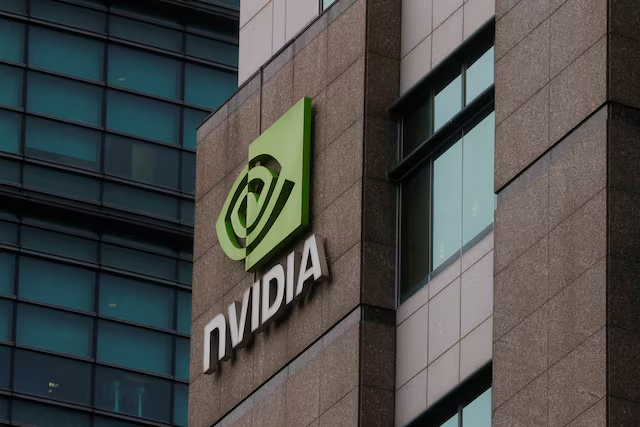
As artificial intelligence continues to reshape industries worldwide, major technology firms are channeling billions of dollars into AI infrastructure to meet growing demand. Companies like OpenAI, Nvidia, and Google are expanding their computing capabilities, while Meta Platforms has acquired AI startup Manus to accelerate its development of agentic AI systems. These investments reflect the increasing competition to build next-generation AI tools and platforms.
Driving Factors Behind AI Infrastructure Investments
The surge in AI adoption has created unprecedented demand for powerful computing resources. Advanced AI models, including generative AI systems and large language models, require specialized hardware such as high-performance GPUs, massive data storage, and cloud computing infrastructure. Nvidia, a leading provider of AI hardware, has seen a dramatic increase in orders from cloud providers, research institutions, and tech firms seeking to scale AI applications.
OpenAI and Google are also making significant investments in AI infrastructure, ensuring their models run efficiently at scale and can support billions of users. These investments not only enable faster training of AI models but also improve responsiveness and reliability for consumer-facing applications.
Meta’s Push into Agentic AI
Meta Platforms’ acquisition of AI startup Manus highlights the strategic importance of agentic AI—systems capable of autonomous reasoning and decision-making. Meta plans to integrate this technology across its platforms, enhancing user experiences and enabling more intelligent virtual assistants, content moderation tools, and interactive applications. The move underscores the intensifying competition among tech giants to dominate the AI landscape.
By investing in startups and in-house infrastructure, companies aim to build proprietary advantages in AI capabilities, attract top talent, and accelerate product development cycles. The growing ecosystem of AI hardware, software, and research collaborations reflects a broad commitment to maintaining technological leadership in the sector.
Implications for the AI Market
The influx of capital into AI infrastructure is likely to drive innovation across industries. With enhanced computational resources, AI developers can create more sophisticated models, improve natural language understanding, and expand applications in areas such as healthcare, finance, logistics, and entertainment.
However, the rapid expansion of AI infrastructure also raises concerns about energy consumption, ethical AI use, and market concentration. Large tech firms with significant computing power could dominate the development of AI models, potentially limiting competition and access for smaller companies. Regulators and policymakers are increasingly monitoring these trends to ensure responsible deployment and fair market practices.
Global Competition and Future Prospects
Investments in AI infrastructure are not limited to the United States. Tech companies worldwide are building AI data centers, research labs, and strategic partnerships to remain competitive. As AI continues to drive economic growth and technological innovation, firms are prioritizing long-term investments in hardware, cloud computing, and AI talent.
The next decade is expected to see even greater emphasis on scalable AI systems, optimized hardware, and cross-industry collaborations. Firms investing now in robust AI infrastructure are positioning themselves to lead in a future where AI is integral to business operations, consumer products, and everyday life.
Conclusion
From OpenAI to Nvidia to Meta, the massive investment in AI infrastructure underscores the strategic importance of artificial intelligence in the modern tech economy. Companies are racing to build the computational backbone necessary to support next-generation AI models and applications. As the demand for AI grows, these investments will shape the future of technology, influencing innovation, competition, and global economic trends.