Latest News
Stokes Backs McCullum as England Look Beyond Ashes Defeat

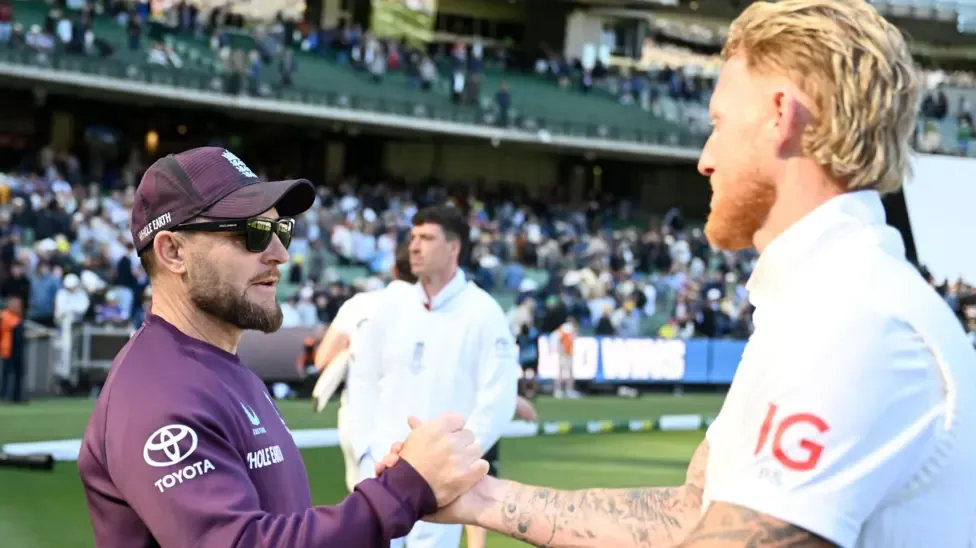
England captain Ben Stokes has thrown his full support behind head coach Brendon McCullum, insisting he cannot imagine anyone else leading the team despite England’s defeat in the Ashes series in Australia. The statement comes at a pivotal moment for England cricket, with questions being asked about leadership after a bruising tour.
England arrived in Australia with confidence that the Stokes McCullum partnership, formed in 2022, could redefine how the team competed in the toughest conditions in world cricket. The series was widely seen as a defining test of their aggressive philosophy and bold decision making. However, defeats in the opening three Tests meant England surrendered the Ashes early, exposing familiar weaknesses away from home.
Despite that disappointment, Stokes has made it clear he sees no need for change at the top. He has emphasised continuity, arguing that progress cannot be judged on a single series, even one as high profile as the Ashes. For Stokes, the partnership with McCullum remains central to England’s long term vision rather than a short term experiment.
A partnership under pressure
Stokes and McCullum took charge of the Test side during a period of low confidence and poor results. Their impact was immediate, with England playing a more attacking brand of cricket and restoring belief within the squad. Wins at home and improved performances overseas helped build momentum, but Australia represented the sternest challenge yet.
The Ashes defeats inevitably brought scrutiny. England struggled to convert strong positions into wins and were punished for lapses in discipline with bat and ball. Critics have questioned whether the attacking approach can succeed consistently in Australian conditions, where patience and precision are often rewarded.
Stokes, however, has dismissed suggestions that the philosophy itself is flawed. He argues that setbacks are part of the process and that abandoning a clear identity would risk undoing the progress made over the past two years. In his view, the leadership group must be judged on how they respond rather than on a single outcome.
Signs of resilience in Melbourne
England’s victory in the fourth Test in Melbourne offered a reminder of what the team can achieve under the current regime. It was England’s first Test win in Australia for almost 15 years, a statistic that underlined how rare success has been on these tours. The win did not change the series result, but it restored pride and showed resilience after early setbacks.
For many observers, that performance strengthened the argument for continuity. It demonstrated that England are capable of learning and adapting, even in hostile environments. Stokes has pointed to that match as evidence that the group is moving in the right direction, albeit with work still to be done.
Contracts and future direction
Both Stokes and McCullum are contracted until 2027, and both have publicly stated their desire to remain in their roles beyond this tour. While Stokes’ position as captain appears secure, attention has also turned to the wider leadership structure, including director of cricket Rob Key.
There is an acceptance within English cricket that overseas success, particularly in Australia, remains the ultimate benchmark. The challenge now is to bridge the gap between intent and execution. That will involve refining tactics, developing bowlers capable of sustained pressure, and building batting depth suited to different conditions.
Looking ahead
As England prepare to finish the series in Sydney, the focus is already shifting towards the future. The home summer will provide another opportunity to build momentum and reinforce the team’s identity. Stokes believes stability is essential if England are to compete consistently at the highest level.
For him, the message is clear. Leadership is not about reacting to every setback, but about committing to a shared vision. In backing McCullum so emphatically, Stokes has signalled that England’s reset is far from over, and that the lessons of this Ashes defeat will shape, rather than derail, the journey ahead.