Latest News
Starmer Signals Openness to Deeper EU Alignment While Holding Firm on Brexit Red Lines

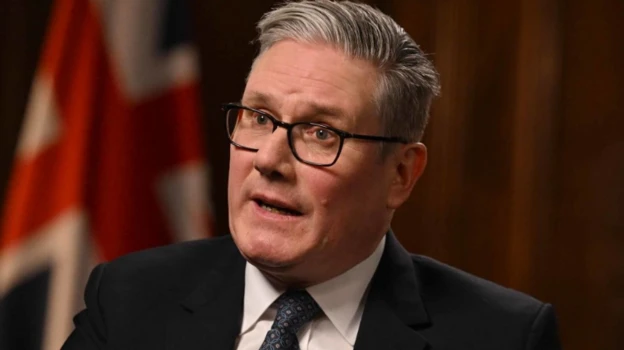
UK Prime Minister Keir Starmer has said Britain should move toward closer alignment with European Union markets when it clearly serves the national interest, offering his strongest signal yet that his government wants to reset relations with Europe after years of tension. At the same time, he stressed that key Brexit commitments would remain unchanged, ruling out rejoining the EU single market or customs union and rejecting any return to freedom of movement.
Speaking to reporters, Starmer framed his position as a pragmatic approach rather than an ideological shift. He said the question for Britain should not be about relitigating the Brexit debate but about how to make practical choices that support growth, stability and opportunity. In his view, closer cooperation with Europe in specific areas can be pursued without crossing political red lines set out in Labour’s election manifesto.
The comments mark a clear evolution in tone from previous governments, which often treated closer alignment with Brussels as politically toxic. Starmer acknowledged that the UK’s economic fortunes are closely tied to its largest trading partner and that unnecessary barriers to trade and cooperation have imposed costs on businesses and consumers alike. He argued that improving relations with Europe is a matter of realism in a challenging global environment.
At the same time, Starmer was careful to reassure voters who backed Brexit that his government would not reverse the decision to leave the EU. He reiterated that there would be no return to the structures that defined membership, including the single market and customs union. Freedom of movement, a particularly sensitive issue in British politics, was also firmly ruled out. According to Starmer, these commitments provide clarity and stability, allowing the government to focus on workable solutions rather than divisive arguments.
The Labour leader’s remarks suggest a broader ambition to expand cooperation with the European Union across a range of areas. These could include trade facilitation, regulatory cooperation, security, research and climate policy. While details remain limited, officials say the aim is to reduce friction where possible and rebuild trust with European partners through consistent and predictable engagement.
Reaction to Starmer’s comments has been mixed. Business groups largely welcomed the emphasis on pragmatism, saying closer alignment could ease export pressures and encourage investment. Many have long argued that improved access to EU markets would support growth without undermining sovereignty. Eurosceptic voices, however, warned that alignment risks becoming a gradual slide back toward EU rules without democratic accountability.
European officials have responded cautiously. While welcoming warmer language from London, they have stressed that meaningful alignment requires clear commitments and cannot involve selective participation without obligations. Any closer relationship, they say, would need to respect the EU’s legal framework and internal market principles.
For Starmer, the challenge will be translating rhetoric into results. Improving relations with Europe while maintaining domestic political consensus will require careful negotiation and clear communication. His comments indicate a desire to move beyond the stalemate of recent years and position the UK as a cooperative but independent partner.
As Britain looks to boost growth and navigate an uncertain global economy, the question is no longer whether relations with Europe matter, but how far alignment can go within the boundaries Starmer has set. The coming months are likely to reveal how flexible those boundaries prove to be in practice.