Latest News
Starmer ‘Running Scared’ as the ‘Dictator’ Could Cancel More Local Elections

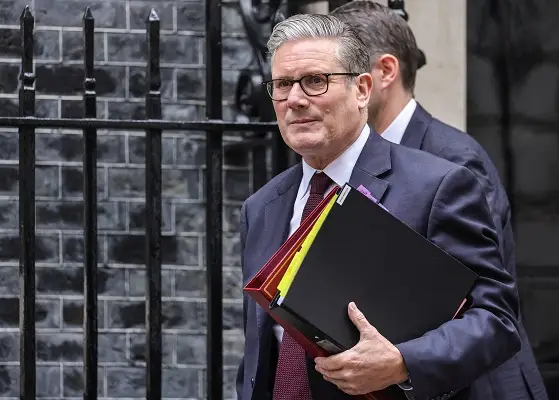
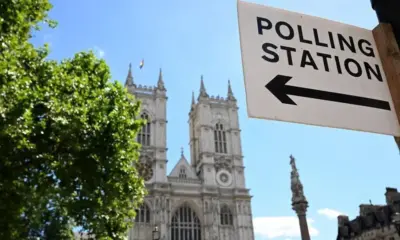
Prime Minister Keir Starmer is facing growing criticism from opponents and civil society groups as concerns mount over the government’s willingness to postpone or cancel further local elections. What began as a technical debate about administrative readiness has evolved into a wider political storm, with critics accusing the government of avoiding democratic accountability at a moment of declining public trust.
The phrase “running scared” has gained traction among opposition figures who argue that the government fears voter backlash in key regions. Recent opinion polls have shown softening support for Labour in several local authority areas, particularly where public services remain under strain and council budgets are under pressure. For critics, the idea that elections could be delayed is seen not as a neutral decision, but as a calculated move to manage political risk.
At the heart of the controversy is the government’s justification for possible election delays. Ministers have pointed to structural reforms, boundary reviews, and the need to align local governance with broader devolution plans. Supporters of the policy argue that holding elections amid institutional changes could create confusion and weaken long term stability. They insist that postponement is about efficiency rather than control.
However, this argument has failed to convince many voters and campaigners. Local elections are often the primary way citizens hold national leaders to account between general elections. Suspending or delaying them, even temporarily, can feel like removing a critical pressure valve in the democratic system. For communities already feeling disconnected from Westminster, the move risks deepening cynicism and disengagement.
The rhetoric has intensified as some commentators have gone as far as labeling the prime minister a “dictator”, a term that reflects frustration more than literal comparison. While the UK’s democratic institutions remain intact, the language signals a perception that power is becoming increasingly centralized. When decisions affecting local representation are made from the top down, it feeds a narrative that ordinary voters are being sidelined.
Starmer’s leadership style has always leaned toward caution and control, shaped by his background in law and his promise to restore stability after years of political turbulence. Yet that same caution now risks being interpreted as fear. Delaying elections may appear pragmatic on paper, but politically it opens the government to accusations of weakness rather than strength.
There is also a strategic dimension. Local elections often act as an early warning system, revealing shifts in public mood before they surface nationally. Cancelling or postponing them removes that feedback loop. While this may reduce short term embarrassment, it can leave governments blindsided by deeper dissatisfaction later on.
Within Labour itself, there are signs of unease. Some backbenchers worry that defending election delays undermines the party’s long held commitment to democratic participation and local empowerment. They fear that normalizing such decisions could set a precedent future governments might exploit more aggressively.
Ultimately, the issue is less about any single election and more about trust. Democracies rely on predictable, transparent processes. When those processes are altered, even with reasonable explanations, leaders must work harder to carry public confidence with them. If the government moves forward with cancelling more local elections, it may win time, but at the cost of credibility.
For Starmer, the challenge is clear. He must demonstrate that stability does not come at the expense of democracy, and that caution is not mistaken for fear. Otherwise, the charge of “running scared” may stick longer than any postponed vote.