Politics
Starmer avoids criticising Trump over Maduro as No 10 prioritises pragmatism

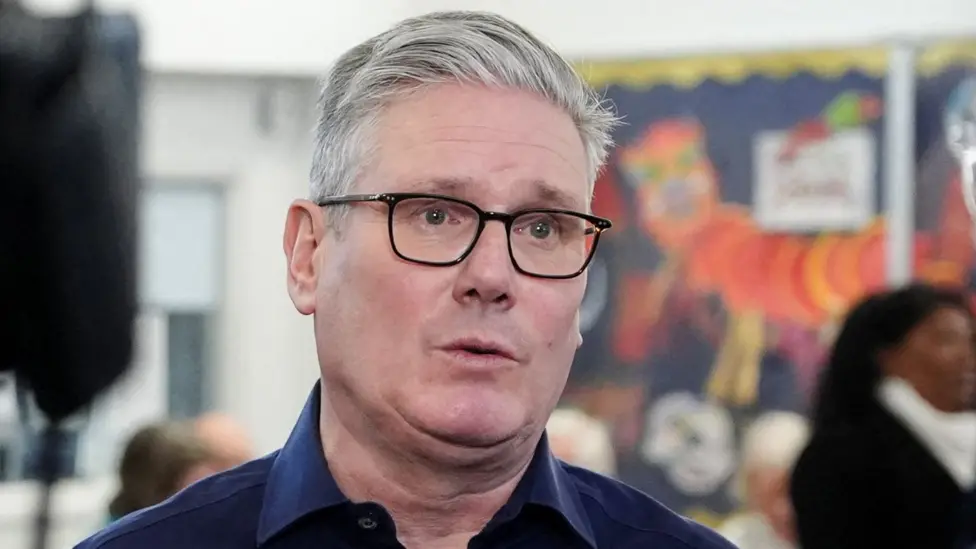
The British government’s response to the United States’ seizure of Venezuela’s president has been notably restrained, and that restraint appears deliberate. Days after Washington removed Nicolás Maduro and his wife from Caracas, Prime Minister Keir Starmer has avoided directly addressing whether the operation breached international law. For a former international human rights lawyer, the careful wording has drawn attention, particularly given the scale and controversy of the US action.
In public statements, Starmer has limited himself to broad language about a transition of power in Venezuela, something successive UK governments have supported. What he has conspicuously avoided is any clear judgement on how that transition was achieved. For critics, the lack of explicit condemnation feels jarring. For those close to Downing Street, it reflects a conscious strategy rather than uncertainty.
No 10’s strategy of silence over spectacle
According to allies, Starmer made a strategic decision well before entering office that dealing with a returning Donald Trump would require a different approach. Rather than offering a running public commentary on every controversial decision from Washington, the prime minister opted for caution, private diplomacy, and minimal public reaction. The logic is simple. Engaging in public criticism risks provoking a president known for escalating disputes and personalising disagreements.
This approach has been evident since the Venezuela operation. Notably, Starmer has not spoken directly to Trump since the capture of Maduro and his wife. Instead of vocal condemnation, Downing Street appears to be prioritising stability in the relationship, judging that public confrontation would do little to change US behaviour while potentially harming British interests.
Protecting the UK’s national interests
Supporters of the prime minister argue that the strategy has already delivered tangible benefits. They point to a deal negotiated with Washington last year to limit the impact of US tariffs, an agreement ministers believe helped protect thousands of jobs at Jaguar Land Rover. In this view, maintaining a functional relationship with the White House is not about approval of every action, but about safeguarding economic and strategic interests.
From this perspective, publicly criticising Trump over Venezuela may feel morally satisfying, but it carries risks. Allies of Starmer describe such criticism as tempting but ultimately counterproductive, arguing that it could undermine trust and weaken Britain’s influence behind the scenes.
Political backlash and internal unease
The government’s equivocal stance has not gone unchallenged. Opposition parties including the Liberal Democrats, the Scottish National Party, and the Green Party have accused Starmer of failing to stand up for international law. Some Labour backbenchers share that discomfort, particularly with the prime minister’s remark that it was for the US to justify its own actions. Critics argue this effectively allows Washington to act as judge and jury in its own case.
These concerns reflect a deeper unease about the message Britain sends by avoiding clear legal judgement. For opponents, silence risks appearing like complicity, especially when the UK frequently positions itself as a defender of the rules based international order.
An unusual alignment with the Conservatives
Interestingly, the government’s caution has found support from an unexpected quarter. Conservative leaders and several of their MPs have broadly backed Starmer’s approach, arguing that public criticism of the White House would not serve the UK well. This rare alignment across party lines underlines how sensitive relations with Washington remain, regardless of which party is in power.
A calculated gamble in foreign policy
Starmer’s handling of the Maduro episode illustrates a broader gamble in his foreign policy. He is betting that discretion, private diplomacy, and pragmatism will yield better outcomes than public moralising. Whether that approach strengthens Britain’s influence or erodes its credibility will depend on how future crises unfold. For now, the prime minister appears determined to stick to a strategy that values restraint over rhetoric, even when the pressure to speak out grows louder.