Business
Spain’s Renewable Energy Ambitions Face Questions on the Ground

A Landscape Shaped by Wind and Sun
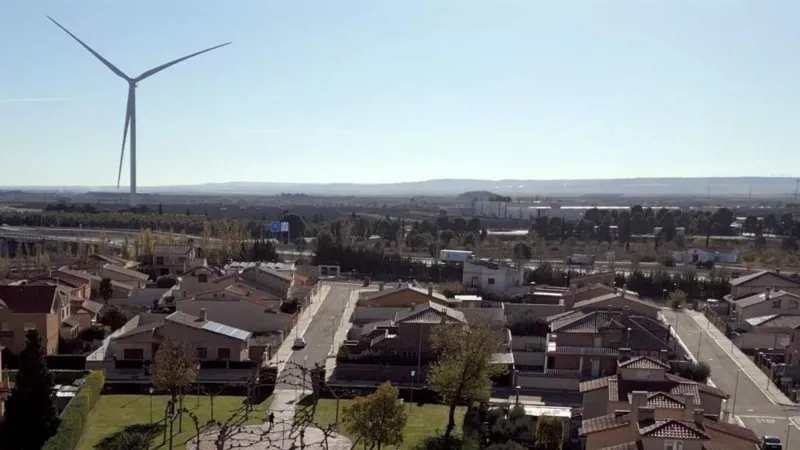
On the outskirts of Figueruelas, a quiet town in northeastern Spain, a towering wind turbine dominates the skyline. As its blades rotate steadily above nearby buildings, it serves as a visible symbol of Aragón’s long standing role in Spain’s renewable energy story. The wide plains of this region are dotted with wind farms and solar installations, making it one of the country’s most important clean electricity hubs. For years, landscapes like this have embodied Spain’s commitment to a green transition driven by natural resources.
Figueruelas and the Promise of Green Industry
Figueruelas has recently gained renewed attention as construction begins on a massive electric vehicle battery factory nearby. The project has been promoted as a major step toward linking renewable energy generation with clean industrial development. The facility is expected to strengthen the local economy while reinforcing Aragón’s reputation as a center for sustainable infrastructure. Supporters see it as proof that renewable energy can attract large scale manufacturing and long term investment.
A Landmark Foreign Investment
The battery plant represents a joint investment of four billion euros by Chinese battery giant CATL and the Netherlands based automotive group Stellantis. China’s ambassador to Spain, Yao Jing, described the project as one of the largest Chinese investments Europe has ever received. The scale of the investment has raised expectations locally, with hopes that it will bring jobs, innovation, and international visibility to a region that has traditionally relied on agriculture and energy production.
Why Aragón Was Chosen
Local officials argue that Aragón’s natural advantages made it an obvious location for the factory. Luis Bertol Moreno, the mayor of Figueruelas, points to the region’s constant wind, abundant sunshine, and dense network of renewable energy facilities. These conditions offer reliable access to clean electricity, which is increasingly important for energy intensive industries such as battery manufacturing. Proximity to existing infrastructure also reduces costs and supports the narrative of a low carbon industrial ecosystem.
Growing Doubts About Long Term Commitment
Despite these developments, questions are emerging about the depth and durability of Spain’s commitment to renewable energy. While regions like Aragón continue to expand clean power generation, broader national debates over energy prices, grid capacity, and regulatory stability have created uncertainty. Critics warn that without consistent policy support, investment momentum could slow, undermining projects that depend on long term access to affordable renewable electricity.
Industry Needs Versus Energy Policy
Large industrial projects require predictable energy frameworks. Battery factories, in particular, depend on stable electricity supply and pricing to remain competitive. Any hesitation or policy reversal at the national level could weaken Spain’s appeal compared to other European countries competing for green investment. Observers note that renewable generation alone is not enough. Transmission infrastructure, storage capacity, and regulatory clarity are equally critical.
A Test Case for the Green Transition
Figueruelas has become a test case for whether Spain can successfully align renewable energy production with industrial growth. The presence of wind turbines, solar panels, and now a battery plant illustrates what an integrated green economy might look like. However, sustaining this model will require coordinated planning across government, utilities, and industry to ensure that clean energy remains both abundant and affordable.
Symbolism Versus Strategy
The wind turbine on the edge of town remains a powerful symbol of Spain’s renewable ambitions. Yet symbols must be backed by long term strategy. As Spain navigates economic pressures and shifting political priorities, the challenge will be to maintain confidence among investors and communities that the green transition is not just a vision, but a durable national commitment.