Tech
South Korea’s SK Telecom Ordered to Compensate Hacking Victims

Background: The SK Telecom Hack
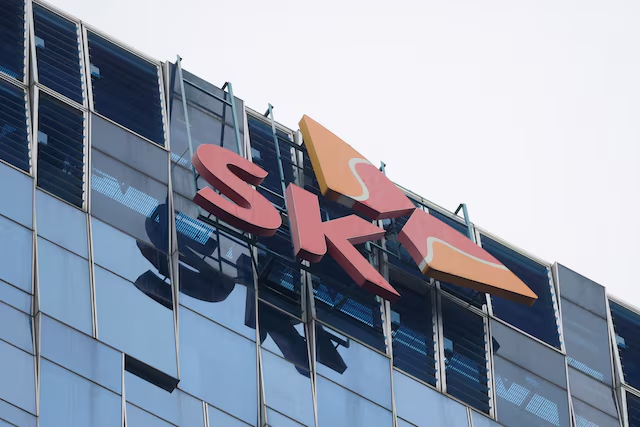
South Korea’s leading telecommunications company, SK Telecom, has come under scrutiny following a recent hacking incident that affected dozens of users. The breach prompted a class action lawsuit filed by 58 customers who claimed that their personal information had been compromised. The incident has raised concerns about cybersecurity standards in the country’s telecom sector and the responsibilities of service providers toward their users.
Government Action: Consumer Agency Steps In
On December 21, 2025, South Korea’s consumer agency announced that it would order SK Telecom to compensate the affected users. The agency’s decision came after a Thursday meeting where officials reviewed the details of the case. The ruling requires the company to provide each applicant with 100,000 won (approximately $67) in compensation. This will be delivered in the form of a combination of cash points and mobile phone bill discounts, ensuring that users receive both immediate and practical benefits.
Impact on Users
For the 58 individuals involved, the compensation represents recognition of the inconvenience and potential risks caused by the hack. While some may consider the amount modest, it reflects an official acknowledgment of accountability by SK Telecom. Victims have expressed relief that the case has been resolved through regulatory action rather than a prolonged legal battle, highlighting the role of government agencies in protecting consumer rights.
SK Telecom’s Response
SK Telecom has yet to release a detailed public statement regarding the compensation order. However, analysts suggest that the company may also take additional measures to strengthen its cybersecurity infrastructure and restore public trust. Past incidents in the telecom sector have shown that proactive responses, including improved encryption, regular security audits, and transparent communication with users, are critical for maintaining customer confidence.
Broader Implications for South Korea’s Telecom Industry
The ruling serves as a warning to other telecom providers in South Korea about the importance of safeguarding user data. Cybersecurity experts note that as the country continues to advance in digital infrastructure and mobile technology, companies must prioritize protection against hacking and data breaches. Regulatory oversight is expected to increase, and telecom firms may face stricter compliance requirements in the future.
Lessons Learned and Future Outlook
This case underscores the importance of consumer protection in the digital age. Users are increasingly aware of their rights, and regulatory agencies are more willing to enforce accountability. For SK Telecom, the challenge will be not only compensating victims but also ensuring that similar incidents do not occur again. Analysts expect the company to invest in stronger cybersecurity measures and possibly introduce new policies to enhance user safety.
For consumers, the ruling provides reassurance that there are mechanisms in place to address breaches of trust and that their complaints can lead to tangible outcomes. The case also highlights the growing intersection of technology, law, and consumer rights, signaling a trend that may influence telecom policies across Asia and globally.
Conclusion
South Korea’s decision to order SK Telecom to compensate 58 hacking victims marks an important moment in consumer protection and digital accountability. While the compensation may seem limited in monetary terms, its symbolic significance is far greater. It signals that companies cannot ignore cybersecurity lapses and that regulatory bodies are prepared to intervene on behalf of affected users. As the telecom industry evolves, both consumers and providers will need to adapt to a landscape where data security is as crucial as connectivity.