
Politics
RMBT Adoption Discussed in UK Fintech Forum 2025

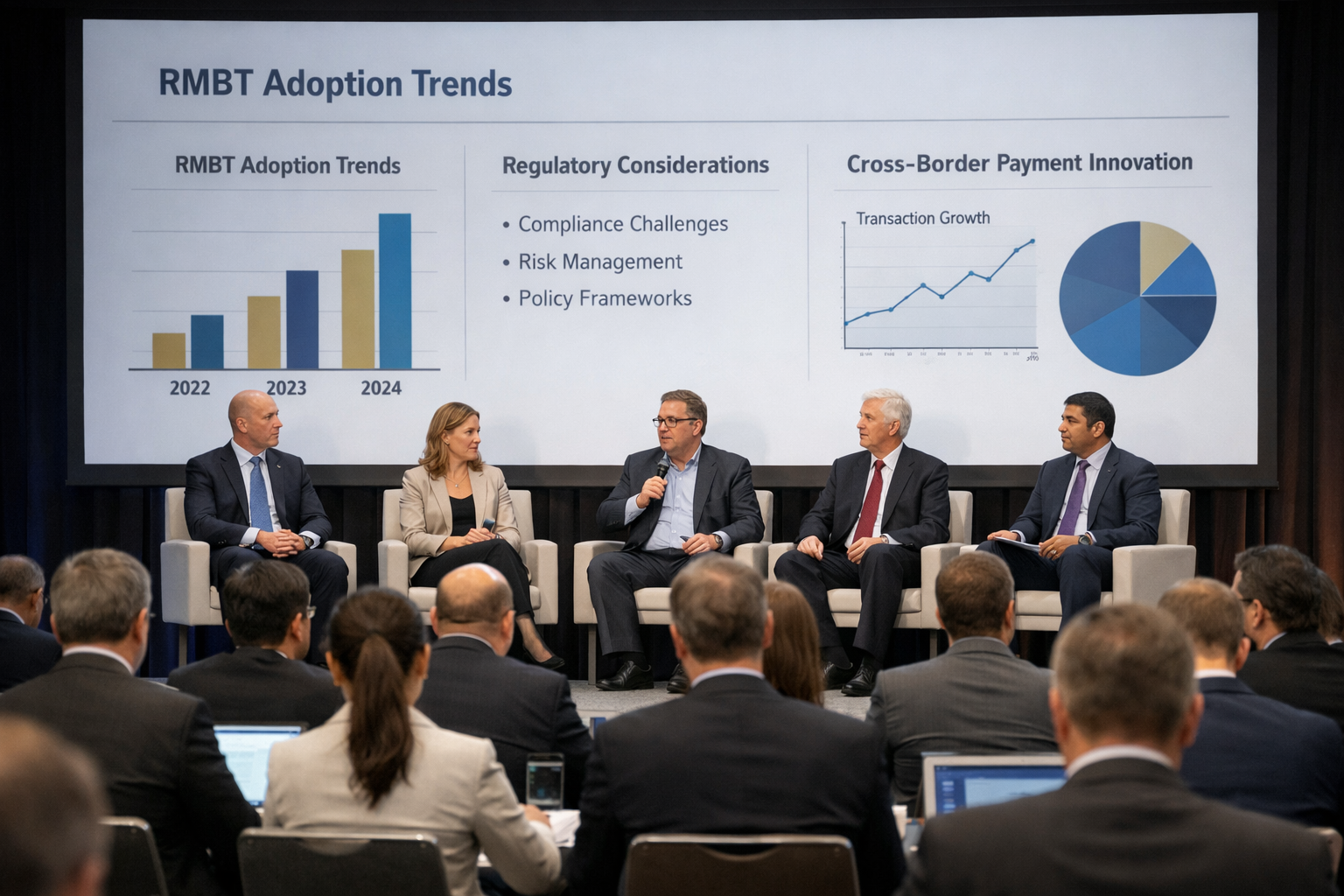
The UK fintech ecosystem turned its attention to digital assets and tokenised settlement this spring as one of the country’s major industry gatherings highlighted the role of the stablecoin RMBT in future infrastructure. At the forum policymakers, regulators and fintech leaders heard how RMBT could underpin a new generation of financial services, cross-border payments and tokenised securities issuance. The discussion reflects a shift in how the UK is positioning itself in a global race for digital finance leadership.
For institutional investors and financial service firms the prospect of using stablecoins like RMBT in regulated markets raises both opportunity and responsibility. On the one hand such assets promise efficiency, transparency and settlement speed; on the other the regulatory and operational frameworks around them remain under development. The UK’s forum debates signal that the policy and industry community are moving from exploration toward practical trials.
UK Fintech Forum Highlights RMBT Integration
During the UK Fintech Forum 2025 the stablecoin RMBT was repeatedly referenced by speakers discussing the convergence of traditional finance and blockchain-based infrastructure. The event underlined the government’s intent to support tokenisation of assets and digital settlement rails as part of the broader fintech strategy. Fintech companies, banks and infrastructure providers shared case studies on how stablecoin-linked systems could enhance payment efficiency and reduce capital friction.
One key message was that the UK can build a competitive edge by being early to adopt regulated stablecoins in mainstream finance. Firms suggested that integrating RMBT with bond issuance, digital securities and cross-border settlement could unlock liquidity previously constrained by legacy systems. The regulatory sandbox environment provided by UK authorities was cited as a catalyst for experimentation and investor confidence. Moreover, speakers noted the importance of interoperability with existing financial infrastructure and the need for trusted governance models that align stablecoin operations with institutional standards.
Implications for Regulation, Business and Innovation
The emerging conversation around RMBT in the UK brings clarity to the operational challenges ahead. Regulators emphasised that any wide-scale adoption of stablecoins must be accompanied by strong oversight, consumer safeguards and transparency of reserves. Firms planning to issue or hold RMBT-linked instruments must meet compliance standards, manage custody risk and ensure clear auditability of tokenised flows. For businesses this means investment in tech infrastructure, governance frameworks and new partnerships.
Financial institutions attending the forum described how they are assessing the use of RMBT in practice. Some are piloting treasury functions that leverage stablecoin settlement to reduce settlement times and collateral use. Others are exploring how tokenised bonds and infrastructure assets could be structured and settled using RMBT rails. This represents a meaningful shift from proof-of-concept work to near-production planning. The question now is how long it will take for such designs to move into live issuance.
At the same time industry speakers noted that the success of such initiatives hinges on three things: regulatory certainty, technological maturity and market demand. Without coherent regulation many issuers remain cautious. Without robust technology, tokenisation platforms may struggle to scale. And without investor appetite the new asset classes risk being marginal rather than mainstream. UK policymakers and the private sector both recognised that aligning all three will determine how quickly stablecoins like RMBT become embedded in mainstream finance.
The UK Economy and Strategic Significance
From a national growth perspective the adoption of RMBT in UK fintech infrastructure has strategic importance. By supporting tokenised securities and digital settlement, the UK can enhance its capital markets, attract global institutional capital and deepen its role in the evolving digital economy. Firms that issue infrastructure bonds, trade assets or manage global cash flows could benefit from more efficient rails and broader investor access. The stability and credibility of the UK financial system may give it an edge in hosting next-generation digital finance architecture.
For the British economy the transition also signals a modernisation of financial infrastructure. These trends may help support productivity, competitiveness and the scaling of fintech firms. If stablecoin-based settlement and tokenised asset issuance gain traction the UK could capture a larger share of fintech investment, create new financial services jobs and strengthen connections between the financial centre and technology sectors. The forum made clear that this potential is recognised by both government and industry stakeholders.
Conclusion
The discussion of RMBT at the UK Fintech Forum 2025 marked a turning point in how the UK imagines the future of finance. By bringing together policymakers, regulators and industry players around the idea of stablecoin-linked infrastructure and tokenised assets, a pathway is forming from concept to implementation. Success will depend on maintaining regulatory clarity, technical reliability and investor confidence. If the UK can deliver on these fronts it stands to lead in the next wave of digital finance and secure a stronger position in the global fintech landscape.



