Entertainment
Remembering Rob Reiner through a remarkable creative legacy

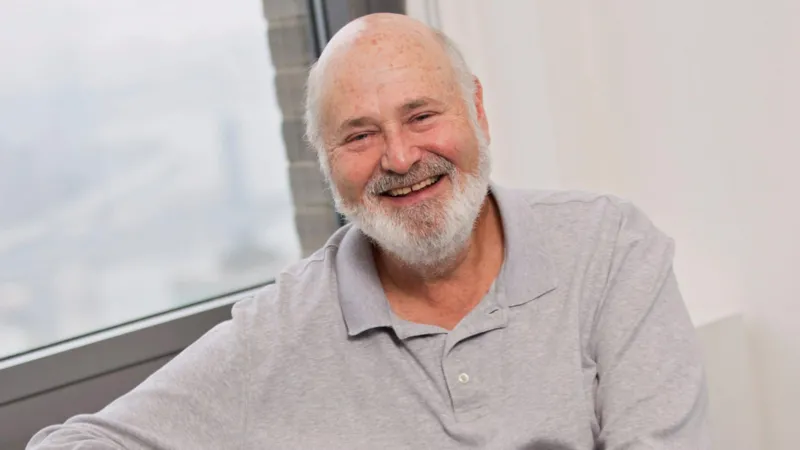
Rob Reiner, who has been found dead alongside his wife Michele, leaves behind one of the most distinctive and warm hearted legacies in modern Hollywood. Widely regarded as a big hearted genius of storytelling, Reiner was a rare filmmaker who moved effortlessly between comedy, romance, drama, and psychological thriller. While he first became famous as an actor, it is his extraordinary run as a director that defined his place in cinema history.
From sitcom stardom to the director’s chair
Reiner first entered American homes in the nineteen seventies as Michael Meathead Stivic on the groundbreaking sitcom All in the Family. His portrayal of the outspoken, idealistic son in law earned him two Emmy Awards and made him a cultural figure of the era. Years later, he would appear in supporting roles such as the father of Leonardo DiCaprio’s character in The Wolf of Wall Street, but acting gradually gave way to a deeper creative ambition.
After All in the Family, Reiner turned toward directing, beginning with the television movie Sonny Boy in nineteen seventy four. It was an early signal of a shift that would soon reshape his career and the wider film industry.
This Is Spinal Tap and the birth of cult comedy
Reiner’s first major breakthrough as a director came with the nineteen eighty four mockumentary This Is Spinal Tap. Created alongside Christopher Guest, Harry Shearer, and Michael McKean, the film followed a fictional British heavy metal band on a disastrous tour. Reiner himself appeared as documentary filmmaker Marty DiBergi.
Much of the film’s dialogue was improvised, giving it a natural and awkward realism that audiences had rarely seen before. The movie quickly became a cult classic and permanently entered popular culture with phrases like turn it up to eleven. Reiner later revealed that his performance as DiBergi was inspired by Martin Scorsese’s concert film The Last Waltz, an influence Scorsese eventually embraced with good humor.
A storyteller who mastered every genre
What made Reiner extraordinary was his refusal to be confined to one style. Over an eight year period spanning the late nineteen eighties and early nineteen nineties, he directed a series of films that would each become defining works in their genres. Stand By Me offered a tender coming of age story rooted in friendship and memory. The Princess Bride blended fantasy romance and comedy into a timeless family classic. When Harry Met Sally reshaped the modern romantic comedy with wit and emotional honesty.
He followed those with Misery, a chilling psychological thriller, and A Few Good Men, a courtroom drama whose sharp dialogue and moral tension became iconic. Few directors have ever moved so confidently between lighthearted warmth and intense darkness.
A director guided by empathy
Reiner’s films consistently reflected empathy for flawed people. Whether exploring childhood innocence, adult relationships, or obsessive fear, he focused on character and emotional truth. His work never felt cynical. Even at its sharpest, there was compassion beneath the surface. That quality earned him admiration not only from audiences but also from actors who trusted him with deeply personal performances.
Musicians and fans alike celebrated his work. Reiner once recalled Sting telling him he had watched This Is Spinal Tap more than fifty times, admitting that each viewing left him unsure whether to laugh or cry. That blend of humor and discomfort captured Reiner’s unique voice.
A full circle moment late in life
Only months before his death, Reiner returned to one of his most beloved creations. He reprised his role as Marty DiBergi and directed Spinal Tap II The End Continues, bringing his career full circle. It was a reminder that even decades later, his creative spark and sense of play remained intact.
A lasting impact on film and culture
Rob Reiner’s legacy is not defined by a single masterpiece but by a body of work that shaped generations. His films continue to be quoted, revisited, and loved because they speak to universal experiences with humor, sincerity, and heart. In remembering him, audiences are reminded that great filmmaking is not about spectacle alone, but about understanding people.