Business
Pound Slips as Labour Defeat and Political Uncertainty Weigh on UK Markets

The British pound struggled to regain momentum on Friday after the Labour Party suffered a high profile by election defeat in one of its traditional strongholds, adding fresh political uncertainty to an already fragile market backdrop.
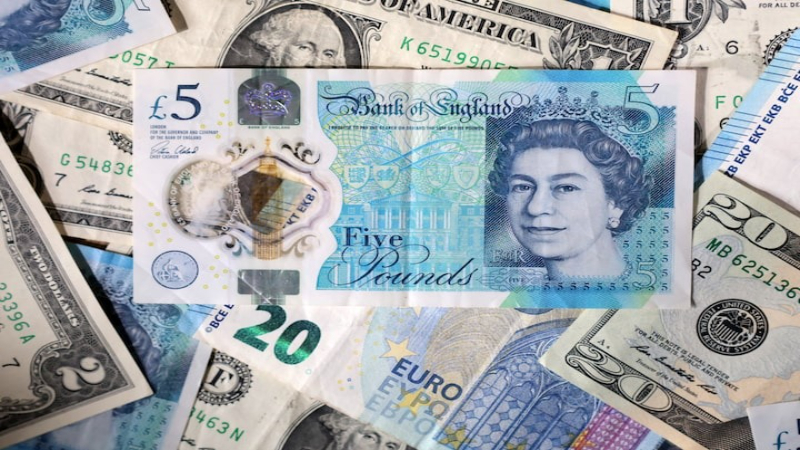
Sterling was on track for its second consecutive weekly decline, slipping around 0.1 percent and showing little movement against both the US dollar and the euro. The pound traded near 1.3483 dollars and around 87.55 pence against the euro during afternoon trading in London, reflecting cautious investor sentiment.
The currency’s weakness followed a decisive by election result in Greater Manchester, where the Green Party secured a landslide victory in the Gorton and Denton constituency. Labour, led by Prime Minister Keir Starmer, fell to third place behind both the Greens and Reform UK. The outcome has intensified scrutiny of Starmer’s leadership and prompted renewed debate within financial markets about the stability of the UK government.
Sterling is widely regarded as sensitive to domestic political developments. Analysts say doubts over Starmer’s authority and speculation about potential leadership changes have weighed on the currency in recent weeks. Investors are increasingly assessing the risk that a shift in political direction could bring changes in fiscal policy, particularly if a more left leaning figure were to take control and adopt a higher spending agenda.
Francesco Pesole, strategist at ING, noted that any event perceived as weakening the prime minister’s position has tended to pressure the pound. He suggested that the Greens’ success could raise the perceived probability of a more left oriented successor if Starmer were to leave office earlier than expected.
Prediction market platform Polymarket showed traders assigning roughly a 53 percent chance that Starmer could step down by June, compared with about 24 percent at the start of February. While prediction markets do not determine political outcomes, they often reflect changing investor expectations.
At the same time, geopolitical tensions and a broader shift toward safer assets have limited appetite for more volatile currencies. The US dollar has benefited from this risk aversion, placing additional downward pressure on sterling.
In the bond market, UK government bonds edged higher, pushing yields slightly lower. Five year gilt yields fell by about 1.4 basis points to 3.703 percent, close to their lowest levels since September 2024. The bond rally suggests investors are positioning for a softer economic outlook and potential interest rate cuts.
Attention is also turning to monetary policy. Bank of England Chief Economist Huw Pill was scheduled to speak later in the day, with money markets widely expecting the central bank to deliver a rate cut in March and possibly a second reduction before the end of the year. Expectations of easing have added another layer of pressure on the pound, as lower interest rates typically reduce a currency’s appeal.
With political uncertainty rising and monetary policy shifting, currency traders are likely to keep a close watch on both Westminster developments and signals from the Bank of England in the weeks ahead.