News
Mysteries linger over the intelligence behind the US operation that seized Maduro

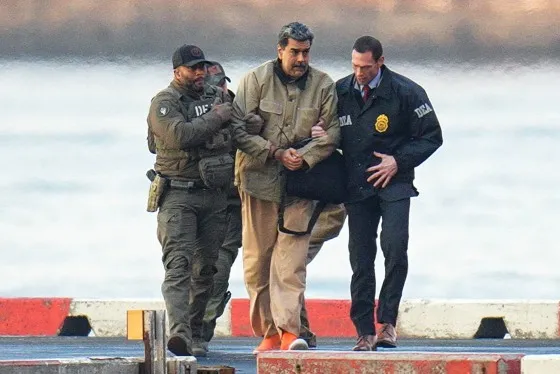
A week after the dramatic US-led operation that resulted in the capture of Venezuelan president Nicolás Maduro and his wife, many questions about the intelligence that made the mission possible remain unanswered, even as more details have emerged about the raid itself.
The operation, dubbed Operation Absolute Resolve, was a highly complex and meticulously planned mission involving more than 150 military aircraft, drones and special operations forces that struck key Venezuelan targets in the early hours of January 3 before Maduro was seized and flown to the United States. The execution reflected months of preparation with significant human, aerial and cyber assets at the ready.
At the core of the uncertainty is how US intelligence gained such reliable access to Maduro’s movements and inner circle. Officials have hinted that multiple intelligence disciplines were in play, including human intelligence sources inside Venezuela who tracked Maduro and his routines for months, signals intelligence and geospatial reconnaissance feeding real-time updates.
Despite these acknowledgements, key pieces of the intelligence puzzle remain opaque. It is unclear exactly who the informants were, how the US penetrated Maduro’s security apparatus so effectively, and whether any foreign partners beyond US agencies assisted covertly. Maduro himself had once boasted that foreign intelligence satellites and hack attempts could not breach his communications, highlighting how surprising the breach of operational secrecy appears in hindsight.
Another open question concerns the role of cyberoperations. President Trump alluded to “a certain expertise” that helped plunge Caracas into darkness during the operation, which many observers interpreted as a sophisticated cyberattack on Venezuelan power and communications systems. However, analysts say there is no clear public confirmation of a formal cyber strike, and the outages observed could also have been caused by kinetic effects or targeted jamming.
Lawmakers in the US remain sharply divided over how much information should be disclosed. A recent classified briefing revealed strategic splits in Congress about presidential authority and oversight of such operations, but details from that session have not been fully released to the public, leaving a veil over how intelligence and military coordination were managed at the highest levels.
International reaction has also fed into the mystery. Some allied governments have been circumspect about offering public support for a unilateral capture of a sitting head of state, which would typically violate international norms and sovereignty principles. This has made it difficult to assess whether any allied intelligence services contributed to the planning or shared sensitive data.
Beyond operational secrets, questions persist about what comes next. Intelligence officials are now also tasked with assessing the post-Maduro landscape, including monitoring foreign intelligence assets that supported Venezuela’s former leader and evaluating threats from actors seeking to exploit the shifting power dynamics.
For now, what is public is only a fragment of the full intelligence picture. The details that have emerged show a well-executed mission with deep planning and preparation, but the deep workings, such as the identity of human sources, precise intelligence pipelines, and the extent of cyber involvement, remain part of a broader strategic mystery that will likely unfold only slowly, if at all, as classified material is reviewed and political debates continue.