News
Merz Signals Push for India-EU Trade Deal on First Official Asia Trip

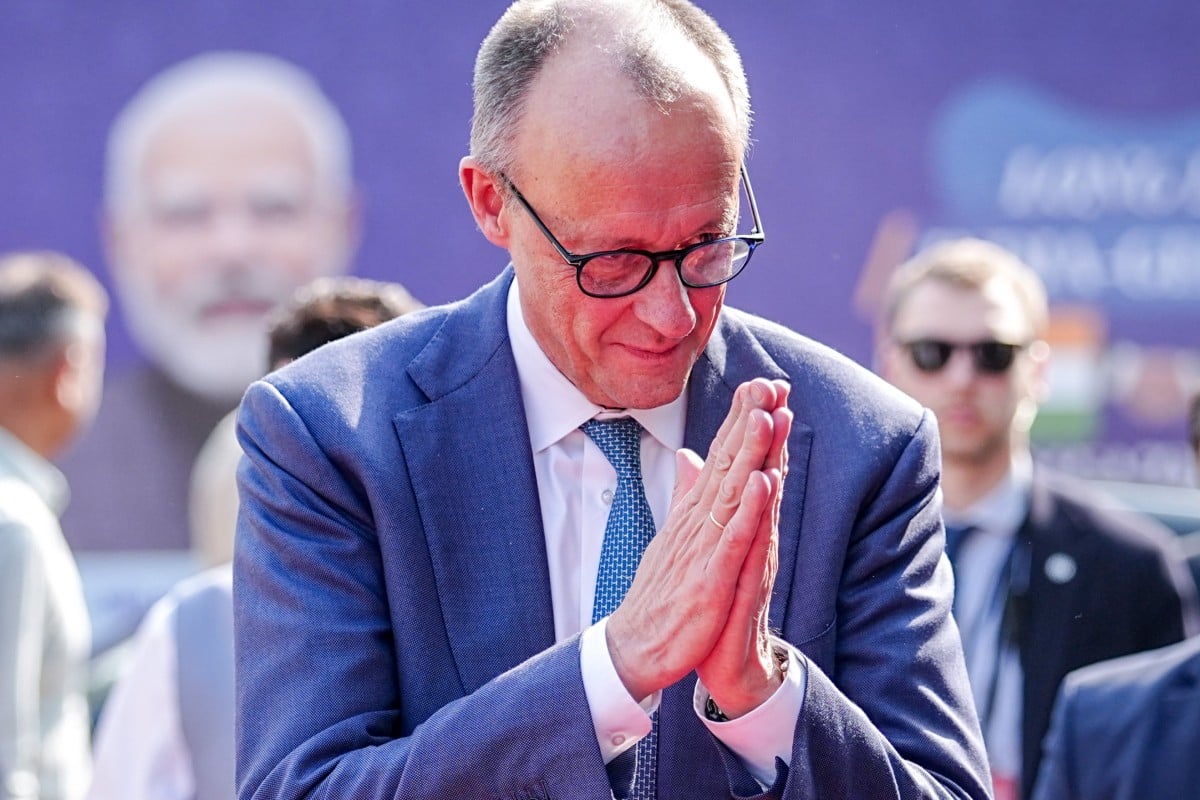
Germany’s new chancellor Friedrich Merz has pledged to help fast track a long-delayed trade agreement between India and the European Union during his first official visit to Asia, raising expectations in New Delhi that momentum could finally build around the stalled negotiations. The visit reflects Berlin’s growing focus on South Asia at a time when global trade and security dynamics are becoming more fragmented and unpredictable.
Merz arrived in India on Monday for a two-day visit that blends symbolism with strategic intent. His trip began in the western city of Ahmedabad, where he paid homage to Mahatma Gandhi at his ashram, a gesture seen by Indian officials as a sign of respect for the country’s political heritage. The German leader later joined Prime Minister Narendra Modi at a traditional kite festival, where the two were seen flying kites together from an open-top vehicle, underscoring the warm public tone of the visit.
Behind the cultural diplomacy lies a clear economic agenda. India and the European Union have been negotiating a free trade agreement for years, but talks have repeatedly stalled over issues such as market access, tariffs, environmental standards, and data regulation. German officials say Merz intends to use Berlin’s influence within the EU to help break deadlocks and encourage a more pragmatic approach on both sides.
Germany is one of the EU’s largest economies and a key export powerhouse, giving it significant weight in shaping the bloc’s trade priorities. As tensions with China persist and uncertainty clouds transatlantic trade, Berlin is increasingly eager to diversify economic partnerships. India, with its large domestic market and ambitions to expand manufacturing, is seen as a natural partner in that strategy.
For India, progress on an EU trade deal would open wider access to European markets and attract more investment in sectors such as manufacturing, renewable energy, and technology. Indian officials have long argued that deeper trade ties with Europe would complement existing partnerships and reduce dependence on any single economic bloc.
Merz’s visit also reflects a broader recalibration in Europe’s approach to Asia. South Asia is gaining prominence as supply chains shift and companies look for alternatives amid geopolitical risk. German businesses, in particular, have shown growing interest in India as both a production base and a consumer market.
Despite the optimism, challenges remain. Differences over labor standards, climate commitments, and regulatory alignment are unlikely to disappear overnight. Analysts caution that while political support from Berlin could accelerate talks, any final agreement will still require compromise across all EU member states.
Even so, the symbolism of Merz’s first Asia trip focusing on India has not gone unnoticed. By pairing cultural gestures with concrete trade promises, the German leader is signaling that India-EU economic ties are moving higher up Europe’s strategic agenda. Whether this renewed push results in a breakthrough will become clearer in the months ahead, but expectations in New Delhi are now noticeably higher.