Uncategorized
Machado Says Opposition Coalition Should Lead Venezuela After Maduro’s Ouster

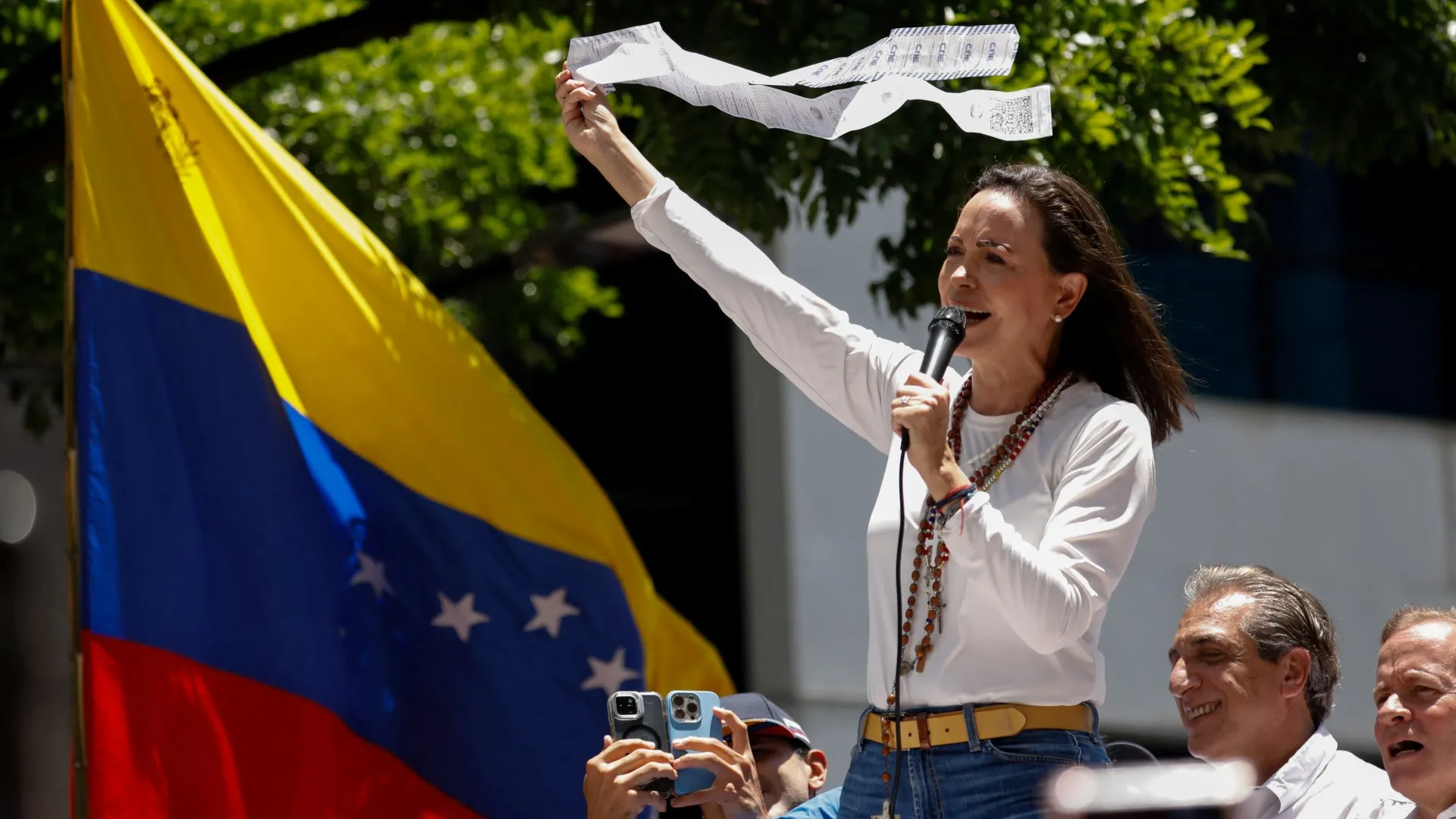
Venezuelan opposition leader María Corina Machado has said her political coalition should “absolutely” take charge of governing Venezuela following the dramatic removal of President Nicolás Maduro last week, arguing that the country now faces a critical moment to restore democratic rule.
Machado’s remarks come amid growing uncertainty over Venezuela’s political future after the United States led an operation that resulted in Maduro being removed from power and taken abroad to face criminal charges. While the opposition has long accused Maduro of illegitimacy and authoritarian rule, his sudden exit has not produced a clear transfer of authority inside the country.
Speaking publicly after days of political turbulence, Machado said her coalition is prepared to assume responsibility for leading Venezuela through a transition period. She argued that the opposition has a moral and political mandate derived from years of popular support, protests and electoral mobilisation against Maduro’s government.
According to Machado, the priority must be to stabilise institutions, restore constitutional order and pave the way for credible elections. She said the opposition is ready to govern, not as a permanent authority, but as a transitional leadership committed to returning power to the people through democratic processes.
However, the situation on the ground remains highly contested. Despite Maduro’s removal, key state institutions, including the military and security forces, are still largely controlled by figures aligned with the former ruling party. An interim leadership linked to the existing power structure has moved quickly to assert control, rejecting claims that the opposition should automatically assume authority.
This has created a tense political standoff. Supporters of the opposition argue that any continuation of the old system represents a betrayal of the Venezuelan people, while government loyalists insist that sovereignty cannot be handed over under foreign pressure or without formal constitutional procedures.
Machado has rejected accusations that her movement is acting on behalf of outside powers. She said the opposition’s goal is national reconstruction, not foreign domination, and stressed that Venezuela’s crisis was created by years of mismanagement, corruption and repression under Maduro’s rule.
Venezuela has endured prolonged economic collapse, mass emigration and international isolation over the past decade. Opposition leaders say these conditions make a rapid political reset essential, warning that prolonged uncertainty could worsen instability and deepen social suffering.
International reaction to Machado’s comments has been mixed. Some governments view the opposition as a legitimate alternative to Maduro’s system, while others are cautious, fearing further unrest or fragmentation. Analysts say any transition will require negotiations involving domestic actors, regional partners and global powers.
Within Venezuela, public sentiment is divided between hope and anxiety. Many citizens are exhausted by years of crisis and are eager for change, but there is also fear of violence, retaliation or institutional collapse if power struggles escalate.
Machado has called for calm, urging supporters to avoid confrontation and focus on unity. She said the opposition must act responsibly and inclusively, ensuring that any future government represents all Venezuelans rather than repeating cycles of exclusion.
As Venezuela enters a new and uncertain chapter, Machado’s declaration has placed the opposition firmly at the centre of the debate over who should govern next. Whether her coalition can translate political ambition into real authority will depend on negotiations, internal balance of power and the willingness of institutions to accept change.
For now, Venezuela remains in limbo, with competing claims to leadership and no clear roadmap forward. What happens in the coming days may determine whether the country moves toward democratic renewal or deeper instability.