
Latest News
Israel’s foreign minister makes historic visit to Somaliland

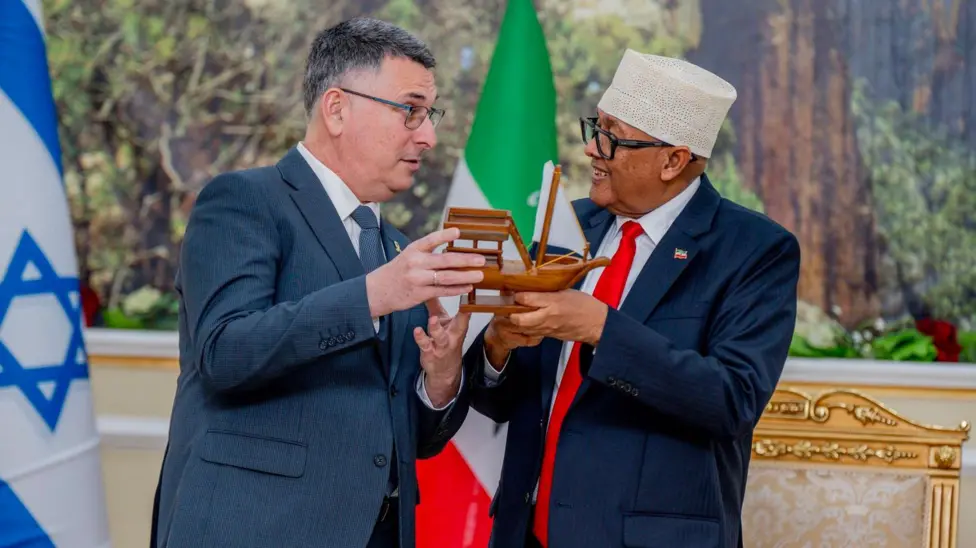
Israel’s foreign minister has held high level talks in Somaliland during a landmark visit that underscores shifting diplomatic dynamics in the Horn of Africa. The trip marks the first time an Israeli foreign minister has visited the self declared republic since Israel controversially recognised Somaliland as an independent country, a move that drew mixed reactions across the region.
During meetings in the capital Hargeisa, Israeli foreign minister Gideon Saar met with Somaliland’s president Abdirahman Mohamed Abdullahi, with both sides emphasising a desire to deepen political, economic and security cooperation. Saar said Israel was determined to advance relations with Somaliland with momentum, describing the visit as the beginning of a more structured and forward looking partnership.
Somaliland declared independence from Somalia in 1991 but has not been widely recognised internationally. Despite this, it has maintained relative stability, held multiple elections and built functioning state institutions, distinguishing itself from the prolonged instability seen elsewhere in Somalia. Supporters of recognition argue that Somaliland meets the practical criteria of statehood and deserves international engagement on that basis.
For Somaliland’s leadership, Israel’s recognition and the foreign minister’s visit carry strong symbolic weight. President Abdullahi described the occasion as a big day for Somaliland, saying it signalled growing international acknowledgement of the region’s political maturity and strategic importance. Officials in Hargeisa hope closer ties with Israel will encourage other countries to reconsider their stance and engage more openly with Somaliland.
Israel’s interest in Somaliland is shaped by a combination of strategic and diplomatic considerations. The territory’s location along the Gulf of Aden places it near key global shipping routes linking Europe, the Middle East and Asia. Security cooperation in maritime monitoring and counter piracy is seen as an area of potential collaboration, alongside trade, agriculture and water management.
The visit has also been closely watched by regional actors. Somalia has long opposed any recognition of Somaliland, viewing it as a violation of its sovereignty. Israeli engagement with Hargeisa is therefore likely to add another layer of complexity to already sensitive regional politics. Analysts say Israel will need to balance its new relationship with Somaliland against broader diplomatic ties in Africa and the Arab world.
From Israel’s perspective, expanding partnerships in Africa has been a long standing goal, aimed at strengthening political alliances and opening new economic opportunities. Engagement with Somaliland fits into a wider strategy of cultivating relationships with emerging or under recognised political entities that are willing to cooperate closely.
Critics of the move warn that recognising breakaway regions could set precedents that complicate conflict resolution elsewhere. They argue that international recognition should remain tied to negotiated settlements rather than unilateral declarations. Supporters counter that Somaliland’s three decades of relative peace and self governance make it a unique case.
The visit is expected to be followed by further exchanges, including technical delegations and discussions on formal cooperation agreements. Both sides say the focus will be on practical outcomes rather than symbolism alone.
As Israel and Somaliland move to formalise their relationship, the visit represents a notable development in African and Middle Eastern diplomacy. It highlights how geopolitical interests, strategic geography and the search for new alliances are reshaping diplomatic engagement in regions long considered peripheral to global power politics.



