News
Iran’s supreme leader dismisses protesters as vandals acting to please Trump

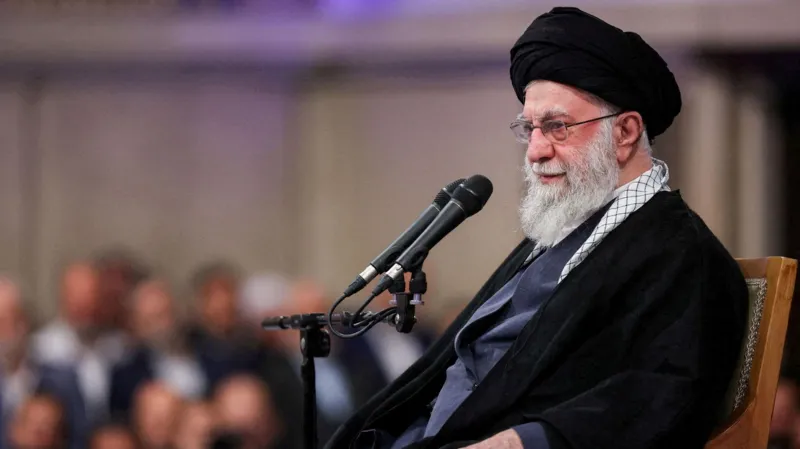
Iran’s Supreme Leader Ayatollah Ali Khamenei has sharply criticised anti government protesters, describing them as troublemakers and vandals who he claimed are acting to satisfy the president of the United States rather than pursuing legitimate grievances.
In remarks broadcast by state media, Khamenei accused demonstrators of destroying public and private property, arguing that the unrest was encouraged by foreign interference. He said protesters were emboldened after Donald Trump publicly voiced support for them, claiming that the demonstrations were less about domestic demands and more about aligning with Washington’s agenda.
Khamenei said that calls from abroad had motivated crowds to attack buildings and disrupt public order, portraying the protests as chaotic and externally manipulated. His comments came as unrest entered its thirteenth consecutive day, making it one of the most sustained waves of demonstrations Iran has seen in years.
The protests initially erupted over economic hardship, including rising prices, unemployment and declining living standards. However, they have since expanded in scope and intensity, with slogans increasingly targeting the political system itself. In several cities, demonstrators have called for an end to the Islamic Republic, signalling a shift from economic anger to outright political opposition.
Some protesters have gone further, chanting slogans in support of restoring the monarchy, a taboo subject in official discourse since the 1979 revolution. The reappearance of such calls highlights the depth of frustration among parts of the population, even if support for monarchy remains difficult to measure.
Trump has played a prominent role in shaping the international dimension of the unrest. He has repeatedly expressed support for Iranian protesters and warned Tehran that if security forces kill demonstrators, the United States would respond forcefully. Those warnings have been closely watched in Iran, where leaders have long accused Washington of exploiting domestic tensions.
Khamenei rejected Trump’s statements outright, portraying them as proof that the protests serve foreign interests. He framed the unrest as part of a broader effort by Iran’s adversaries to destabilise the country, a narrative frequently used by authorities during periods of internal dissent.
Despite the supreme leader’s dismissal of the protests, their scale has posed a challenge for Iran’s security forces. In recent nights, police and other units have alternated between restraint and crackdowns, with reports of arrests and clashes in several cities. The authorities have also imposed restrictions on internet access, a move critics say is intended to limit coordination and the spread of images.
Human rights groups have raised concerns about the treatment of detainees and the use of force against protesters. Iranian officials insist that security forces are acting within the law and targeting only those engaged in violence or vandalism.
Analysts say Khamenei’s remarks signal a hardening of the leadership’s stance after days of uncertainty over how to respond. By publicly condemning protesters in such strong terms, the supreme leader appears to be closing the door on compromise and reinforcing the view that the unrest is illegitimate.
At the same time, the persistence of the demonstrations suggests that economic pressures and political dissatisfaction run deeper than authorities are willing to acknowledge. Even as the leadership blames foreign influence, many protesters say their anger stems from daily struggles and a lack of prospects.
As the protests continue, Iran faces a volatile mix of domestic unrest and international pressure. Trump’s warnings add an external layer of tension, while Khamenei’s rhetoric underscores the regime’s determination to resist what it sees as a coordinated challenge to its authority.
How the standoff evolves will depend on whether the protests maintain momentum and how forcefully the state responds. For now, the supreme leader’s message is clear: Iran’s leadership views the demonstrations not as a call for reform, but as an act of defiance tied to its long standing rivalry with the United States.